Seoul City Inspects 1,564 Food Manufacturers and Sellers for Ritual Offerings
11 Cases Exceed Residual Pesticide Limits in Green Onions, Spinach, and More
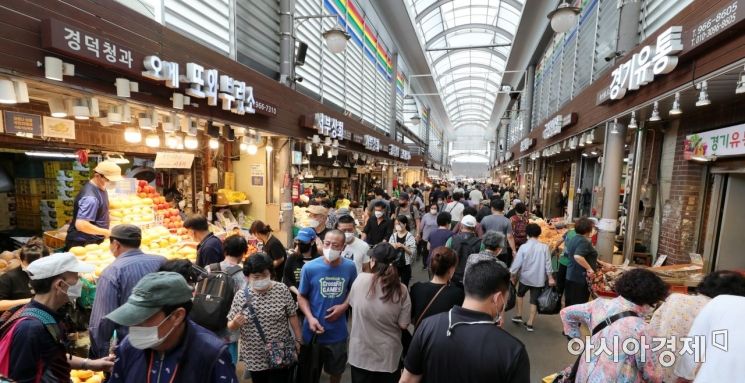 A traditional market in Seoul is bustling with citizens purchasing ritual offerings. The photo is unrelated to the article content. Photo by Yoon Dong-joo doso7@
[Asia Economy Reporter Han Jinju] Companies that labeled Korean beef as domestic beef or sold agricultural products with pesticide residues exceeding the standard were caught.
On the 28th, the Seoul Metropolitan Government inspected 1,564 businesses manufacturing and selling Seollal gift and ancestral rite foods in cooperation with autonomous districts and found 10 violating businesses. With the recent increase in online purchases, they also conducted sampling inspections online, testing a total of 1,068 cases of agricultural, marine, livestock products, and processed foods.
Seoul inspected for violations such as ▲storage and sale of expired products ▲hygienic handling of food ▲compliance with business operator obligations ▲compliance with livestock traceability system including origin, variety, grade ▲false labeling such as misrepresenting domestic beef as Korean beef or false part names. The city plans to continue focused crackdowns until the 30th.
As a result of inspecting 440 businesses including Seongsu food manufacturing, processing, and instant sales businesses, five were caught for failing to conduct health checks on employees and failing to comply with inspection orders. Seoul will impose fines and other measures on violating companies.
They collected 368 processed food items such as Hangwa (traditional Korean sweets), dried fish, and nuts, completing inspections on 74 cases. Among these, two cases of roasted peanuts (origin: China) were found to contain aflatoxin, a mold toxin, exceeding the standard, and administrative measures were requested from the relevant local government.
Among 427 agricultural and marine products collected from 38 discount marts, large marts, and wholesale markets, pesticide residues exceeding the standard were detected in 11 cases including green onions and spinach. Seoul immediately disposed of 621.32 kg of non-compliant agricultural products and blocked their distribution.
Inspecting 1,086 livestock product sellers in department stores, large marts, and traditional markets, companies that labeled domestic beef as Korean beef or falsely labeled the front leg of Korean beef as brisket were caught. Seoul took administrative actions such as business suspension, warnings, and fines on 6 cases from 5 violating companies.
Unannounced inspections were conducted on carcass transport vehicles at Majang-dong livestock market, and administrative measures were requested for vehicles violating transport regulations. In addition, 273 cases of Korean beef gift sets, ancestral rite beef, eggs, etc. were collected for safety inspections, and administrative actions will be taken immediately upon any non-compliance findings.
© The Asia Business Daily(www.asiae.co.kr). All rights reserved.
![User Who Sold Erroneously Deposited Bitcoins to Repay Debt and Fund Entertainment... What Did the Supreme Court Decide in 2021? [Legal Issue Check]](https://cwcontent.asiae.co.kr/asiaresize/183/2026020910431234020_1770601391.png)