US Monetary Tightening Faster Than Expected
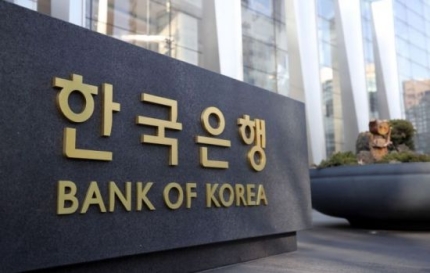
[Asia Economy reporters Seo So-jung, Sejong=Son Sun-hee, Moon Je-won] Jerome Powell, Chairman of the U.S. Federal Reserve (Fed), revealed a decidedly 'hawkish' (preference for monetary tightening) stance on the 26th (local time), deepening the concerns of the Bank of Korea. Although the Bank of Korea has already raised the base interest rate to proactively respond to U.S. tightening, worries have grown that the U.S. may implement a more aggressive monetary tightening policy than expected.
On the morning of the 27th, the Bank of Korea held a 'situation review meeting' chaired by Deputy Governor Park Jong-seok to assess the international financial market situation following the Federal Open Market Committee (FOMC) results and the potential impact on domestic financial and foreign exchange markets. Deputy Governor Park Jong-seok stated, "The FOMC policy decision largely aligned with market expectations, but Chairman Powell's press conference was somewhat hawkish," adding, "As the normalization of the Fed's monetary policy is accelerating, market stabilization measures should be implemented promptly if necessary," clearly signaling the possibility of further rate hikes.
The issue lies in the timing and frequency. The market expected the Bank of Korea to raise the base interest rate about twice this year. Since the Bank of Korea already used a rate hike on the 14th, it was believed that only one more rate hike remained for the rest of the year. However, following Chairman Powell's remarks, analyses suggesting that the Bank of Korea could raise rates an additional 2 to 3 times this year have gained traction. Some forecasts even suggest that action could be taken as early as next month.
Professor Ha Jun-kyung of Hanyang University’s Department of Economics said, "Since the base rate was raised in January, additional rate hikes are expected with about a two-month interval," and added, "If high inflation persists, the base rate could rise to 1.75% within the year." Professor Kim Sang-bong of Hansung University’s Department of Economics also stated, "Once the U.S. raises rates, it continues to do so," emphasizing, "We need to respond considering the pace of U.S. rate hikes, domestic gross domestic product (GDP), and asset market conditions."
Professor Kim So-young of Seoul National University’s Department of Economics mentioned, "Although there are variables such as the March presidential election and the end of Bank of Korea Governor Lee Ju-yeol’s term, the possibility of an additional rate hike in February is not entirely ruled out."
Meanwhile, the government judged that even if the Fed’s rate hike timing accelerates, the impact on the domestic financial market would be limited. On the same day, Lee Eok-won, First Vice Minister of Strategy and Finance, held a 'Macroeconomic and Financial Meeting' and said, "There remains uncertainty regarding the development of global inflation, which affects the pace of monetary policy normalization, so we cannot let our guard down," emphasizing, "If necessary, we will proactively implement market stabilization measures according to the contingency plans prepared in advance in cooperation with relevant agencies." He also stated, "To prevent market volatility from increasing due to additional budget financing, the issuance of additional government bonds will be distributed as evenly as possible over time."
© The Asia Business Daily(www.asiae.co.kr). All rights reserved.
![User Who Sold Erroneously Deposited Bitcoins to Repay Debt and Fund Entertainment... What Did the Supreme Court Decide in 2021? [Legal Issue Check]](https://cwcontent.asiae.co.kr/asiaresize/183/2026020910431234020_1770601391.png)















