[Seoul District News] Seongdong-gu Supports 936 Businesses Including Closed Small Businesses and Village Bus Companies, and 3,586 Unemployed Youth and Taxi Workers to Eliminate Social Blind Spots... Serious Accident Punishment Act Enforced on 27th... Gangnam-gu Operates 'Serious Accident Prevention Team'... Gwanak-gu Recruits Resident Companies for Nakseong Venture Startup Center in Venture Business Promotion Zone... Jungnang-gu Implements 4.8 Billion Won Customized Livelihood Measures... Eunpyeong-gu Installs Heated Chairs at 143 Bus Stops... Jongno-gu Supports Senior Centers Renovation and Security Staff Facilities Improvement... Guro-gu's Experienced Middle-aged Volunteers Engage in Childcare
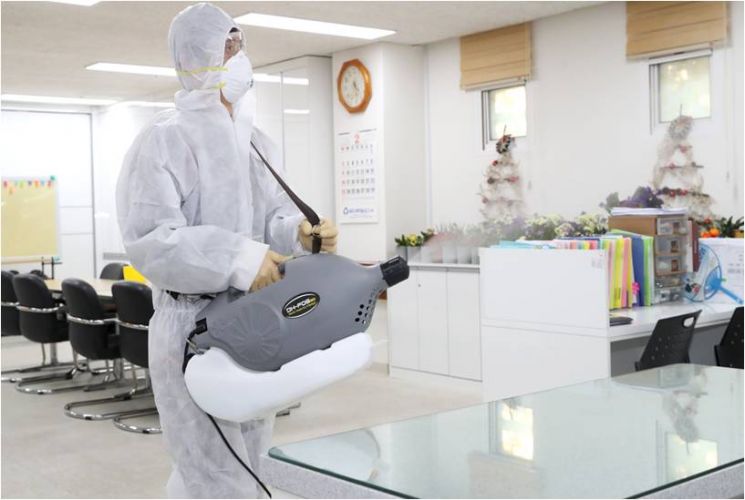
[Asia Economy Reporter Park Jong-il] Seongdong-gu (Mayor Jung Won-oh) will provide 2.5 billion KRW in disaster relief funds to vulnerable groups affected by COVID-19.
The recipients include a total of 936 businesses such as closed small business owners and 3,586 unemployed youth or taxi workers.
Amid the severe period caused by the spread of the COVID-19 Omicron variant and the increase in confirmed cases, the district has prepared active livelihood and economic support measures to ensure no groups are left out of support, including eight groups excluded from government and Seoul city disaster relief payments and taxi workers (individual and corporate) who are included but require additional support.
Accordingly, 10 million KRW will be provided to seven village bus companies experiencing operational crises due to COVID-19, and 1 million KRW each to 163 daycare centers, 13 local children's centers, and 28 kindergartens. Elderly care facilities (19 locations) will receive between 500,000 and 1 million KRW, religious facilities (196 locations) will be provided with quarantine supplies worth 500,000 KRW, and 510 small business owners who have unfortunately closed due to COVID-19 business difficulties will receive 500,000 KRW.
Approximately 1,500 unemployed youth aged 19 to 34 who graduated within two years will receive 500,000 KRW in Seongdong Love Gift Certificates as employment encouragement funds to give them strength and courage. Individual and corporate taxi workers, included in government and Seoul city support but severely impacted by COVID-19, will also receive 400,000 KRW in employment stability support funds. Detailed information can be found on the Seongdong-gu website.
One local children's center official among the disaster relief recipients said, "As COVID-19 has prolonged, operations have become increasingly difficult, causing much worry, but we gained great courage from the careful support extended even to local children's centers," expressing gratitude.
Jung Won-oh, Mayor of Seongdong-gu, said, "This disaster relief fund is prepared to provide even a small support to residents struggling due to COVID-19, and we plan to expedite the process to provide support before the Lunar New Year holiday," adding, "We will continue to make active efforts to ensure no groups are excluded from COVID-19 damage support alongside a robust quarantine system."
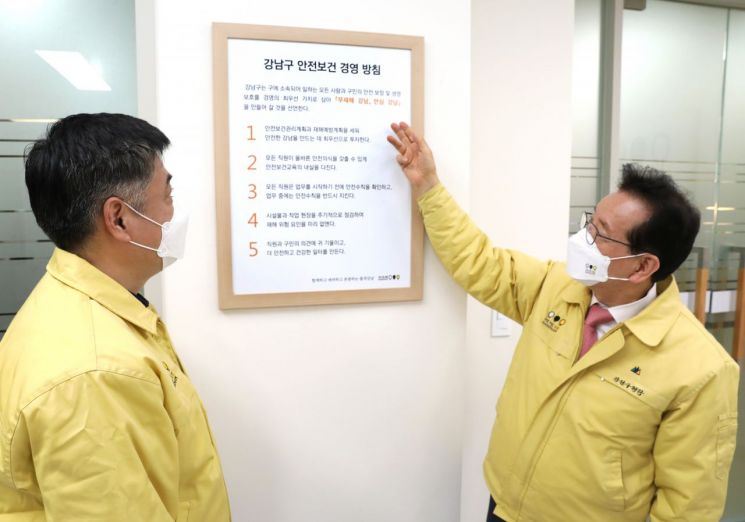
Gangnam-gu (Mayor Jung Soon-gyun) will begin full-scale activities of the newly established 'Serious Accident Prevention Team' from the 27th, when the 'Serious Accident Punishment Act' (hereafter referred to as the Serious Accident Punishment Act) is enforced.
The Serious Accident Punishment Act is a law that strengthens criminal penalties for business owners and management responsible for safety and health obligations when fatal accidents occur in industrial sites. Gangnam-gu has been conducting employee education since the end of last year on the background of the law's enforcement and accident prevention measures with the goal of "Zero Accident Gangnam, Safe Gangnam."
Gangnam-gu also plans to form the 'Gangnam-gu Safety Management Advisory Group' composed of experts in industrial accidents, construction, and health fields and establish a work system that allows workers to actively identify risk factors. Additionally, it will build an 'Integrated Serious Accident Prevention System' to link the identification and action status of risk factors at construction sites and workplaces within the district to the Smart Mayor's Office, serving as a 'control tower' for serious accident prevention.
Jung Soon-gyun, Mayor of Gangnam-gu, said, "The Serious Accident Prevention Team, composed of safety and health managers, will establish comprehensive plans to prevent industrial and citizen accidents," adding, "Since the purpose of the Serious Accident Punishment Act is more about 'prevention' than punishment, we will support the proper operation of safety and health management systems at industrial sites and continuously monitor them."
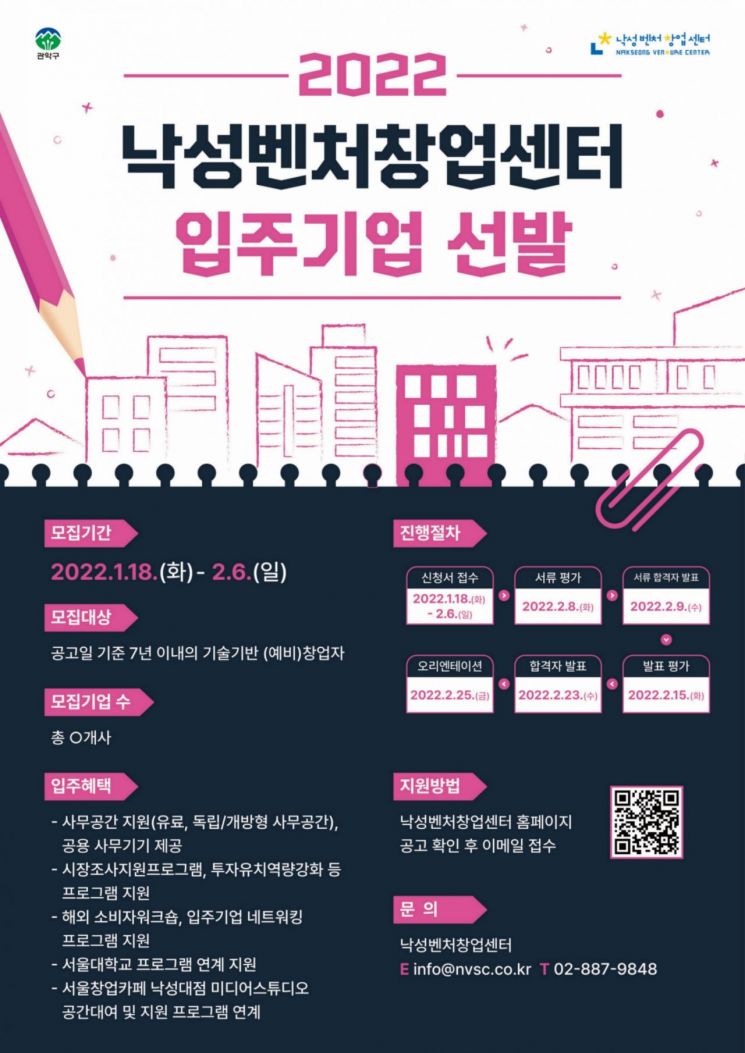
Gwanak-gu (Mayor Park Jun-hee) announced that it is recruiting resident companies for 2022 at the Nakseong Venture Startup Center located at Nakseongdae-ro 2 within the Venture Business Promotion District.
The district is promoting the 'Gwanak S Valley' project to create a global startup hub where universities, companies, and the community coexist, based on Seoul National University's excellent talent, technology, and youth assets, aiming to create quality jobs and revitalize the local economy.
Once a barren land for startups, the district has established 13 startup infrastructure facilities over three years to develop 'Nakseong Venture Valley' and 'Sillim Startup Valley' as two major hubs for venture and startup activities.
Currently, 112 startup companies reside there with 711 startup activists actively engaged. Over the past three years, resident companies have achieved 20.5 billion KRW in sales, attracted 38.7 billion KRW in investments, and been selected for support projects worth 9.8 billion KRW.
The recruitment target for the Nakseong Venture Startup Center is technology-based (pre-)startups within seven years of establishment as of the announcement date. Selection will be through a first-stage document review and a second-stage presentation evaluation. Bonus points during evaluation include recommendation letters from VCs, accelerators, or related organizations (1 point), and venture company certification (2 points), valid only if issued after the announcement date.
Available spaces include independent rooms for 6 people (2 rooms), 5 people (2 rooms), 4 people (2 rooms), and 9 open seats. Space allocation depends on the number of employees of the selected companies. Selected companies will be provided office space at low rent and access to shared meeting rooms and various OA facilities.
The residency period is one year, extendable up to two years through an extension evaluation.
Additionally, the Nakseong Venture Startup Center offers startup support programs such as market research, investment linkage, expert mentoring, and IR programs to effectively enhance companies' growth and survival potential. From this year, business funding support will also be provided to resident companies based on evaluations.
The application period is until February 6. Applicants can apply after checking the notice on the Nakseong Venture Startup Center website. Inquiries about resident company selection can be made by phone or email (jskim@nvsc.co.kr).
Meanwhile, 'Gwanak S Valley' was designated as a Venture Business Promotion District by the Ministry of SMEs and Startups on the 10th. Designation exempts venture companies residing in the district from 37.5% of property tax and acquisition tax, waives various charges such as development and traffic inducement charges, and provides various benefits including technology commercialization, marketing, and education consulting.
The district expects the designation to accelerate the Gwanak S Valley project.
A district official said, "We will build a sustainable startup ecosystem in the region by fostering startups utilizing excellent technology and talent," adding, "We have prepared various programs that are practically helpful to resident companies, so we hope many (pre-)startup entrepreneurs will apply."
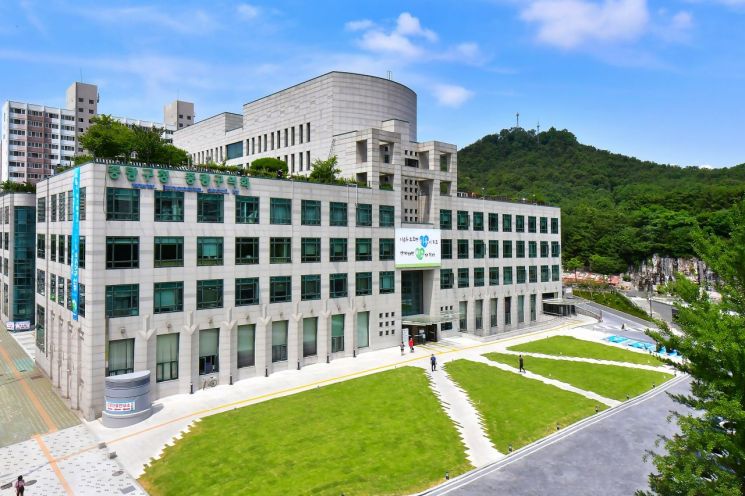
Jungnang-gu (Mayor Ryu Kyung-gi) is implementing a livelihood measure to provide disaster relief funds to industries suffering from the prolonged COVID-19 pandemic, closed small business owners, and unemployed youth. The support funds are expected to be paid sequentially before the Lunar New Year.
This livelihood measure was prepared following the agreement of the Seoul Metropolitan Council of District Mayors on the 21st, focusing on resolving blind spots in government and Seoul city support. The district is concentrating support on small business owners and vulnerable groups and is promoting sequential payments by sector before the Lunar New Year holiday.
The targets include ▲individual and corporate taxi drivers (400,000 KRW per person) ▲daycare centers (1 million KRW per facility) ▲local children's centers (1 million KRW per facility) ▲elderly care facilities (500,000 to 1 million KRW per facility) ▲village bus companies (10 million KRW per company) ▲closed small business owners (500,000 KRW per company) ▲unemployed youth (Seongnang Love Gift Certificates worth 500,000 KRW per person) ▲kindergartens (1 million KRW per facility) ▲religious facilities (500,000 KRW per facility).
The district plans to first provide disaster relief funds totaling 2.5 billion KRW starting from the 28th to about 5,800 companies and individuals including taxi drivers, daycare centers, local children's centers, elderly care facilities, and village bus companies. Kindergartens, religious facilities, closed small business owners, and unemployed youth will be supported sequentially.
In particular, Jungnang-gu will additionally invest 500 million KRW to supply quarantine supplies to multi-use facilities and traditional markets in preparation for the surge in confirmed cases due to the Omicron variant. Quarantine supplies such as masks and hand sanitizers will be quickly distributed from February to establish a dense quarantine network.
Ryu Kyung-gi, Mayor of Jungnang-gu, said, "I hope this livelihood measure fills the support blind spots and provides practical help to those desperately needing support due to the prolonged COVID-19," adding, "We will carefully ensure that support is provided as quickly and smoothly as possible."
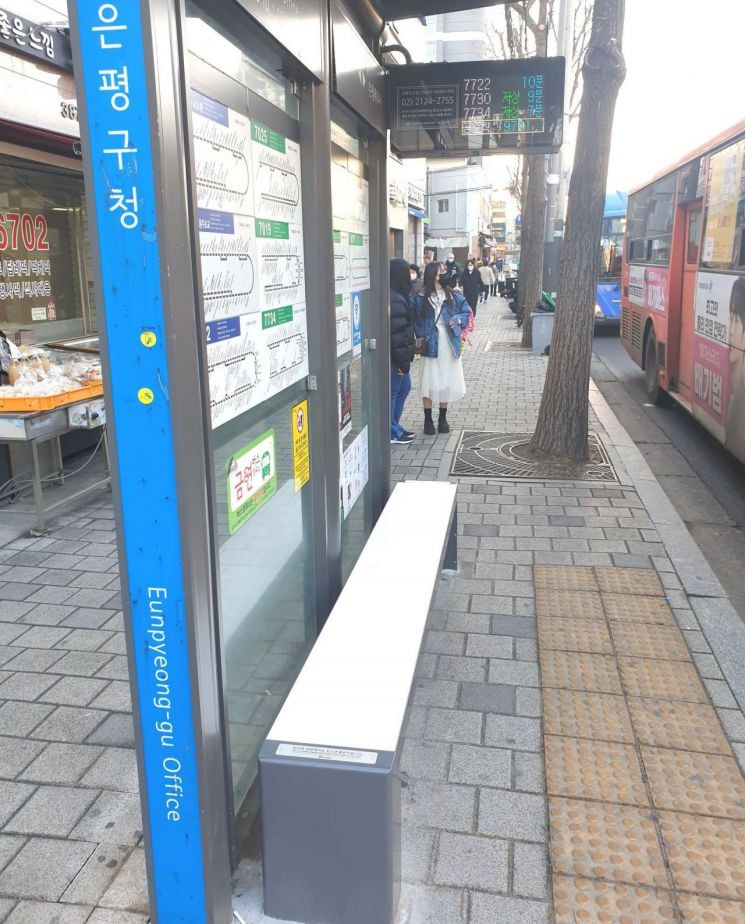
There is a place where warm warmth blooms amid the cold weather these days. It is the bus stops in Eunpyeong-gu equipped with heated seats.
Eunpyeong-gu (Mayor Kim Mi-kyung) announced that it has installed 'heated seats at bus stops' so that residents can wait warmly during winter at bus stops.
The heated seats have been installed at a total of 143 locations along Yeonseo-ro (28 locations), Bukhansan-ro (16 locations), and Eunpyeong-ro (12 locations), all bus stops along streets where electricity supply is available.
The heated seats are designed to automatically operate and maintain 38°C when the outside temperature drops below 18°C, not only in winter but also during spring and autumn transitional seasons. Operating hours are from 5 a.m. to 11 p.m.
The district expects the heated seats to provide warmth to residents using buses early in the morning or late at night and serve as a street community space where people can briefly sit and warm up on their way.
Kim Mi-kyung, Mayor of Eunpyeong-gu, said, "I hope residents feel warmth while waiting for the bus. We will continue to create a pleasant environment so that residents can conveniently use public transportation."
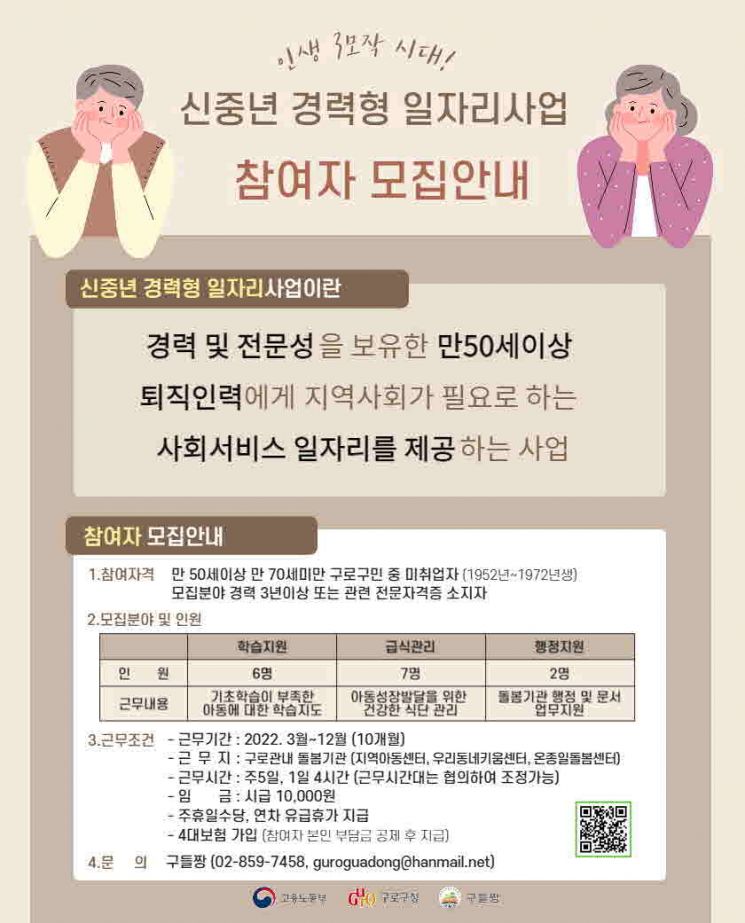
Guro-gu (Mayor Lee Sung) is strengthening child care by utilizing the expertise of retirees in the care sector.
Guro-gu announced on the 27th that it will operate the 'New Middle-aged Social Contribution Activity Support Project' to provide professional personnel to care facilities in the district facing manpower shortages and offer reemployment opportunities to participants.
The 'New Middle-aged Career-type Job Project' is a program that discovers and supports jobs utilizing the expertise and experience of retired professionals.
Guro-gu was selected for the Ministry of Employment and Labor's New Middle-aged Career-type Job Project last year and secured 94.88 million KRW in national funds, operating the project with a total budget of 189.76 million KRW.
The number of selected personnel is six for learning support, seven for meal management, and two for administrative support. Eligibility requires Guro-gu residents aged 50 to under 70 with at least three years of experience or professional certification in the relevant field.
Working conditions are five days a week, four hours a day, with an hourly wage of 10,000 KRW including weekly and annual leave allowances. The work period is from March to December.
Those interested can inquire with the Guro-gu Regional Children's Center Association Guduljjang by the 10th of next month and apply via email. Detailed information on application forms and recruitment fields can be found in the news section of the Guro-gu website.
A Guro-gu official said, "This project will bring vitality to the lives of new middle-aged people and provide professional personnel to social service institutions, achieving two goals at once," adding, "We encourage active participation from interested residents."
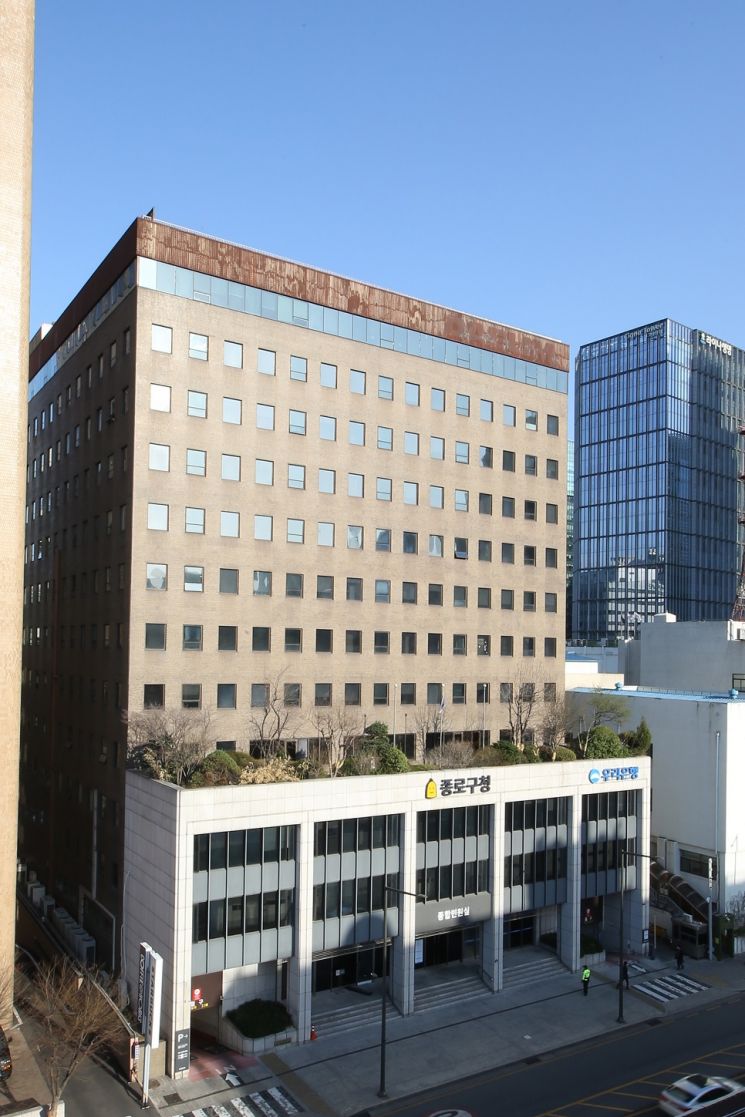
Jongno-gu is promoting the 2022 Apartment Support Project to create a pleasant residential environment and improve the convenience of residents.
The project budget for this year is 160 million KRW, targeting mandatory management apartments and non-mandatory management apartments with 20 or more households.
Examples of support projects include ▲opening fences or passageways and installing/maintaining related facilities ▲renovation of multipurpose facilities such as cafes and lecture rooms for residents' common use ▲maintenance of restrooms or children's playgrounds open to nearby residents ▲repair and dredging of outdoor sewers.
Additionally, projects include ▲repair of senior citizen centers ▲installation of facilities for the disabled ▲expansion and repair of outdoor parking lots ▲installation/improvement of garbage collection and eco-friendly facilities, delivery facilities ▲tree planting ▲improvement of workplaces for workers such as security guards within complexes. The cost-sharing ratio between Jongno-gu and apartments for each project is detailed on the district office website. However, new facility installations or purchases unrelated to the project and apartments that have not passed usage inspection by December 31 of last year are excluded.
Applications must be submitted by 6 p.m. on February 11 to the Residential Regeneration Division of the district office by visit or mail (only those arriving by the deadline are accepted), including documents proving the resolution of the residents' representative meeting (autonomous association), project plan, and estimates. Application forms must be downloaded from the administrative information - notices/announcements section of the district office website.
After receipt, the district will conduct departmental review, on-site inspection, and deliberation committee review, and notify the final selected complexes in March.
For more information, check the district office website or contact the Residential Regeneration Division.
Last year, Jongno-gu supported costs for 14 projects in 12 complexes, including maintenance of children's playgrounds, road and security light repairs, exterior wall painting, and external fence construction. For construction over 10 million KRW, expert consultation was sought, significantly improving residents' living environment and resolving safety issues, thereby increasing resident satisfaction.
A district official explained, "This is a continuously conducted project to create a pleasant residential environment and contribute to community revitalization."
© The Asia Business Daily(www.asiae.co.kr). All rights reserved.
![User Who Sold Erroneously Deposited Bitcoins to Repay Debt and Fund Entertainment... What Did the Supreme Court Decide in 2021? [Legal Issue Check]](https://cwcontent.asiae.co.kr/asiaresize/183/2026020910431234020_1770601391.png)

















