Revealing ‘mtIF3’ with Proprietary Fluorescent Sensor Technology
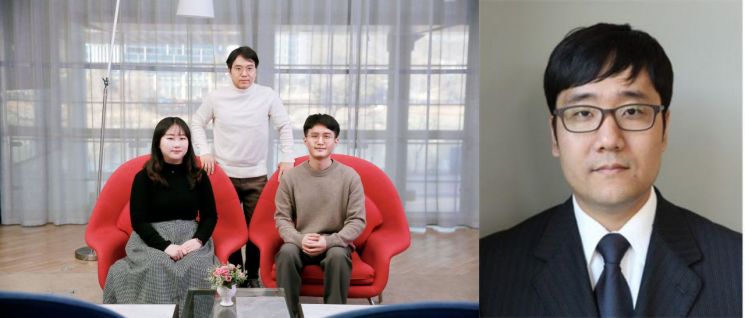 Ulsan National Institute of Science and Technology (UNIST) has discovered a protein that supplies energy necessary for brain neural circuits. (From left: Researcher So-yeon Lee, Professor Jae-ik Kim, Researcher Dong-geun Park, Professor Jeong-hoon Lim)
[Asia Economy Yeongnam Reporting Headquarters Reporter Se-ryeong Lee] Researchers at Ulsan National Institute of Science and Technology (UNIST) have discovered a protein that supplies the energy needed for the brain's neural circuits to reorganize when a specific part of the brain is injured or when learning a new language.
When a specific part of the brain is stimulated, such as by impact or learning a new language, the brain's neural circuits are very busy growing projections that connect circuits and reorganizing.
The research team led by Professors Jae-ik Kim and Jeong-hoon Lim from the Department of Life Sciences at UNIST revealed that a protein called ‘mtIF3’ is involved in the growth and reorganization of brain nerve cells.
The research was conducted with support from the National Research Foundation of Korea’s Leader Research, Mid-career Research, Basic Research Laboratory support projects, and the Seokyeongbae Science Foundation.
The researchers stated that the mtIF3 protein promotes the supply of energy necessary for the development of growth cones, which guide the growth direction of nerve cell axons.
This protein performs its role through the regulation of mitochondrial translation, where mitochondria are organelles within cells that produce energy.
Mitochondrial translation refers to the process by which proteins encoded in the form of DNA within mitochondria are synthesized, and the translated proteins are used in the energy synthesis process.
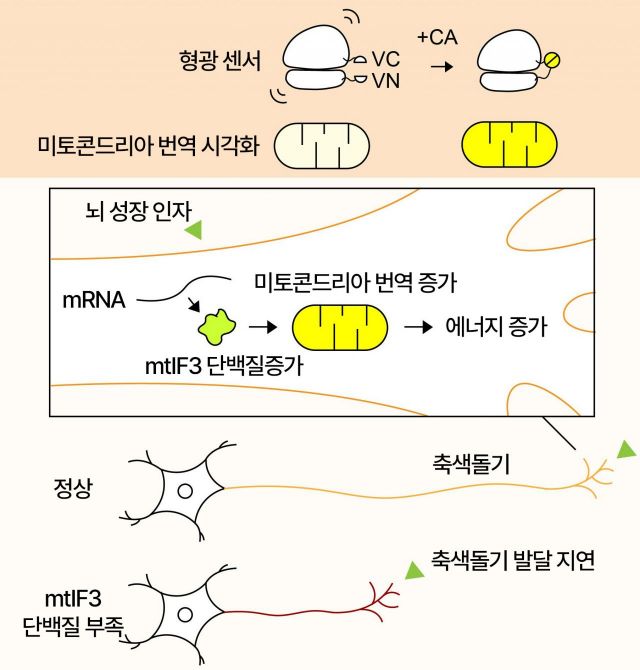 A research figure showing the principle of the fluorescent sensor and the effect of mtIF3 protein on regulating neuronal cell growth through the promotion of mitochondrial translation.
The research team developed a sensor technology that operates on the principle that fluorescence is emitted when two substances necessary for mitochondrial translation meet, and found that the fluorescence intensity increases as translation is activated.
When mtIF3 protein was synthesized at the nerve cell terminals, the fluorescence intensity detected by the sensor increased, and when this protein was inhibited, nerve cell development was also suppressed.
The researchers emphasized that this is evidence that mtIF3 protein activates mitochondrial translation to assist nerve cell development, and that this study is the first to reveal that mtIF3 protein is one of the locally translated proteins.
mtIF3 is originally a protein encoded in the cell nucleus and is known as a mitochondrial translation initiation factor.
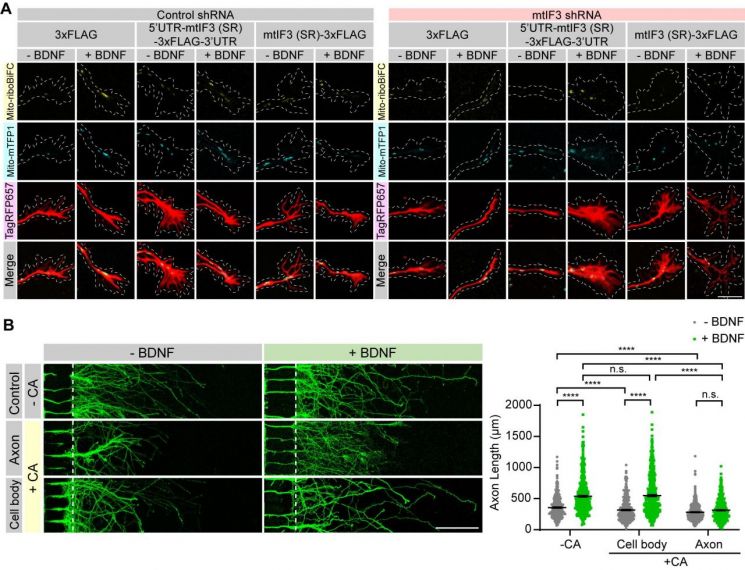
The process of receiving transcript mRNA from the cell body and converting it into protein instead of receiving completed proteins is called local protein translation, which occurs because synthesizing and using proteins directly at the cell terminal allows the cell to perform its functions faster and more efficiently than transporting proteins from the cell body.
A transcript is the protein information contained in DNA transferred to RNA; if DNA is the original source of protein genetic information, RNA is likened to a copy of that information.
The research team of the late Professor Kyung-tae Min, who passed away in 2020, discovered the transcript (mRNA) of mtIF3 protein at nerve cell terminals and designed this experiment.
The results of this study, co-corresponding authored by Professor Min, were published on January 7, 2022, in ‘BMC Biology,’ a leading journal in the field of life sciences.
The research team stated, “This technology can be applied to various studies to elucidate how nuclear protein synthesis and mitochondrial protein synthesis communicate to regulate cell functions in response to changes in environment and energy demands.”
© The Asia Business Daily(www.asiae.co.kr). All rights reserved.
![User Who Sold Erroneously Deposited Bitcoins to Repay Debt and Fund Entertainment... What Did the Supreme Court Decide in 2021? [Legal Issue Check]](https://cwcontent.asiae.co.kr/asiaresize/183/2026020910431234020_1770601391.png)

















