Administrative Notices in the First Half of This Year, Manufacturing Allowed Only for 6 Months Thereafter
Modamoda "Existential Crisis for Domestic SMEs Based on Innovative Technology"
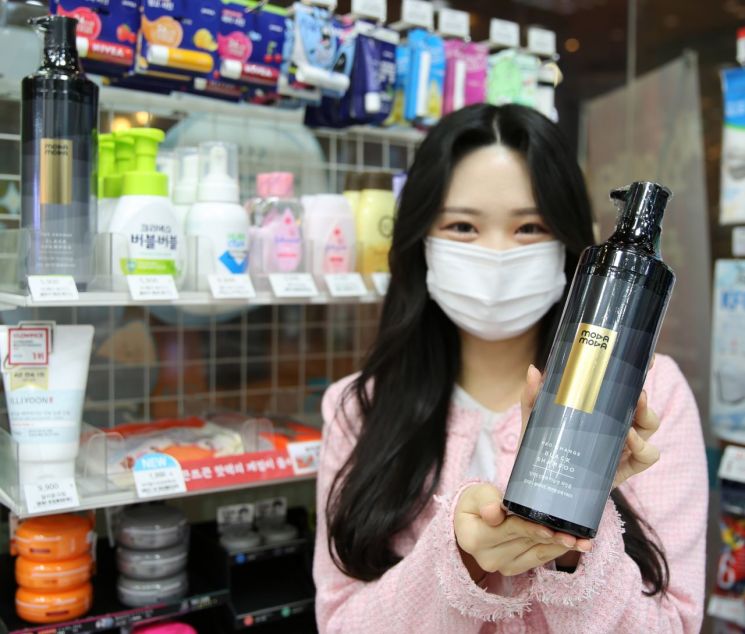
[Asia Economy Reporter Ki Ha-young] The Ministry of Food and Drug Safety (MFDS) has decided to add '1,2,4-Trihydroxybenzene' (THB), the key ingredient in Modamoda shampoo that dyes hair just by washing, to the list of prohibited cosmetic ingredients. In response, Modamoda and KAIST urged a reconsideration of the legislative revision related to product safety, stating that the survival of domestic small and medium-sized enterprises based on innovative technology is at stake.
On the 26th, the MFDS announced that following the conclusion of the administrative notice for the 'Regulations on Cosmetic Safety Standards, etc.,' it will proceed with the amendment process to designate THB as a prohibited ingredient in cosmetics and add it to the list. After subsequent procedures such as regulatory review, the revision is expected to be completed within the first half of this year, and six months after the revision date, the ingredient will no longer be allowed for use in cosmetic manufacturing.
THB is an ingredient included in hair dye products, appearing as a light beige powder. It dissolves well in water and reacts with oxygen in the air to turn black, making it mainly used in hair dyes.
To evaluate the safety of THB, the MFDS conducted experiments on non-clinical genetic toxicity, skin irritation, skin sensitization, reproductive and developmental toxicity, and skin absorption. As a result, THB was assessed as a substance that cannot exclude potential 'genotoxicity' causing mutations in genetic material (DNA). It was also found to have mild skin irritation and skin sensitization effects.
However, the MFDS explained that ▲ no significant hazards were confirmed in other test items such as reproductive and developmental toxicity, and ▲ considering that Europe has added it to the prohibited list and is enforcing manufacturing and sales bans with grace periods, the decision was made accordingly.
At expert advisory meetings, it was also evaluated that the possibility of genotoxicity of THB cannot be excluded, and it was concluded that for genotoxic substances, banning use regardless of usage amount or environment is appropriate. It was also noted that even though it is a rinse-off shampoo, since it is massaged directly onto the scalp, which has pores and a high absorption rate, it is difficult to judge that the absorption rate is low given the frequent use characteristics of shampoo.
The MFDS stated, "We will continue to conduct hazard assessments of 'cosmetic ingredients' and monitor foreign regulatory trends to ensure the supply of safe cosmetics to the public."
In response, Modamoda said, "We are currently conducting additional tests to prove the potential genotoxicity concerns claimed by the MFDS" and requested a reconsideration of the legislative revision.
Modamoda is currently conducting ▲ the first genotoxicity tests including OECD standard bacterial reverse mutation, chromosomal aberration test, and skin sensitization test (to be completed by April 2022, conducted by ChemOn), ▲ the second human application test analyzing THB residue in hair follicles of actual Modamoda users at Bundang Seoul National University Hospital (clinical cooperation among KSRC-Korea Skin Research Center, KAIST, and ChemOn), and ▲ the third genotoxicity test (to be completed in the first half of 2022 by KCL-Korea Conformity Laboratories or KTR-Korea Testing & Research Institute).
Modamoda countered, "Can hair dyes, which have been widely used by the public for decades, be considered less safe than Modamoda shampoo?" and questioned, "Why are these regulations not applied to over 1,000 products currently sold domestically that contain ingredients confirmed as genotoxic by the European Union (EU)?"
They further emphasized, "The EU report that forms the basis of this amendment allows multiple interpretations by experts," and urged, "We once again request the MFDS to postpone the announcement of this amendment until the additional genotoxicity test results of our products are available and to reconsider the legislative revision so that our products, such as cleansers, are eventually exempted from regulation."
© The Asia Business Daily(www.asiae.co.kr). All rights reserved.
![User Who Sold Erroneously Deposited Bitcoins to Repay Debt and Fund Entertainment... What Did the Supreme Court Decide in 2021? [Legal Issue Check]](https://cwcontent.asiae.co.kr/asiaresize/183/2026020910431234020_1770601391.png)















