Kim Boo-kyum "Considering Expansion of Medication Age Limit to 50 Years"
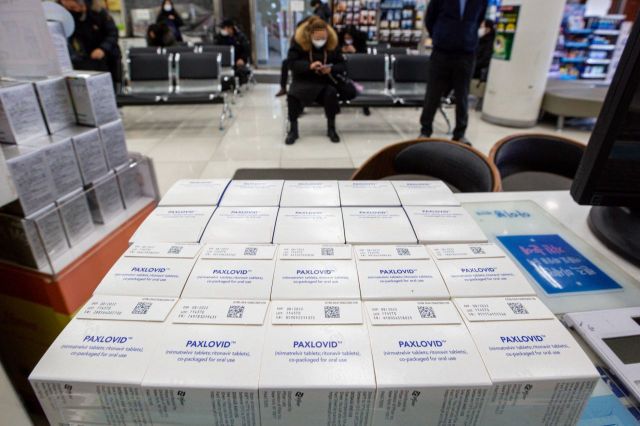 On the 14th, the oral COVID-19 treatment Paxlovid was delivered to a pharmacy in Guro-gu, Seoul. Photo by Jinhyung Kang aymsdream@
[Asia Economy Reporter Lee Chun-hee] An additional 11,000 doses of Pfizer's oral COVID-19 treatment, Paxlovid, will arrive in South Korea on the 30th.
The government announced on the 26th that 11,000 doses of Paxlovid are scheduled to arrive domestically on the 30th. This is the first additional shipment since the initial introduction of 21,000 doses on the 13th. A government official stated, "Future import schedules and quantities will be disclosed once the domestic import schedule is confirmed."
Although administration began on the 14th, the day after the initial import, actual usage has been sluggish. As of the 20th, only 109 patients had been prescribed the medication over the course of about a week. Prescription targets were mainly high-risk groups such as those aged 65 and older or immunocompromised individuals, but there are 23 ingredients that should not be taken together with Paxlovid in South Korea alone, and many medications related to underlying conditions common among high-risk groups, such as angina, hyperlipidemia, and arrhythmia, limit prescriptions.
In response, authorities lowered the eligible prescription age to 60 starting from the 22nd. Since then, the number of patients receiving the medication has somewhat increased, and Prime Minister Kim Boo-kyum explained yesterday, "The approximately 200 people who have been treated so far have definitely experienced positive effects." He added, "We will actively use the oral treatment even if it means reducing the dosage as much as possible," expressing plans to lower the eligible age for treatment to 50.
The institutions and methods for administration are also being diversified. Initially, the treatment was available to home care patients and those admitted to residential treatment centers, but the target has been expanded to include elderly care facilities and nursing hospitals. Furthermore, 233 infectious disease specialized hospitals are expected to be allowed to administer the treatment starting from the 29th. For 21 dedicated nursing hospitals, 1,500 doses, equivalent to 50% of total beds, will be supplied in advance to enable direct prescription and dispensing.
© The Asia Business Daily(www.asiae.co.kr). All rights reserved.
![User Who Sold Erroneously Deposited Bitcoins to Repay Debt and Fund Entertainment... What Did the Supreme Court Decide in 2021? [Legal Issue Check]](https://cwcontent.asiae.co.kr/asiaresize/183/2026020910431234020_1770601391.png)















