[Seoul District News] Seongdong-gu Wins Legal Ruling on Free Transfer Maintenance Infrastructure Shared Property Lease Fees... Innovation Education Local Government Council and National Lifelong Learning Cities Council Announce Autonomous Education Declaration... Geumcheon-gu Provides Up to 3 Million KRW Support for SMEs Participating in Domestic and International Exhibitions... Nowon-gu Receives Excellent Grade in Anti-Corruption for 2021, Rising Two Levels from Previous Year... Dobong-gu Begins Crackdown on Charging Obstruction Acts from January 28 under Revised Act on Promotion of Environmentally Friendly Vehicle Development and Distribution... Yangcheon-gu Recruits Resident Companies for Social Economy Support Center...
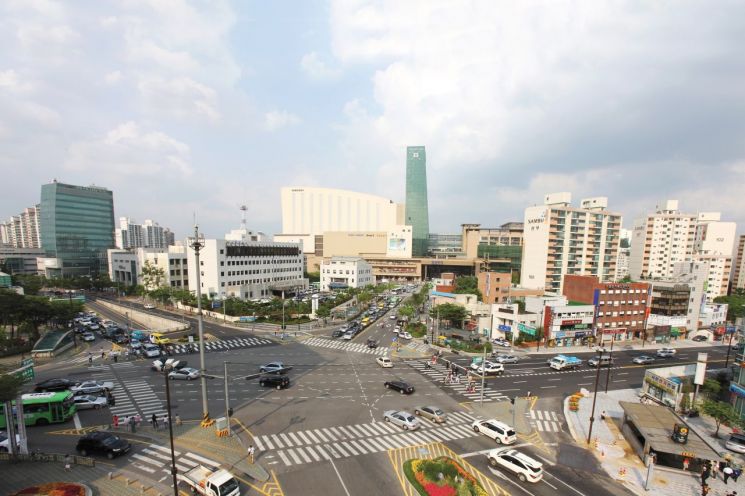
[Asia Economy Reporter Park Jong-il] Seongdong-gu (Mayor Jung Won-oh) has won a lawsuit regarding the imposition of public property lease fees through thorough management of national and public shared property, with the related lawsuit amount exceeding 25.3 billion KRW.
At the end of last year, the district set a precedent by consecutively winning two Supreme Court lawsuits confirming the legality of public property lease fees imposed on the occupancy and use of maintenance infrastructure within housing redevelopment maintenance zones, which are transferred free of charge to redevelopment associations under the Urban and Residential Environment Improvement Act.
Among national and public shared lands within housing redevelopment maintenance zones, land transferred free of charge to associations must pay usage and lease fees sequentially until completion when ownership is transferred, following certain administrative procedures. Usage fees are exempted for administrative properties under the Urban and Residential Environment Improvement Act, but lease fees arise once the property is re-designated as general property after use cessation.
Before the amended law took effect on February 9, 2018, there was no exemption for lease fees on general property. The district imposed lease fees from the start of occupancy considered as general property (start of construction) until completion when transferred free of charge to the association. The district won the lawsuit filed by plaintiffs who opposed this.
By objectively and rationally interpreting the law and actively carrying out administrative procedures, the district has lawsuits pending in various courts involving the same issues, with a total lawsuit amount exceeding 25.3 billion KRW, including 12.4 billion KRW for the current case.
The Supreme Court's final ruling in favor of Seongdong-gu after intense legal battles since 2018 is evaluated to be due to meticulous and experienced management of national and public shared property.
Since 2017, the district has operated a property specialist system, enhancing expertise in property management through two dedicated staff members and providing advice across all areas from acquisition to management and disposal of national and public shared property, improving overall administrative efficiency related to administrative property.
For professional and complex management of national and public shared property, the district organically interpreted various adjacent individual laws such as the Housing Act and the Act on Acquisition and Compensation of Land for Public Projects in relation to the entire legal system, promoting flexible administration through active legal interpretation.
In particular, during litigation, the district actively responded with meticulous logical arguments, leading to a favorable ruling and leaving the possibility of becoming a representative precedent for similar cases. Courts currently withholding judgment on similar lawsuits are closely watching this Supreme Court ruling by Seongdong-gu, which is expected to be good news for other local governments.
Jung Won-oh, Mayor of Seongdong-gu, emphasized, “National and public shared property is a valuable asset of the residents. We will continue to be vigilant and consistently carry out proactive administration as guardians of administration.”
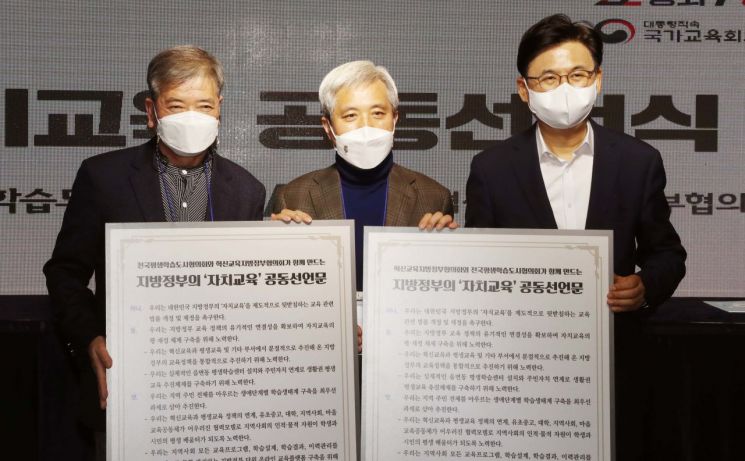 Park Sung-soo, Mayor of Songpa District, is holding the 'Autonomous Education Declaration' for a commemorative photo. (From left) Kim Jin-kyung, Chairperson of the National Education Council, Kwak Sang-wook, Mayor of Osan, Park Sung-soo, Mayor of Songpa District
Park Sung-soo, Mayor of Songpa-gu and Chairperson of the Innovative Education Local Government Council, jointly announced a local government ‘Autonomous Education’ declaration with the National Lifelong Learning Cities Council (Chairperson Kwak Sang-wook, Mayor of Osan) at 2 p.m. on the 25th at the Sapphire Ballroom of Lotte Hotel Seoul in Jung-gu, Seoul.
The Innovative Education Local Government Council is an administrative council formed by 65 local governments to discover and policyize regional issues and educational agendas, now in its fifth year. Led by Chairperson Park Sung-soo, the council promotes various regional education projects to supplement public education.
This event was organized in conjunction with the ‘National Lifelong Learning Cities Council Regular General Meeting & Policy Forum’ to share diverse opinions on autonomous education among member cities of both councils.
In particular, participating cities declared ‘Autonomous Education’ to open an era of autonomous education that resonates with the central government, local governments, and local residents.
The declaration includes commitments such as ▲ urging the amendment and enactment of education-related laws to institutionally support ‘Autonomous Education,’ ▲ efforts to establish administrative and financial systems for autonomous education, and ▲ promoting various collaborations responding to climate change, population crisis, and socioeconomic polarization, defining ‘Autonomous Education’ as a new platform pursuing regional community coexistence.
The declaration was participated in by 65 cities of the Innovative Education Local Government Council and 182 cities of the National Lifelong Learning Cities Council.
At the event, following a video congratulatory message from Minister of Education Yoo Eun-hye, Kim Jin-kyung, Chairperson of the Presidential National Education Council, attended and presented on ‘Future Education and the Role of Local Communities,’ discussing cooperation between central and local governments for autonomous education.
Park Sung-soo, Mayor of Songpa-gu and Chairperson of the Innovative Education Local Government Council, stated, “It is now time to shift the paradigm of future education to autonomous education. We will do our best to expand a truly autonomous decentralized education system and connect various educational stakeholders such as central and local governments, regions and schools, and communities into one platform called autonomous education.”
Meanwhile, Mayor Park Sung-soo has established ‘Songpa SSEM (Songpa Smart Education Model),’ an independent education support system, as a core project of the 7th local government term, and participates as a member of the Education Recovery Support Committee operated by the Ministry of Education, leading efforts to strengthen regional education capacity as an important partner of the central government.
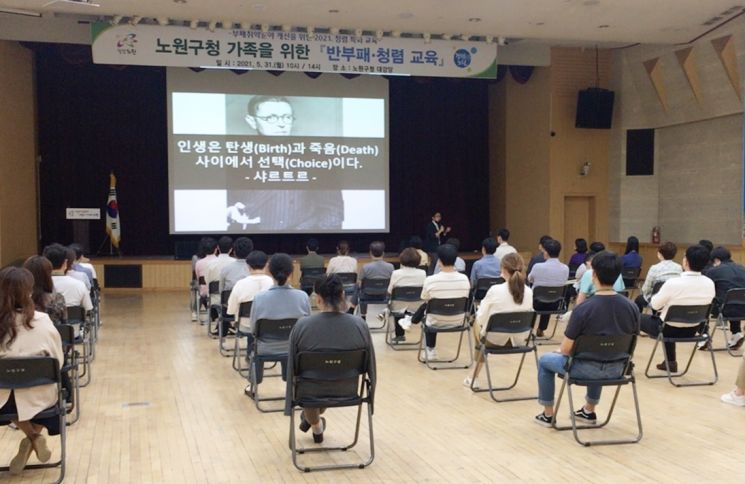
Nowon-gu (Mayor Oh Seung-rok) announced that it received a grade 2 in the 2021 Anti-Corruption Policy Evaluation, rising two levels from the previous year.
The Anti-Corruption Policy Evaluation is a system conducted annually by the Anti-Corruption and Civil Rights Commission since 2002 to raise the integrity level of the public sector by evaluating anti-corruption activities and achievements autonomously pursued by public institutions at all levels.
This year, 273 institutions were evaluated on anti-corruption policies implemented from November 2020 to October last year. The evaluation covered four areas: planning, execution, performance, and dissemination, assessed through seven unit tasks and 19 indicators including ▲ establishment of anti-corruption plans, ▲ expansion of participation in integrity policies, ▲ establishment and operation of anti-corruption systems, ▲ anti-corruption policy performance, and ▲ efforts to disseminate anti-corruption policies, and announced in five grades.
The district scored higher than last year in six unit tasks, rising two levels in the overall grade. It received particularly high evaluations in the operation of anti-corruption systems and anti-corruption policy performance tasks.
The operation of anti-corruption systems evaluates whether integrity education is provided to senior officials including the head of the institution and all employees, the operation of anti-corruption systems, and stable establishment of public finance recovery systems. Anti-corruption policy performance is determined by improvements in the institution’s comprehensive integrity and the implementation of anti-corruption plans; the district scored above average and implemented all 20 detailed tasks.
The district explained that it likely received high evaluations due to actively implementing anti-corruption plans such as ▲ establishing comprehensive measures to eradicate power harassment in Nowon-gu, ▲ enacting the “Seoul Nowon-gu Ordinance on Prohibition of Workplace Harassment,” ▲ activating participation of citizen auditors, and ▲ establishing improvement measures to block fraudulent claims to spread a culture of integrity within the organization.
Based on this result analysis, the district plans to discover and promote various policies to further enhance anti-corruption and integrity culture.
Oh Seung-rok, Mayor of Nowon-gu, said, “Integrity is fundamental to trusted governance. We will continue to do our best to create a communicative organization and transparent administrative culture.”
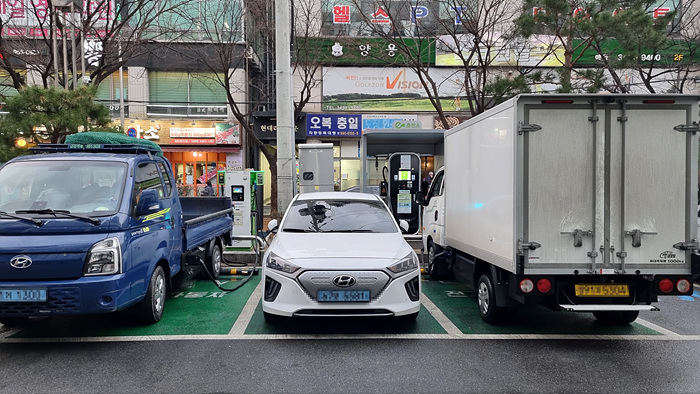
Dobong-gu (Mayor Lee Dong-jin) will directly enforce regulations against obstruction of electric vehicle charging in all charging zones starting January 28.
The district announced that enforcement follows the full implementation of the amended Act on the Development and Promotion of Environmentally Friendly Automobiles, announced in July 2021 and effective from January 28, 2022.
Main points include the transfer of enforcement authority for electric vehicle charging obstruction from metropolitan to basic local governments, expansion of enforcement targets, mandatory installation and increased ratio of electric vehicle charging facilities, and opening of chargers in the public sector.
From January 28, obstruction of electric vehicle charging in about 300 charging zones within Dobong-gu will be monitored, and violators will be fined.
Main violations include ▲ parking general vehicles in charging zones, ▲ placing objects or parking in charging zones, surrounding areas, or access roads to obstruct charging, ▲ continuing to park after charging is complete, and ▲ intentional damage to charging facilities or markings. Fines range from 100,000 to 200,000 KRW.
Additionally, with the expansion of mandatory installation targets and ratios for electric vehicle charging facilities from January 28, the district will guide prompt establishment of charging facilities. The amended law mandates installation of dedicated parking and charging facilities in public buildings and public-use facilities with 50 or more parking spaces, and apartments (multi-family housing) with 100 or more households. The district will publicize that failure to comply within grace periods (1 year for public facilities, 2 years for public-use facilities, 3 years for multi-family housing) will result in correction orders and enforcement fines to prevent disadvantages.
Dobong-gu declared ‘2050 Carbon Neutrality’ in July 2020 and has established and is implementing a greenhouse gas reduction strategy aiming to switch to 100% eco-friendly electric and hydrogen vehicles by 2050. Accordingly, the district plans to expand public rapid chargers to 300 units to enable charging within a 5-minute distance.
Lee Dong-jin, Mayor of Dobong-gu, said, “The transition to eco-friendly vehicles is a timely trend to solve environmental problems. We will strive to create an environment where residents can conveniently use eco-friendly vehicles anywhere.”
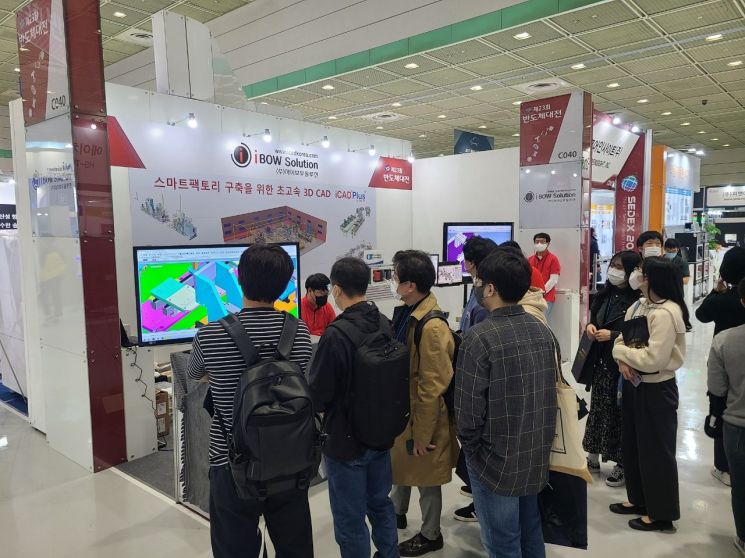
Geumcheon-gu (Mayor Yoo Sung-hoon) announced support for participation fees for domestic and international exhibitions for small and medium-sized enterprises (SMEs) facing difficulties in corporate promotion and market development.
Through the ‘2022 Advanced Industry Exhibition Participation Support Project,’ Geumcheon-gu supports up to 1.5 million KRW for domestic exhibition participants and up to 3 million KRW for international exhibition participants.
The selection targets are 10 companies participating in domestic exhibitions and 5 companies participating in international exhibitions, supporting booth rental fees, interior costs, electricity and telephone charges, and other incidental expenses. Online exhibitions are supported for participation fees.
SMEs located in Geumcheon-gu planning to participate in exhibitions this year can download the application form from the ‘Notices & Announcements’ section on the Geumcheon-gu Office website from January 28 to February 18, fill it out, and submit it in person to the district’s Regional Economy Division.
After internal review and local subsidy deliberation, the district will select supported companies in March and announce the results on the Geumcheon-gu Office website.
Companies with national or local tax arrears, those with 300 or more regular employees or subsidiaries of large corporations, and companies receiving duplicate support from other institutions or local governments are excluded from the review.
Yoo Sung-hoon, Mayor of Geumcheon-gu, said, “Since 2010, Geumcheon-gu’s exhibition support project has helped 301 companies pioneer new markets. We hope this year’s project will be a stepping stone for companies to leap forward, and we will continue to do our best to make Geumcheon-gu a good place to run a business.”
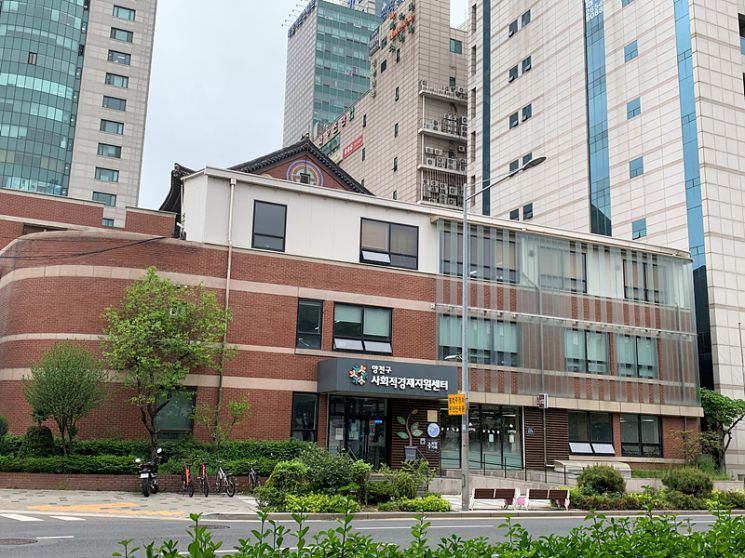
Yangcheon-gu (Mayor Kim Soo-young) will publicly recruit companies to move into the Social Economy Support Center (375 Mokdongdong-ro) from February 3 to 4.
Applicants must be social economy enterprises such as (preliminary) social enterprises, (preliminary) village enterprises, or (social) cooperatives that are not receiving space support from other institutions or organizations.
Additionally, as of the announcement date (January 21), companies must be located in Yangcheon-gu or able to relocate their corporate address to Yangcheon-gu within three months after signing the lease.
The lease period is one year, extendable up to three years after renewal review. The district plans to select two tenant companies through a first round of document and on-site inspections and a second round of committee review. Results will be individually notified in February.
Selected tenant companies can use office spaces (23m², 10m²) on the 2nd floor of the Yangcheon-gu Social Economy Support Center, as well as facilities such as training rooms, meeting rooms, pantries, community spaces, and underground storage.
Companies wishing to apply can download related documents from the district office website’s notice board, fill them out, attach supporting documents, and submit them in person or by mail to the Yangcheon-gu Social Economy Support Center from 9 a.m. on February 3 to 6 p.m. on February 4.
For detailed inquiries about moving into the Yangcheon-gu Social Economy Support Center, contact the district office’s Job and Economy Division.
Kim Soo-young, Mayor of Yangcheon-gu, said, “We will spare no support to help social economy enterprises grow into solid companies that coexist with the community and add social value through office space support.”
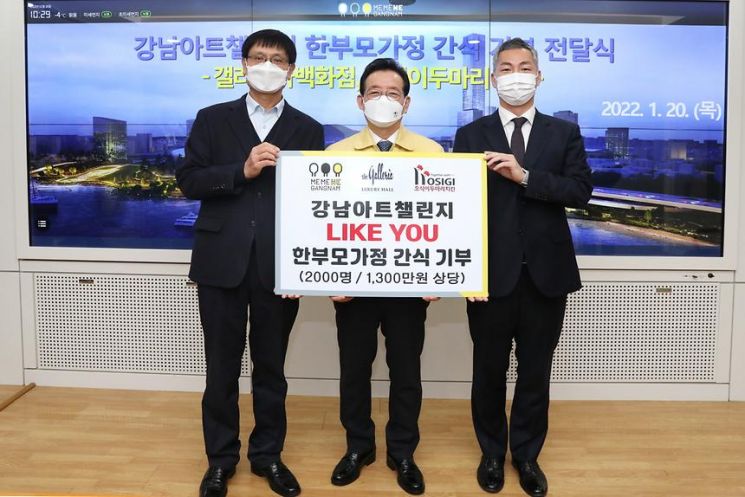
Gangnam-gu (Mayor Jung Soon-kyun), together with sponsors Galleria Department Store and Hosigi Two-Chicken, donated snacks worth 13 million KRW to children from single-parent families on the 20th.
The ‘Gangnam Art Challenge,’ held from December 15 last year to January 9 this year, is a donation campaign where donations for single-parent families accumulate when participants post photos expressing love for neighbors on SNS with the required hashtag (#GangnamArtChallenge).
Starting with Mayor Jung Soon-kyun and Gangnam-gu publicity ambassador LABOUM, singers Baek Ji-young, Ali, Ailee, actors Kang Kyung-heon, Ahn Si-ha, and others participated, with about 340 citizens joining the certification mission.
After the event, Galleria Department Store donated 1,500 rice cakes (worth 7 million KRW), and Hosigi Two-Chicken donated 500 chickens (worth 6 million KRW). The donated items will be delivered to single-parent families through the Gangnam Welfare Foundation during the Lunar New Year holiday.
Jung Soon-kyun, Mayor of Gangnam-gu, said, “I appreciate those who participated in the Gangnam Art Challenge, sharing the intention to convey warm hearts to neighbors in need. We will continue to plan cultural events that embody community values and foster a culture of sharing, caring, and respect to establish a ‘dignified Gangnam’ culture.”
© The Asia Business Daily(www.asiae.co.kr). All rights reserved.
![User Who Sold Erroneously Deposited Bitcoins to Repay Debt and Fund Entertainment... What Did the Supreme Court Decide in 2021? [Legal Issue Check]](https://cwcontent.asiae.co.kr/asiaresize/183/2026020910431234020_1770601391.png)