KAIST Research Team Develops High-Reliability Device Mimicking Synapses
[Asia Economy Reporter Kim Bong-su] Domestic researchers have developed a memory device that can perform computation and storage simultaneously by mimicking neurotransmitters in the brain. It is expected to be applied to the development of next-generation artificial neural network computers that can replace the existing 'Von Neumann' type computers, which inevitably consume time and energy by performing computation and storage separately.
The Korea Advanced Institute of Science and Technology (KAIST) announced on the 25th that Professor Choi Se-hyun's research team from the Department of Electrical Engineering and Computer Science developed a highly reliable device (synapse device) that mimics the neurotransmitter synapse of our brain by utilizing a next-generation resistive switching device (memristor) with a porous structure. A memristor is a memory device that combines memory and resistor, remembering all previous states. In other words, it remembers the direction and amount of current that passed just before even when the power supply is cut off.
The research team designed a highly reliable synapse device by composing the medium in a hybrid form that mixes the existing cation resistive switching method and anion resistive switching method, using a porous structure made of amorphous material and a buffer layer. By forming this structure through a low-temperature process, it can be integrated and stacked on existing silicon complementary metal-oxide-semiconductor (CMOS), and it is expected to be actively applied to the production of high-density large-capacity logic and artificial neural network computing systems.
The research results were published in the January issue of the international academic journal Science Advances.
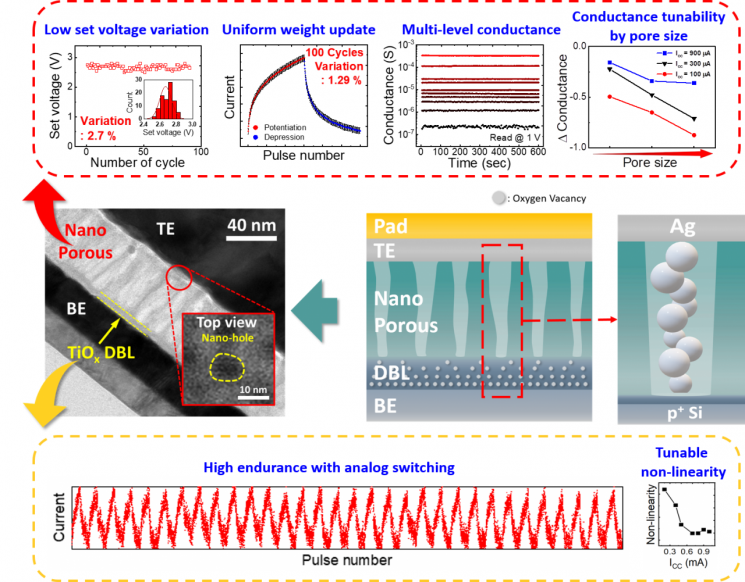 Figure 1. Images of the devices fabricated in this study and the characteristics induced by each structure. Provided by KAIST
Memristors are attracting attention as next-generation devices that can be used in next-generation non-Von Neumann architectures for in-memory computing, weight storage, and vector-matrix multiplication with low power consumption. However, to create practical large-scale neural computing systems with existing memristors, research is needed to secure the reliability of individual memristor devices.
The degradation of device reliability traditionally originates from defects and the random movement of ions within amorphous materials. Previously, Professor Choi Se-hyun succeeded in securing device reliability by controlling defects and the random movement of ions using single-crystal materials. However, using single crystals requires high-temperature processes, making integration and stacking on existing silicon CMOS difficult, thus limiting the increase in integration density.
In this study, the research team designed a cation control layer with a porous structure and an anion control layer used as a buffer layer using existing amorphous materials to secure reliability, and produced devices that can be stacked and integrated. The team was able to improve reliability by more than six times compared to existing devices, while simultaneously securing other characteristics necessary for artificial synapse devices.
Professor Choi said, "This research suggests a direction for stable large-scale array production and can contribute to building a platform suitable for application fields requiring big data processing, such as neuromorphic computing based on next-generation devices. The development of next-generation device-based technologies, which is actively underway in companies in the United States and Taiwan, should also be revitalized domestically. By presenting a methodology that can be structurally applied to other material systems, we expect active research to proceed."
© The Asia Business Daily(www.asiae.co.kr). All rights reserved.
![User Who Sold Erroneously Deposited Bitcoins to Repay Debt and Fund Entertainment... What Did the Supreme Court Decide in 2021? [Legal Issue Check]](https://cwcontent.asiae.co.kr/asiaresize/183/2026020910431234020_1770601391.png)
















