Presidential Candidates Announce Campaign Promises
Labor Sector Calls for Public Debate on Implementation
Experts Say "Difficult Without Consensus"
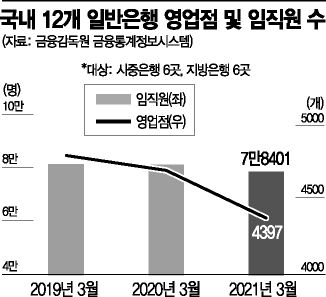
[Asia Economy Reporter Kiho Sung] As presidential candidates from both ruling and opposition parties pledge a ‘4-day workweek’ with only four working days per week, labor unions in the banking sector are rushing to be the first to implement it. They argue that adopting the 4-day workweek will create jobs, and if the government provides tax benefits, it can be introduced without wage cuts. However, experts point out that resolving issues in industries with longer working hours than the financial sector should take priority, and that without wage adjustments, the introduction of a 4-day workweek is practically difficult.
According to the financial sector on the 25th, the Financial Labor Union under the Federation of Korean Trade Unions and the Office and Financial Workers’ Union under the Korean Confederation of Trade Unions jointly held a forum titled ‘4-Day Workweek and the Future of Financial Workers’ at the National Assembly last week. The 4-day workweek discussion gained momentum after Sim Sang-jung, the Justice Party candidate, included it as a campaign pledge ahead of the presidential election. Lee Jae-myung, the Democratic Party candidate, emphasizes reducing working hours as a long-term national agenda. Riding this wave, some bank unions have been raising the 4-day workweek as a campaign pledge and forming new executive teams since the end of last year, bringing the topic into public discourse.
At the forum, labor representatives expressed positions including ▲ leading the introduction of a 4-day workweek in the banking sector ▲ allowing workers to freely choose 4 days out of 5 working days ▲ no wage cuts when reducing working hours. However, experts remain skeptical, stating that without social consensus, it will be difficult to implement a 4-day workweek in the banking sector.
The biggest hurdle is the issue of working hours. Experts expressed concerns that if banks, which have relatively better working conditions, introduce a 4-day workweek first while many occupations still endure long working hours, the polarization of working hours will worsen. Professor Byunghoon Lee of the Department of Sociology at Chung-Ang University said, "It can be seen as presenting a direction for our society regarding long working hours," but added, "Since there is a large disparity in working hours depending on the occupation in Korea, the first discussion should focus on how to reduce working hours in occupations like healthcare and broadcasting, where long hours continue."
Regarding the labor unions’ proposal to introduce a 4-day workweek while maintaining wages, some criticize it as an unrealistic plan. Professor Jisoon Park of Korea University Law School said, "I support reducing wages through a 4-day workweek and using the difference for job sharing," but emphasized, "If wages are maintained as they are and banks increase staff to implement a 4-day workweek, the high-wage structure will remain, which could impose a greater burden on companies."
Professor Daejong Kim of the Business Administration Department at Sejong University explained, "Given that banks are recording record-high profits amid government loan regulations, government support for labor costs through tax benefits is somewhat unreasonable," adding, "If banks expect such support from the government, it could spark controversy over discrimination against other industries."
There is also concern about considering the convenience of financial consumers. Professor Taeyoon Sung of the Department of Economics at Yonsei University said, "Even if banks increase staff to maintain 5 business days, they will inevitably face manpower shortages on preferred holidays like Mondays or Fridays," and added, "While industries without face-to-face consumer services, such as manufacturing, might manage a 4-day workweek, if the financial sector unilaterally adopts it, it could cause inconvenience to consumers."
© The Asia Business Daily(www.asiae.co.kr). All rights reserved.
![User Who Sold Erroneously Deposited Bitcoins to Repay Debt and Fund Entertainment... What Did the Supreme Court Decide in 2021? [Legal Issue Check]](https://cwcontent.asiae.co.kr/asiaresize/183/2026020910431234020_1770601391.png)















