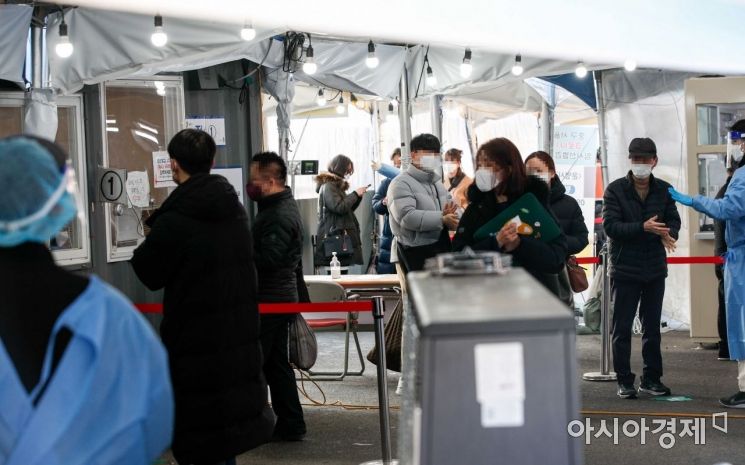
 Citizens are lining up to get tested at a temporary screening clinic set up at the Sogang University Station Plaza in Mapo-gu, Seoul on the 24th. Photo by Jinhyung Kang aymsdream@
[Asia Economy Reporter Kim Daehyun] As the detection rate of the Omicron COVID-19 variant in South Korea surpassed 50%, becoming the dominant strain, authorities announced that they plan to avoid strengthening social distancing measures as much as possible, even if confirmed cases increase significantly due to the spread of the Omicron variant.
On the morning of the 24th, Son Youngrae, head of the Social Strategy Division at the Central Disaster and Safety Countermeasures Headquarters, explained during a back briefing that when asked whether social distancing measures should be strengthened if daily confirmed cases reach 10,000 to 20,000 due to the spread of the Omicron variant, "The current judgment is to operate with minimal implementation of social distancing measures that cause significant social and economic damage."
"Medical Capacity Larger Than During Delta"
Son said, "Although the current medical system capacity varies depending on variables, it will increase as much as possible compared to the Delta variant," adding, "Compared to Delta, we have expanded medical system capacity since last December and secured approximately 4,600 intensive care unit beds capable of responding to critical patients." He also stated, "There are 20,000 beds in residential treatment centers and a system capable of home treatment for 30,000 to 40,000 people. Based on Delta, the system can handle up to 13,000 daily confirmed cases, and since the severity and hospitalization rates of Omicron appear to be lower than Delta, the capacity seems even greater."
He further explained, "According to various overseas data, the rate of progression to severe illness with Omicron is one-third to one-quarter that of Delta, so the manageable number of confirmed cases will differ," adding, "The medical system can handle many more confirmed cases compared to Delta. It is important to quickly identify and treat patients who have the potential to become severe."
Meanwhile, the Central Disease Control Headquarters (CDCH) announced that as of midnight on the 22nd, the number of nationwide Omicron infections increased by 4,574 cases (2,895 domestic infections and 1,935 imported cases) during the previous week (December 16?22), reaching a cumulative total of 9,860 cases. This is 1,895 more new infections than the 2,679 cases confirmed in the previous week (December 9?15). The domestic detection rate of the Omicron variant surpassed 50%, confirming it as the dominant strain.
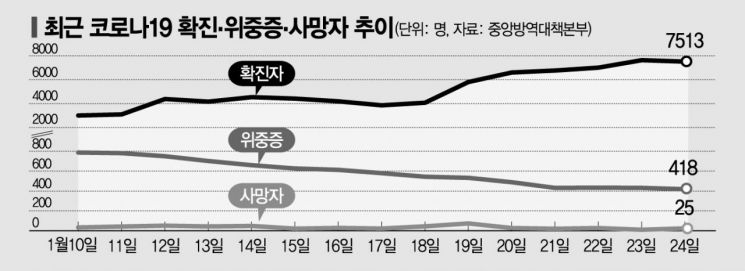
"Reviewing Appropriate Timing for Nationwide Omicron Response System Transition"
Regarding the timing of the nationwide transition to the Omicron response system, Son explained, "It is not about moving to the response system as soon as possible, but about the appropriate timing," adding, "Compared to initial concerns, the rate of increase in severe cases is slower relative to the spread of Omicron, and diagnostic capacity is also substantial." Currently, polymerase chain reaction (PCR) tests, which can handle up to 800,000 tests per day, are being conducted at about 500,000 tests per day, leaving a capacity of approximately 300,000 tests. Since the number of severe cases has also decreased to the 400s, the nationwide situation will be further reviewed.
Son stated, "The core of the response system transition is to focus on early diagnosis and treatment of elderly or high-risk patients," explaining, "There may be issues such as looser diagnosis and treatment for younger or lower-risk individuals compared to now."
However, the health authorities will prioritize transitioning the testing and treatment systems in Gwangju, Jeonnam, and Pyeongtaek and Anseong cities in Gyeonggi Province?where Omicron has been confirmed as the dominant strain?to the Omicron response system starting from the 26th.
Under the response phase, PCR testing at screening clinics, the existing testing method, will be applied only to high-risk groups (priority testing groups). At screening clinics established in these areas, only individuals who are ▲60 years or older, ▲epidemiologically linked cases, ▲those with a doctor's note indicating the need for COVID-19 testing, or ▲those who tested positive on self-test kits or rapid antigen tests will be eligible for PCR testing. Epidemiological investigations will shift from the previous full-scale investigation policy to investigations focused on high-risk groups (priority testing groups) such as family members, and the isolation period for vaccinated confirmed cases will be shortened to 7 days.
© The Asia Business Daily(www.asiae.co.kr). All rights reserved.