Missing Direction and Philosophy in National Governance
Targeted Promises Flood Amid Tight Elections
Risk of Falling into Populism Trap
No Differentiation in Campaign Promises
[Asia Economy Reporter Naju-seok] In this year's presidential election, the major candidates' pledges have lost their 'grand narratives.' As tailored pledges targeting specific generations and groups flood in, not only is there no visible direction or philosophy for the next government's national agenda, but concerns are also rising that the upcoming five years in power could flounder in a swamp of 'populism.'
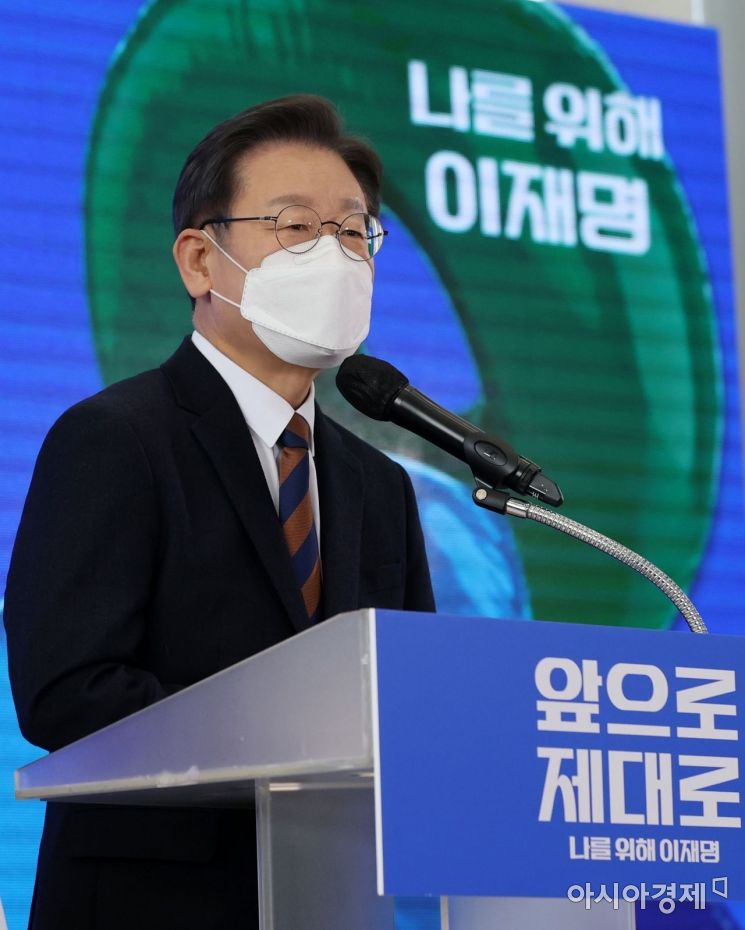 Lee Jae-myung, the presidential candidate of the Democratic Party of Korea, is announcing Gyeonggi Province policy pledges at Poeun Art Hall in Yongin, Gyeonggi Province on the 24th. Photo by Dongju Yoon doso7@
According to political circles on the 24th, one characteristic of this presidential election is the flood of life-oriented, detailed pledges (small pledges), with no sign of era-defining or grand pledges that propose political, economic, or national governance directions.
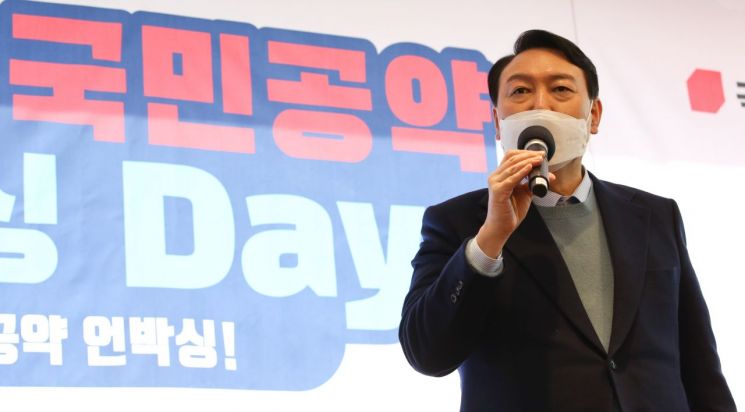
Lee Jae-myung, the Democratic Party presidential candidate, is promoting 'Sohwakhaeng,' meaning small but certain happiness; Yoon Seok-youl, the People Power Party candidate, is pushing 'Simkung,' meaning a heart-throbbing excitement; and through '59-second shorts' that introduce pledges via short videos, they announce pledges multiple times a day.
Experts attribute the disappearance of grand narratives largely to the unprecedentedly close race in this election. According to the National Barometer Survey (NBS) conducted by four polling agencies?Embrain Public, K-Stat Research, Korea Research, and Hankook Research?between the 17th and 19th, surveying 1,000 people aged 18 and over nationwide, Lee's support rate was 34%, and Yoon's was 33%. Notably, 28% of respondents said they could change their preferred candidate, while among those in their 20s, 65%, and in their 30s, 55%, indicated they might switch their support. (For detailed information, refer to the Central Election Poll Deliberation Commission website.) The 20s and 30s act as swing voters, and even slight shifts in their votes can overturn the election outcome. For this reason, tailored pledges targeting the voting preferences of specific generations and groups are flooding the scene.
From the voters' perspective, the increased appeal power?meaning the influence on the consumers' thoughts or attitudes?can be positive, but the lack of a national vision is fatal, indicating an absence of a national agenda for the next five years. Among the candidates, only Ahn Cheol-soo of the People Party proposed a 'science-centered nation,' and Kim Dong-yeon of the New Wave party suggested a 'Republic of Opportunity.'
Besides the election dynamics, the fact that the major candidates are 'amateur outsiders' is also cited as a reason for the increase in small pledges. Rather than candidates representing the values of the two major parties, the Democratic Party and People Power Party, the candidates' personal lives and experiences have been emphasized, leading to situations where the candidates' 'views' take precedence over the 'party line.'
In past presidential elections, grand narratives led the election landscape. For example, former President Roh Moo-hyun proposed relocating the administrative capital, presenting a blueprint for balanced national development. Former President Park Geun-hye prominently advocated economic democratization. President Moon Jae-in also introduced a new growth narrative called income-led growth to seek voters' support.
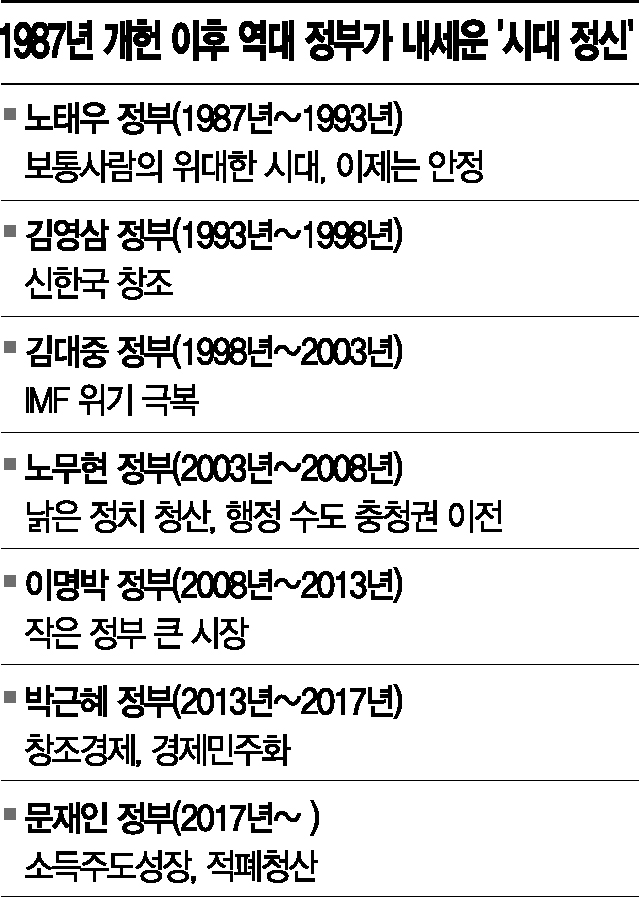
The problem is that, without a national vision presented in the form of grand narratives, pledges to cut taxes while increasing welfare and benefits are being repeated. As a result, the costs of pledges to be spent keep increasing, but conversely, the capacity to bear these costs is shrinking. This is considered a factor that could lead to waste from the perspective of national finances. Especially under the Moon Jae-in administration, national debt has rapidly increased, and it is highly likely to exceed 1,000 trillion won this year. Without a philosophy for national governance, there is a significant risk that the next five years could be swayed by populism.
With similar pledges continuing, there is no policy differentiation among candidates. Kim Bong-shin, CEO of Metavoice, said, "Candidates' national philosophies should be presented to gain sympathy, and specific policies or detailed pledges should be structured as sub-brands under a higher-level brand, but such systematization is regrettably lacking."
© The Asia Business Daily(www.asiae.co.kr). All rights reserved.
![User Who Sold Erroneously Deposited Bitcoins to Repay Debt and Fund Entertainment... What Did the Supreme Court Decide in 2021? [Legal Issue Check]](https://cwcontent.asiae.co.kr/asiaresize/183/2026020910431234020_1770601391.png)

















