Korea Institute of Civil Engineering and Building Technology, Data Platform Development
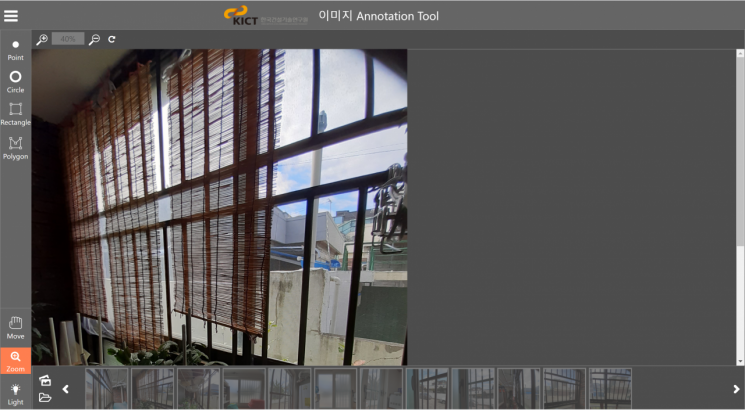 ‘Building Aging Diagnosis Data Platform for Energy-Vulnerable Groups’ developed by Korea Institute of Civil Engineering and Building Technology
[Asia Economy Reporter Kim Bong-su] A data platform has been developed that remotely diagnoses the condition of old houses, mainly inhabited by vulnerable groups such as elderly living alone, child-headed households, and people with disabilities, without on-site expert inspections, providing aging diagnosis and prescriptions.
On the 24th, the Korea Institute of Civil Engineering and Building Technology announced that it has developed a data platform capable of diagnosing the aging of buildings for energy-vulnerable groups.
It is estimated that there are about 1.3 million energy-vulnerable households nationwide in South Korea, most of whom are socially disadvantaged such as elderly living alone, child-headed households, and people with disabilities. Due to the climate crisis and the COVID-19 pandemic, income inequality and polarization issues have worsened, exposing energy-vulnerable groups to more natural disasters, increasing damage, and causing significant difficulties in daily life. In addition, the government has declared carbon neutrality by 2050 and prioritizes housing improvements to enhance energy efficiency in the residences of vulnerable groups in existing old buildings in the building sector.
However, diagnosing the condition of old buildings requires expert on-site inspections. There are limitations due to limited budgets and manpower, and on-site inspections have become difficult due to the spread of COVID-19, creating a need for new alternatives.
Researcher Jong-won Lee and his team at the Korea Institute of Civil Engineering and Building Technology have developed a data collection and analysis platform that can efficiently diagnose the aging level of old buildings inhabited by energy-vulnerable groups. In the data collection phase, citizen volunteers and life support workers visit the homes of vulnerable groups to conduct surveys on the living environment and register photos of windows, which intuitively represent the aging level of the old buildings, into an application. The institute signed memorandums of understanding (MOUs) with civic groups and local social welfare organizations and provided training on how to use the application.
The second phase is data analysis. The collected survey and window photo data are refined and automatically matched to evaluate the degree of aging. The aging level is indicated by colors: red (poor), yellow (average), and green (good), and combined with public data based on geographic information systems (GIS) to be displayed on an energy poverty map. This map visually represents the aging of windows, allowing the distribution of old buildings to be grasped at a glance on the map. The distribution data of old buildings shown on the map can be used as basic data for policy formulation and implementation to resolve energy welfare blind spots.
The final phase is the advanced stage. The collected window photos are built into an AI training dataset. Through deep learning analysis, artificial intelligence (AI) can determine the aging condition of windows with minimal surveys and photos. The research team plans to accumulate data based on the old building data platform and develop it into a new untact-based AI diagnostic technology for old buildings.
Additionally, the institute provided follow-up support to ensure that the data collected through the old building data platform can be used for welfare projects to improve the living environment of energy-vulnerable groups. In September last year, a "Step Donation Campaign" was conducted with citizen participation, donating 28 million steps, and with the funds raised (about 4 million KRW), the institute, Daejeon Environmental Movement Federation, and Daejeon Seo-gu Regional Self-Support Center jointly carried out heating equipment renovation work for four households in the Daejeon area.
The institute explained, "The old building data platform is a new approach that visualizes the degree of aging in the living environment as online-based visual data, making it very efficient in terms of time, cost, and manpower," adding, "By quickly and extensively diagnosing old buildings nationwide, it is possible to efficiently prepare policy measures for energy-vulnerable groups."
They also added, "Because it is an open science platform that citizens can directly participate in, it has great significance as science and technology that the public can feel," and "Ultimately, it is expected to greatly contribute not only to resolving welfare blind spots for energy-poor groups but also to activating green remodeling for vulnerable groups to achieve carbon neutrality by 2050."
© The Asia Business Daily(www.asiae.co.kr). All rights reserved.
![User Who Sold Erroneously Deposited Bitcoins to Repay Debt and Fund Entertainment... What Did the Supreme Court Decide in 2021? [Legal Issue Check]](https://cwcontent.asiae.co.kr/asiaresize/183/2026020910431234020_1770601391.png)
















