[Asia Economy Reporter Baek Kyunghwan] A woman who exposed sexual harassment by her workplace superior via email upon resignation and was prosecuted for defamation received a not guilty verdict from the Supreme Court. This follows precedent that if the facts in a defamation case concern the public interest, the intent to defame is negated.
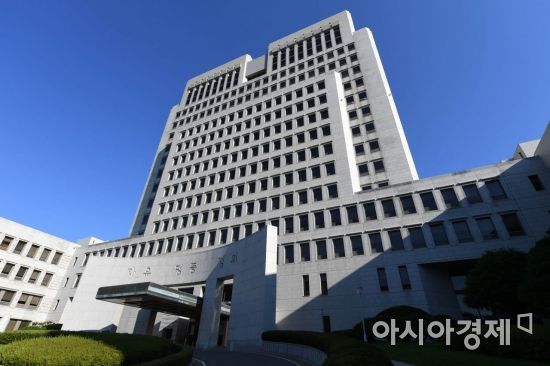
On the 24th, the Supreme Court's 3rd Division (Presiding Justice No Jeonghee) announced that in the appeal trial of Ms. A, who was charged with violating the Information and Communications Network Act (defamation), the previous court's fine of 300,000 won was overturned with a not guilty verdict, and the case was remanded to the Seoul Eastern District Court.
Mr. B, who was in charge of recruitment and new employee training, sent Ms. A, who joined SRS Korea Co., Ltd. (KFC) in August 2014, texts such as "Let's go together today" and "Why aren't you calling?" about ten times and held her hand at a drinking party.
Later, in March 2016, Ms. A was transferred to another store and in April of the following month, she expressed her intention to resign and sent an email titled "Sharing and Request Regarding Sexual Harassment Cases" to representatives of 208 stores nationwide and about 80 headquarters employees. The email contained details of the sexual harassment she suffered from Mr. B.
However, Ms. A was prosecuted on charges of defaming Mr. B’s reputation. This occurred after Ms. A filed a complaint with the labor authorities against the CEO, and the case was administratively closed due to no charges (insufficient evidence).
The first and second trials found Ms. A guilty, judging that she sent the email with the intent to defame. They determined that she suddenly raised issues about Mr. B’s past behavior after being transferred from headquarters to a regional store. The first trial court stated, "Although Mr. B was married at the time and his behavior was inappropriate, it could be seen as the actions of a man showing interest," and "Even if it constituted sexual assault or harassment, Ms. A could have taken appropriate measures but instead sent the email," sentencing her to a fine of 300,000 won. The second trial court agreed.
However, the Supreme Court’s interpretation differed. The Supreme Court stated, "The email concerns Ms. A’s sexual harassment experiences at work, which is a matter of public interest to the company’s organization and members," and "It is difficult to see that there was an intent to defame, and the crime cannot be considered proven." Furthermore, it added, "Considering our society’s perpetrator-centered culture, perceptions, and structure, Ms. A could have had anxiety about secondary harm," and "It is hard to infer an intent to defame simply because she did not report earlier and sent the email upon resignation."
© The Asia Business Daily(www.asiae.co.kr). All rights reserved.
![User Who Sold Erroneously Deposited Bitcoins to Repay Debt and Fund Entertainment... What Did the Supreme Court Decide in 2021? [Legal Issue Check]](https://cwcontent.asiae.co.kr/asiaresize/183/2026020910431234020_1770601391.png)