[Asia Economy Reporter Tae-min Ryu] #Office worker Mr. A recently visited a model house to apply for an apartment sale and found it puzzling. Although he was informed that the apartment was 32 pyeong, the actual interior space felt smaller than expected.
When purchasing apartments or officetels, it is often the case that the area feels smaller than initially imagined. In the past, apartment areas were measured based on the unit ‘pyeong,’ approximately 3.3058㎡, but nowadays, various area-related terms are used interchangeably. The exclusive area, residential common area, and service area explained by construction companies at model houses have different meanings, so caution is necessary.
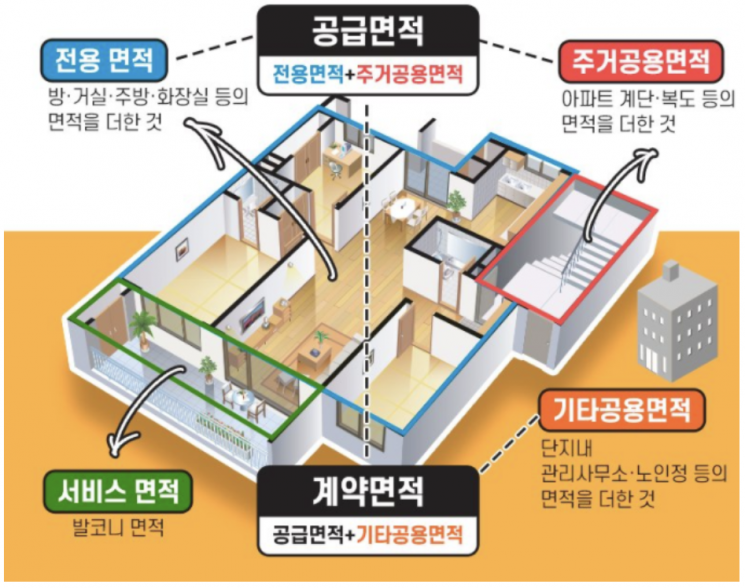
First, the ‘exclusive residential area’ refers to the space that the owner exclusively uses, such as rooms, living room, kitchen, and bathroom. It is easy to understand as the interior area of the house starting from the entrance, used solely for residential purposes. However, balconies are excluded from the exclusive area. Since April 2009, all apartment types must be indicated based on the exclusive residential area.
On the other hand, the ‘residential supply area,’ which was the previous standard for area calculation, is a term combining the exclusive area and the common area. The common area refers to the space used jointly by multiple households within a building. The common area is divided into residential common area and other common areas. Stairs, corridors, elevators, and building entrances are included in the residential common area, while community facilities, underground parking lots, and management offices fall under other common areas.
While a larger common area is more convenient than a smaller one, since it is shared by all households, a larger common area can relatively reduce the exclusive area. A typical example is residential officetels where the common area is large, resulting in a smaller exclusive area compared to the contract area.
When the supply area (exclusive area + residential common area) is combined with other common areas, the ‘contract area’ used in actual contracts is calculated. However, the contract area does not include ‘service areas’ such as balconies. Recently, balcony extensions are often offered as options during sales, and since these can expand the exclusive residential area, it is important to carefully consider them when purchasing.
© The Asia Business Daily(www.asiae.co.kr). All rights reserved.

















