National Relics Supreme Council and Cultural Heritage Exchange Cooperation
Participation in Investigation, Excavation, and Restoration of Tutmose IV Temple
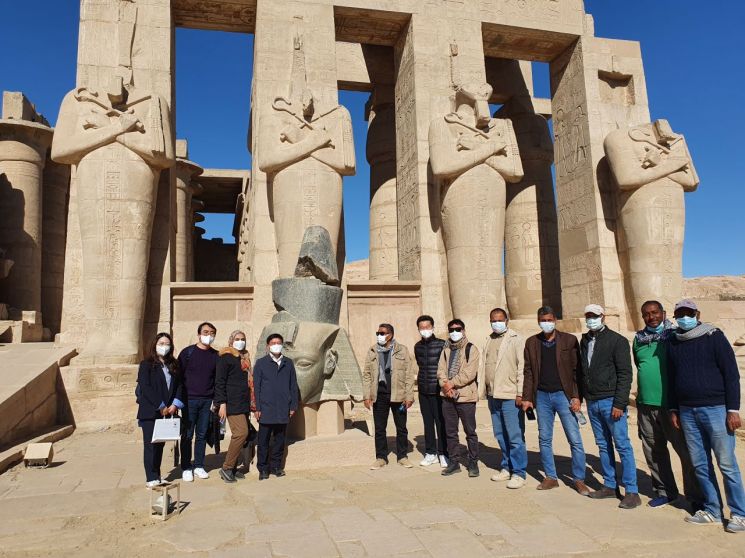
Our government will dismantle and restore the pylon of Egypt's largest temple. It is the Luxor Ramesseum Temple, where Ramses II is buried.
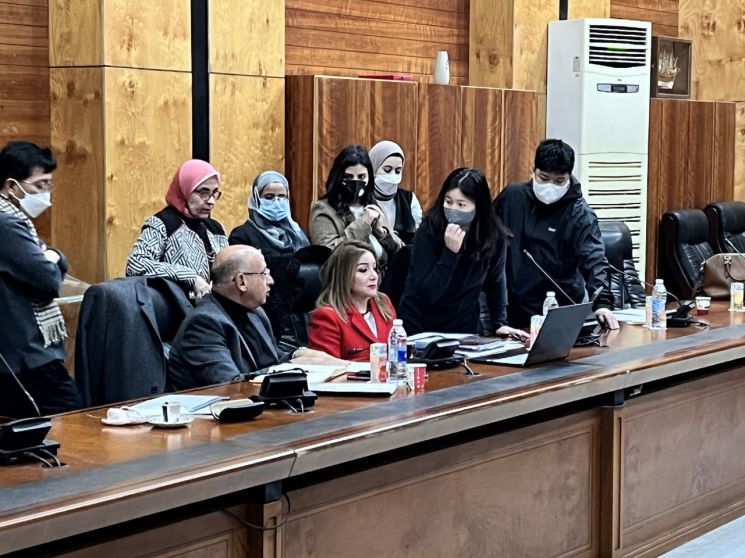
On the 23rd, the Cultural Heritage Administration announced that on the 21st (local time), it signed a memorandum of understanding on cultural heritage exchange and cooperation with the Supreme Council of Antiquities in Cairo, Egypt. The Supreme Council of Antiquities is a vice-ministerial government agency overseeing Egypt's cultural heritage affairs. A Cultural Heritage Administration official stated, "Secretary-General Mostafa Waziri requested the restoration of the Ramesseum Temple and the investigation of the Temple of Thutmose IV during the high-level bilateral cultural heritage talks held on the 20th at the Karnak Temple in Luxor, and we accepted the request."
The Ramesseum Temple, located on the west bank of the Nile River, is famous for the 17-meter-tall seated statue of Ramses II. Only broken fragments remain today. Ramses II was a capable administrator who brought prosperity to Egypt. In addition to wars against the Hittites and Libyans, he led Egypt's final peak through extensive construction projects and the building of residential cities. In Egypt, the number of temples built during a reign is used as a measure of prosperity at the time. The largest Ramesseum Temple has been under excavation and artifact restoration since 1990 with support from the French National Center for Scientific Research. Only about half of the walls remain. The bas-reliefs depicting the Battle of Kadesh, the Syrian wars, and scenes of the Min Festival are notable features.
The Cultural Heritage Administration will utilize its experience in restoring the Mireuksaji Stone Pagoda in Iksan, human resources from the Korea National University of Cultural Heritage, and information and communication technology (ICT) to dismantle and restore the entire pylon of the Ramesseum Temple and improve the access road. It will also participate in the investigation, excavation, and restoration of the nearby Temple of Thutmose IV. Thutmose IV was a king of Egypt's 18th Dynasty. During his reign, he strengthened alliances with the Mitanni Kingdom, ushering in an era of peace. His temple, discovered in 1903, has yet to be excavated.
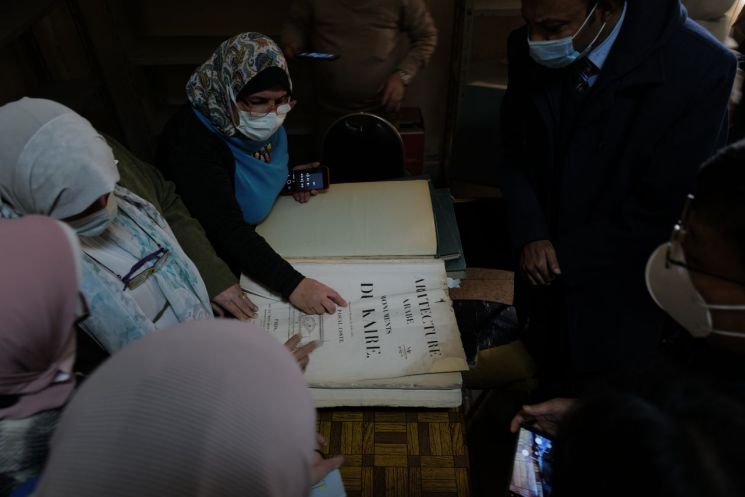
The Cultural Heritage Administration is also promoting a project to digitally record artifacts held by six major Egyptian museums and research institutes, including the Egyptian Museum, Coptic Museum, Museum of Islamic Art, and the Archaeological Research Center, and to build a database (DB). An official said, "We will cooperate not only in archaeological excavation and restoration but also in the repatriation of illegally exported cultural properties, academic information and personnel exchanges, and UNESCO World Heritage registration." They added, "We have already requested cooperation for the registration of the 'Gaya Tumuli' at the World Heritage Committee meeting scheduled for June this year."
© The Asia Business Daily(www.asiae.co.kr). All rights reserved.
![User Who Sold Erroneously Deposited Bitcoins to Repay Debt and Fund Entertainment... What Did the Supreme Court Decide in 2021? [Legal Issue Check]](https://cwcontent.asiae.co.kr/asiaresize/183/2026020910431234020_1770601391.png)