[Asia Economy Reporter Yoo In-ho] As the United States and Japan strengthen their relationship over China containment and cooperation on North Korea sanctions, concerns are emerging that trilateral cooperation with South Korea may be somewhat loosened.
While the Biden administration has recently held consecutive ministerial-level and summit meetings to closely coordinate on China containment and North Korea sanctions, talks with the South Korean government have remained at the high-level meeting stage.
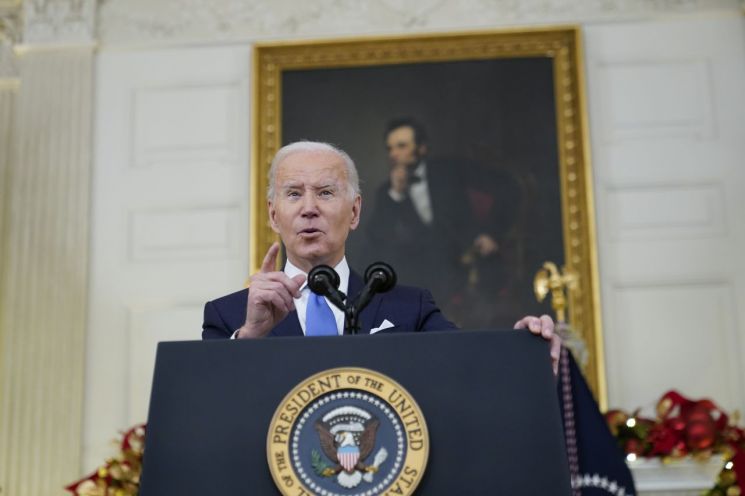
According to diplomatic sources on the 23rd, U.S. President Joe Biden and Japanese Prime Minister Fumio Kishida focused on China containment and North Korea cooperation during a virtual summit held on the 21st (local time).
The two leaders condemned North Korea's recent series of ballistic missile tests and agreed to closely coordinate not only between the two countries but also with South Korea, reaffirming their commitment to cooperation in responding to China. Although not meeting in person, this was the first formal summit between the two leaders since Prime Minister Kishida took office in October last year.
The White House emphasized, "The two leaders highlighted the strengths of the U.S.-Japan relationship and held talks to advance a shared vision for a free and open Indo-Pacific region, which is vital to the lives of the American and Japanese people," adding, "They agreed that the U.S.-Japan alliance is stronger and more necessary than ever."
The two leaders condemned North Korea's recent ballistic missile launches, which violate United Nations Security Council resolutions, and pledged to maintain close coordination with South Korea on North Korea issues toward the complete denuclearization of the Korean Peninsula.
They also highlighted containment of China, pledging to counter China's attempts to change the status quo in the East China Sea and South China Sea, emphasizing the importance of peace and stability in the Taiwan Strait and the peaceful resolution of cross-strait issues. They also expressed concerns about China's practices in Xinjiang and Hong Kong.
The White House announced that the Quad summit, a China containment forum involving the U.S., Japan, India, and Australia, is scheduled to be held in Japan in the first half of this year, and that President Biden welcomed Prime Minister Kishida's invitation.
On the other hand, it is known that President Biden has not held a phone summit with President Moon Jae-in regarding North Korea's recent missile provocations. With only deputy minister-level phone calls taking place, there are criticisms that U.S.-Japan cooperation is prioritized over South Korea-U.S. cooperation on North Korea issues.
Some speculate that the Biden administration appears to be seeking to establish a new relationship with the next South Korean government on North Korea and China containment policies, given that President Moon's term is nearing its end.
A diplomatic expert said, "The Biden administration, marking one year since its inauguration, will once again emphasize trilateral cooperation among South Korea, the U.S., and Japan through a review of China containment and North Korea policies," adding, "The recent lack of consultations between the South Korean and U.S. leaders on North Korea issues indicates that North Korea is not the top priority in the U.S. foreign policy agenda."
© The Asia Business Daily(www.asiae.co.kr). All rights reserved.
![User Who Sold Erroneously Deposited Bitcoins to Repay Debt and Fund Entertainment... What Did the Supreme Court Decide in 2021? [Legal Issue Check]](https://cwcontent.asiae.co.kr/asiaresize/183/2026020910431234020_1770601391.png)















