Frequent Sold-Outs and Consecutive Price Hikes, Additional Payment Demands: 'Bold Business'
Midwinter Open Runs and Shopping Expeditions... Resale Demand Also Surges
"Literally, I was told to pay an additional 1.1 million won after just one night. It's not just about the money, but I felt like I was completely taken advantage of as a 'hogu' (someone naive and easy to exploit)..."
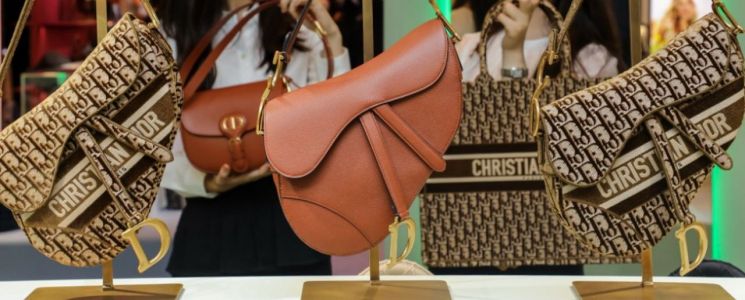
On the 18th, the French luxury brand Christian Dior raised product prices by up to 20%. Not only did they significantly increase prices from the beginning of the new year, but they also demanded additional payments for the price difference from customers who had already fully paid and were just waiting for their products to arrive, sparking widespread dissatisfaction. On internet communities where luxury buyers gather, complaints continued, saying, "The Lady Bag price went up by 1.1 million won overnight, and the larger size increased by 1.4 million won. Dior even pressured customers who had already paid in full to either pay the difference or cancel their reservations," and "All the effort of lining up from early morning to buy before the price hike was in vain."
As the year changed, the price hike relay among luxury brands continues without fail this year as well. According to the luxury industry on the 21st, Hermes Korea raised prices of major products such as bags, scarves, and shoes by about 3-7% on the 4th. The popular 'Constance Mini 18' product increased from 9.9 million won to 10.4 million won (4.8%), and the entry-level bag known as 'Picotin 22' also rose from 3.85 million won to 4.11 million won (6.7%). Compared to prices two years ago, this is nearly a 10% increase. The 'Chanel Classic Medium' has surged more than 32% in two years, exceeding 11 million won.
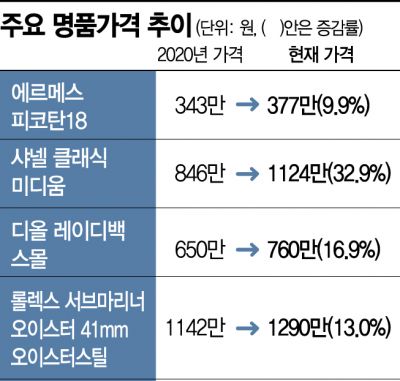
These high-end luxury brands, known as 'E·Ru·Sha' (Hermes, Louis Vuitton, Chanel), collectively raised prices 4 to 5 times last year alone. Due to increases in raw material and labor costs, as well as exchange rates, when one brand raises prices, other luxury brands follow suit in quick succession. Consumers, anxious about frequent sellouts and price hikes, rush to buy more products, leading to 'open runs' where people camp out in front of department stores in the dead of winter to wait for entry, and 'expedition shopping' where they track down stores stocking popular items and even travel to distant regional department stores. The surge in resale demand is also a phenomenon where consumers looking to profit from transactions and those willing to pay premiums to obtain scarce luxury goods meet. Because of this, the luxury industry is hearing phrases like 'the more prices go up, the longer the lines get,' 'today is the cheapest day,' and 'prices are raised to sell.'
Professor Eunhee Lee of Inha University's Department of Consumer Studies pointed out, "Due to repeated price increases by luxury brands, consumers come to believe that the current price is the cheapest, resulting in a 'Veblen effect' where demand increases even as prices rise."
There are also observations that this phenomenon is particularly pronounced in Korea. A department store official said, "Luxury brands are compensating for sales losses in European city stores and duty-free shops, where sales have dropped due to the absence of tourists after COVID-19, by raising prices in markets like China and Korea where revenge consumption is increasing," adding, "Recently, Louis Vuitton announced it will withdraw from domestic duty-free shops, citing damage to its image due to Chinese resellers, but in other words, doesn't this mean they plan to sell to Korean customers at even higher prices going forward?" expressing bitterness.
© The Asia Business Daily(www.asiae.co.kr). All rights reserved.
![User Who Sold Erroneously Deposited Bitcoins to Repay Debt and Fund Entertainment... What Did the Supreme Court Decide in 2021? [Legal Issue Check]](https://cwcontent.asiae.co.kr/asiaresize/183/2026020910431234020_1770601391.png)
















