White House Notifies US Semiconductor Association to "Prepare for Export Restrictions to Russia"
Semiconductor Export Volume Minimal but Ripple Effects on Set Products Unavoidable, Raising Concerns
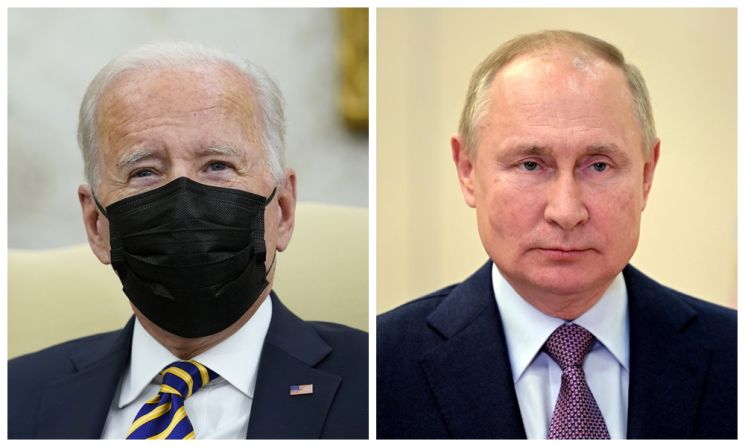
[Asia Economy Reporters Heungsun Kim, Hyeyoung Lee, Hyunui Cho] The White House is considering banning exports of U.S. semiconductor components to Russia in response to Russia's invasion of Ukraine. Domestic companies manufacturing finished products (sets) such as automobiles and home appliances in Russia are closely monitoring the situation, concerned about potential production disruptions.
According to foreign media on the 19th (local time), officials from the White House National Security Council (NSC) recently told the Semiconductor Industry Association (SIA) in a call to "prepare new export restrictions against Russia, including blocking Russia's access to the global electronics supply in the event of Russia's invasion of Ukraine."
The NSC informed the SIA that it is prepared to take unprecedented measures if Russia attacks Ukraine. An SIA official sent an email to member companies stating, "The NSC indicated that the situation in Ukraine is 'exceptional' and that all options are being actively considered."
Regarding the new export restrictions against Russia, the SIA sought clarity on the possibility of broad export controls similar to financial sanctions and those applied to North Korea and Iran, as well as a significant expansion of government authority to block shipments of foreign products, similar to measures applied to China's Huawei.
According to the Korea International Trade Association, as of last year, South Korea's semiconductor exports to Russia amounted to $75 million (approximately 89 billion KRW), accounting for about 0.8% of total exports ($9.983 billion). Semiconductor companies such as Samsung Electronics stated, "Since Russia's share in the export market is not large, there is little immediate risk if limited to semiconductors alone."
However, since semiconductors and related components are essential in finished products, if the U.S. sanctions are actually implemented, set manufacturers could be affected. Samsung Electronics operates a TV production line in Kaluga Oblast near Moscow. LG Electronics also manufactures home appliances and TVs in Luzha, on the outskirts of Moscow. An industry insider said, "It is difficult to predict exactly how U.S. export regulations targeting Russia will unfold, but if component supply is restricted for major items such as home appliances, smartphones, and automobiles, local production and sales could face difficulties."
In particular, Samsung Electronics' smartphones hold over a 30% annual market share in Russia, ranking first among global manufacturers. Automobile and automobile parts exports to Russia ranked first and second among major export items last year, with $2.642 billion and $1.590 billion respectively.
Kyunghwa Kim, senior researcher at the Korea International Trade Association's Trade Support Center, said, "The impact on Korean companies will vary depending on whether the U.S. sanctions list against Russia includes semiconductors using U.S. technology and the products derived from them," adding, "We need to watch for further announcements."
© The Asia Business Daily(www.asiae.co.kr). All rights reserved.
![User Who Sold Erroneously Deposited Bitcoins to Repay Debt and Fund Entertainment... What Did the Supreme Court Decide in 2021? [Legal Issue Check]](https://cwcontent.asiae.co.kr/asiaresize/183/2026020910431234020_1770601391.png)















