Nowon-gu, First Local Government to Challenge Urban Leisure-Commerce Big Data Analysis KT Partners with Korea University for 2019-2021 Three-Year Nowon-gu Leisure Urban Population-Commerce Analysis Results
[Asia Economy Reporter Jongil Park] Nowon-gu (Mayor Oh Seung-rok) collaborated with KT AI Data Convergence Support Group and Korea University Digital Innovation Promotion Group to attempt big data analysis of urban leisure and commercial districts.
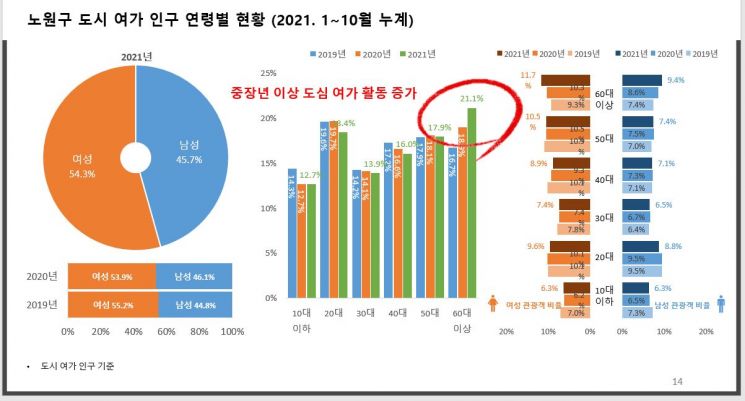
This is the first case among local governments to analyze the behavior patterns of the urban leisure population. To track changes before and after COVID-19, the time frame was set to three years, focusing on five major commercial districts within the area to analyze leisure activity status and sales fluctuation trends.
According to the analysis, the number of visitors to major commercial districts in Nowon-gu steadily increased from 116.33 million in 2019 to 120.69 million in 2020, and 126.16 million in 2021.
In particular, the proportion of Nowon-gu residents among all visitors increased from 60% in 2019 to 66.3% in 2021. This appears to be the result of residents refraining from activities in other regions and preferring leisure activities nearby due to social distancing measures after COVID-19.
Looking at the urban leisure population status by administrative dong in Nowon-gu, significant increases were observed in Sanggye 6 and 7-dong, where Jungnangcheon and Danghyeoncheon streams are located; Gongneung 1-dong, which has the Gyeongchun Line Forest Trail; and Wolgye 1-dong, home to Yeongchuksan and Uicheon. This is analyzed as the effect of the district’s initiatives such as the creation of healing towns and river rebirth projects aimed at making Nowon a "Healing City."
This analysis also evaluated the impact of Nowon’s representative festival, "Nowon Dalbit Sanchaek" (Nowon Moonlight Walk). Despite the COVID-19 situation, the district provided safe and diverse outdoor exhibitions. Analysis of visitor status before and after the festival showed an increase of 4.5% in 2020 and 8.8% in 2021 compared to before the festival. This is believed to be due to increased demand for leisure activities among residents amid the prolonged COVID-19 pandemic.
In the consumption pattern analysis by commercial district, overall consumption showed a decreasing trend; however, Wolgye-dong, where large supermarkets are located, and Gongneung-dong, influenced by the Gyeongchun Line Forest Trail, were the only areas showing an increase in consumption. This also highlighted the need for targeted support focused on small business owners.
The survey on preferred areas by age group found that teenagers favored Eunhaeng Intersection, people in their 20s preferred Nowon Station, and those aged 40 and above favored Suraksan Design Street, suggesting the necessity of setting age-specific targets to revitalize local commercial districts.
Based on the analysis results, the district plans to actively utilize them to create age- and gender-customized smart streets reflecting user behavior patterns and to establish various digital cultural spaces to promote leisure activities for local residents.
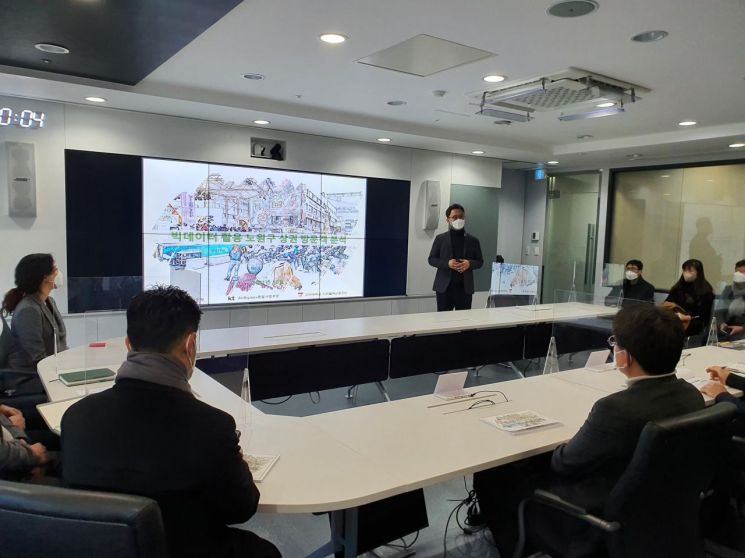
Since this analysis can serve as an important policy guideline, the district produced a video report to share it with all employees.
Oh Seung-rok, Mayor of Nowon-gu, said, "Visualizing what was previously only vague speculation into precise figures through big data analysis makes the residents’ policy demands more tangible. We will continue to strive to discover administrative needs using big data."
© The Asia Business Daily(www.asiae.co.kr). All rights reserved.