72.612 Million Laying Hens in Q4
Impact of Winter AI Reduction
Highly Pathogenic AI from Nov 8 to Jan 19
69% Decrease Compared to Previous Year
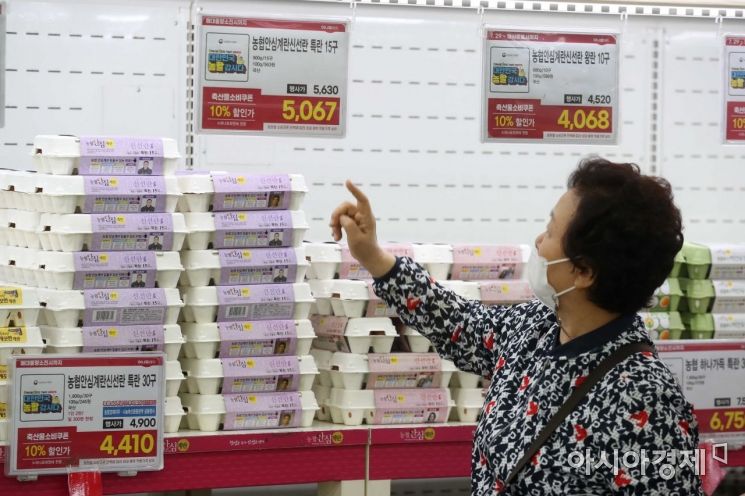
[Sejong=Asia Economy Reporter Moon Chaeseok] Last winter, as avian influenza (AI) decreased, the number of laying hens remained steady compared to the previous year. The declining trend shifted to a stable level.
Statistics Korea announced the results of the fourth-quarter livestock trend survey on the 20th. The data was compiled as of the 1st of last month.
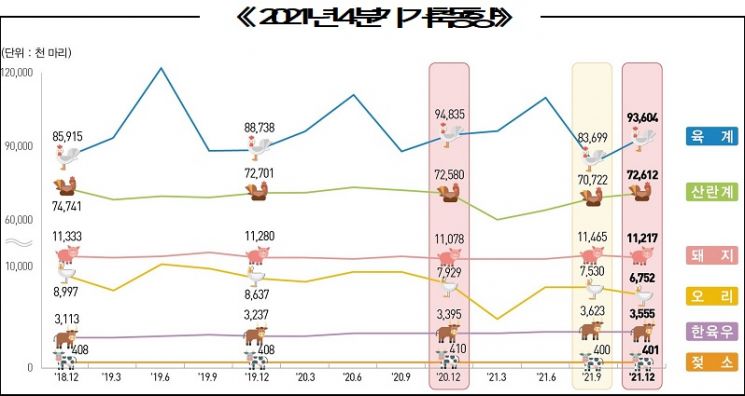
As of the fourth quarter, the number of laying hens was 72,612,000. This is an increase of 33,000 (0.0%) compared to the same period last year. The decrease in AI last winter appears to have influenced this. According to the Ministry of Agriculture, Food and Rural Affairs, since the outbreak of highly pathogenic avian influenza (HPAI, H5N1 type) on November 8 last year at poultry farms, HPAI infections have been confirmed at 21 farms to date. This is a 69% decrease compared to 68 cases in the same period the previous year. In particular, laying hens accounted for only 6 cases, a 75% decrease compared to the previous year. Generally, when the number of laying hens increases, egg prices tend to stabilize.
The number of broilers in the fourth quarter was 93,604,000, down 1,231,000 (1.3%) from a year earlier, and ducks numbered 6,752,000, down 1,177,000 (14.8%). The number of Korean beef cattle was 3,555,000, up 160,000 (4.7%) from a year earlier. The number of pigs also increased by 139,000 (1.3%) to 11,217,000 during the same period.
© The Asia Business Daily(www.asiae.co.kr). All rights reserved.