[Seoul Autonomous District News] Dongjak-gu ▲441 officials ▲33 vehicles and excavators ▲216 tons of calcium chloride and salt deployed for emergency snow removal on main roads and vulnerable areas Concurrent snow removal in vulnerable areas by each Dong resident center, operation of 10 automatic brine spraying devices and 4 automatic road heating systems... The secret to snow-free roads in Seongbuk-gu during the heavy snow and cold wave on the 19th: ‘Eco-friendly Smart Road Heating System’... Gangseo-gu publishes and distributes work manual for the visually impaired... Yongsan 2-ga-dong mechanical public parking lot operation begins... Geumcheon-gu environmental officers
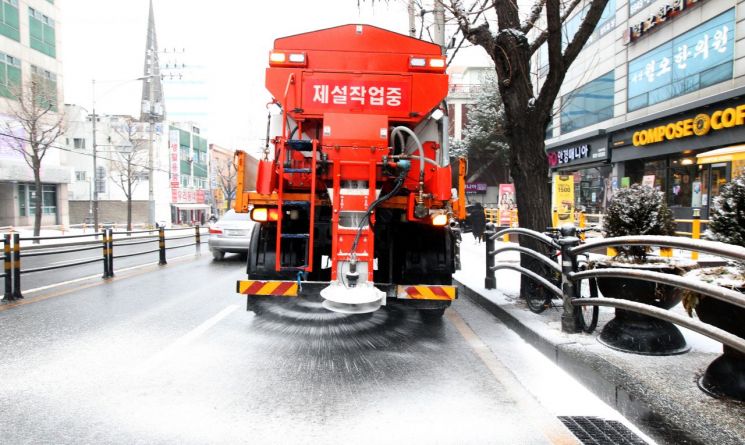
[Asia Economy Reporter Park Jong-il] Dongjak-gu (Mayor Lee Chang-woo) announced on the 19th that it is making every effort to ensure prompt snow removal operations as freezing is expected in vulnerable areas such as roads and slopes within the district due to heavy snowfall and cold waves.
Following the Korea Meteorological Administration's snowfall forecast, the district issued Snow Removal Measure Level 2 starting at 7 a.m. that day and entered an emergency duty system.
Snow removal equipment was inspected, and brine was replenished in the automatic brine spraying devices. Snow removal agents were spread on alleyways and steep slopes before the snow fell.
▲ 441 personnel including public officials ▲ 33 vehicles and excavators ▲ 216 tons of materials such as calcium chloride and salt were deployed to focus snow removal efforts on main roads and vulnerable areas.
In particular, the Road Management Division of the district office is conducting snow removal on 54 major arterial and secondary arterial roads within the district, while 15 community centers are responsible for snow removal on alleyways and sidewalks, sharing responsibility for their respective areas.
Additionally, to minimize inconvenience for residents during their commute, each community center conducts joint snow removal operations with public officials and civilian personnel on key vulnerable areas such as village bus routes and steep slopes. Ten automatic brine spraying devices and four automatic road heating systems capable of immediate snow removal upon snowfall are in operation.
Furthermore, free snow removal toolboxes equipped with shovels, scrapers, and brooms have been installed at 21 locations including major sidewalks in 11 neighborhoods such as Noryangjin 1-dong, where shops are densely packed and foot traffic is heavy, enabling residents to easily participate in snow removal.
Baek Won-gi, head of the Road Management Division, said, “We will minimize safety accidents and resident inconvenience through prompt snow removal not only on main roads but also on sidewalks and side streets,” and added, “We ask residents to actively participate in clearing snow in front of their homes and stores to create a safe walking environment.”
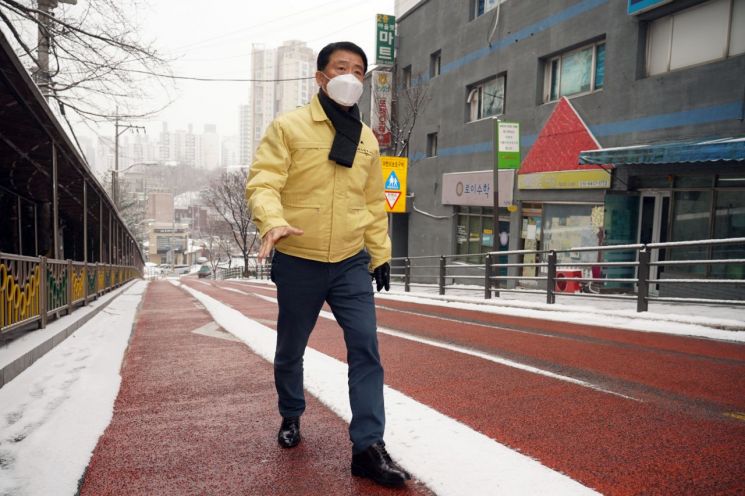
The roads in Seongbuk-gu that remained free of snow on the 19th, when heavy snowfall was accompanied by a cold wave, have become a topic of interest. The secret is the eco-friendly smart road heating system.
Seongbuk-gu (Mayor Lee Seung-ro) has installed the largest number of ‘eco-friendly smart road heating systems’ to prepare for traffic safety accidents during winter.
Seongbuk-gu is an area with many steep hills and slopes, where vehicle traffic becomes difficult during heavy snowfall, often complicating snow removal efforts. To address this, starting in 2016 with Seongbuk-ro 4-gil (the passageway of Hanshin Hanjin Apartment), the district completed installation of eco-friendly heating systems at 28 locations totaling 8.1 km as of January 2022, establishing the largest eco-friendly smart heating system in Seoul.
Even when sudden heavy snowfall caused numerous traffic accidents and resident damages across Seoul, Seongbuk-gu was able to minimize resident harm by operating the eco-friendly smart heating system, enabling rapid and efficient response despite the heavy snow.
Notably, the road eco-friendly heating system installation project gained attention as a prompt solution reflecting residents’ complaints raised during the ‘On-site Mayor’s Office’ initiative, a key project of Seongbuk-gu’s 7th elected term.
The district plans to consider expanding the road heating system installation on slopes frequently used by vulnerable pedestrians such as the elderly and elementary school students, aiming to create a safe and comfortable road environment during winter snowfall.
For vulnerable sections such as slopes without heating systems, the district official stated that regular safety inspections and pre-application of snow removal agents will be conducted according to snow removal measures to prevent traffic accidents on snowy roads in winter.
Seongbuk-gu Mayor Lee Seung-ro said, “Although heavy snowfall in winter caused road congestion during commuting hours and increased resident inconvenience and traffic accidents in many Seoul districts, Seongbuk-gu was able to enhance road traffic safety and minimize resident damage through the installation of heating systems and immediate snow removal,” adding, “We will continue to make every effort to resolve inconveniences so residents can commute safely during winter.”
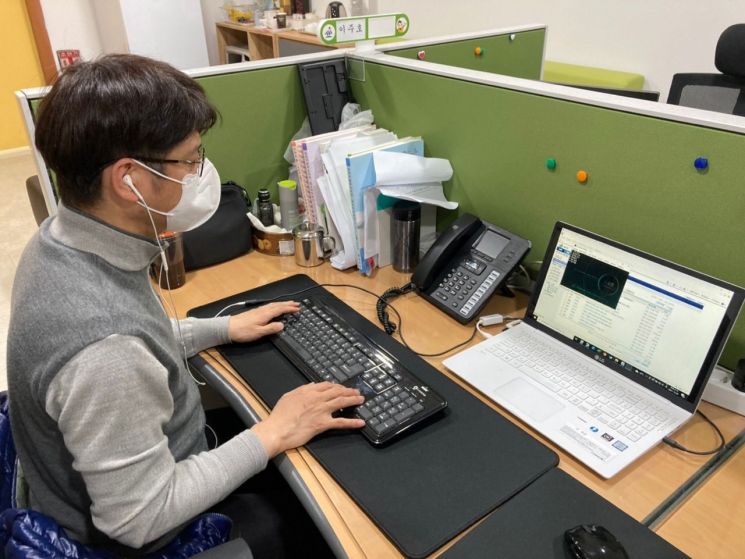
A work manual for 386 visually impaired public officials in Seoul has been created.
Gangseo-gu, Seoul (Mayor Noh Hyun-song) announced that it will publish and distribute the ‘Sael and e-Hojo User Manual,’ designed to be conveniently used by visually impaired public officials by incorporating their practical work experience.
Although the hiring of disabled public officials, including the visually impaired, is increasing, there is a shortage of dedicated manuals that visually impaired individuals can easily understand.
Therefore, the district produced this manual to help visually impaired public officials more easily familiarize themselves with work systems and enhance their job capabilities.
Notably, the manual was created by a research group within the district office composed of employees including visually impaired public officials. These officials utilized their practical work experience to develop a manual that allows colleagues and new employees to use the work systems more easily and conveniently.
The manual covers the use of the Sael administrative system and the e-Hojo local finance management system, including sections on ▲ general electronic document system ▲ drafting and approval processes ▲ document distribution ▲ e-Hojo expenditure management.
It was written to match the voice messages output by screen reader programs used by totally blind visually impaired individuals, ensuring terminology consistency. Related images were also included for reference by low-vision visually impaired individuals and work assistants.
Considering that users of this manual may be new employees encountering administrative tasks for the first time, it also includes various administrative procedures and tips for efficient use of administrative systems.
The district expects this manual to improve the work adaptability of visually impaired public officials and contribute to creating an administrative environment convenient for both disabled and non-disabled employees.
The district plans to continue providing various support to enable disabled public officials to demonstrate their capabilities as organizational members and contribute to the local community.
A district official said, “We created this work manual to help employees with disabilities, who have a strong will to work, fully demonstrate their abilities,” and added, “We will continue efforts to create an administrative environment that improves work accessibility for disabled public officials.”
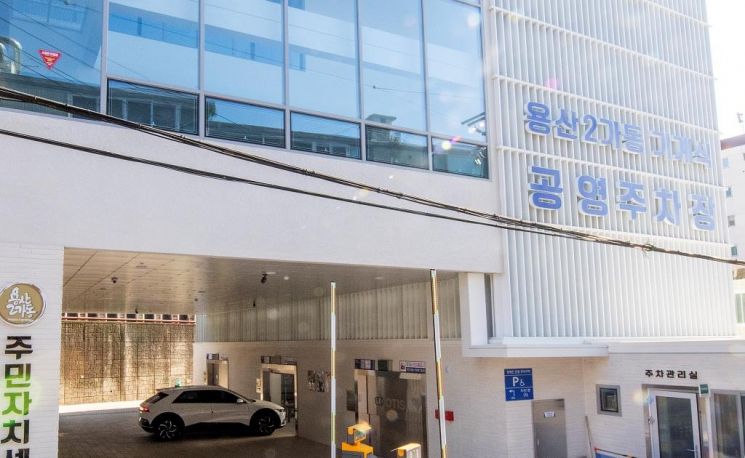
Yongsan-gu (Mayor Seong Jang-hyun) has completed the vertical expansion project of the public parking lot located at 47-2 Yongsan 2-ga-dong and will officially begin operation from the 24th.
Yongsan 2-ga-dong is an area with high terrain and many old houses, resulting in a shortage of parking spaces. The opening of this parking lot is expected to help alleviate parking difficulties in the area and revitalize the Haebangchon commercial district.
The public parking lot has one basement floor and five above-ground floors, with a total floor area of 997.75㎡. It has a total of 54 parking spaces (including 2 spaces reserved for the disabled), accommodating 28 more vehicles than before the vertical expansion.
The 2nd and 3rd floors of the building include 273.51㎡ of resident convenience facilities. Through interior construction, a shared kitchen, cultural classroom, meeting room, and the Yongsan 2-ga-dong Residents’ Autonomous Committee office will be opened to residents by the end of March.
The total project cost is 4.4 billion KRW (2 billion KRW from the city, 2.4 billion KRW from the district). The 2 billion KRW city funding was secured through selection as a pilot project of Seoul’s ‘10-minute Neighborhood Life SOC,’ aimed at providing convenience facilities within a 10-minute walk for residents of old low-rise residential areas lacking basic infrastructure in 2019.
Subsequently, the district underwent procedures including feasibility studies, city investment reviews, design competitions, architectural reviews, urban planning facility implementation approvals, mechanical parking safety certifications, district contract reviews, and construction and supervision contracts, starting construction in December 2020 and completing the work by the end of last year.
A district official expressed gratitude to residents for their patience during construction and stated that monthly parking permits were preferentially allocated to residents who used the resident-priority parking zones before the vertical expansion project.
The parking lot will be operated by the Yongsan-gu Facilities Management Corporation, running 24 hours. The usage fee is 250 KRW per 5 minutes, and the monthly permit costs 180,000 KRW. Vehicles with dimensions up to 5205 mm length × 2100 mm width × 1550 mm height (excluding EQ900 5.0) and curb weight under 2200 kg can use the facility.
Yongsan-gu Mayor Seong Jang-hyun said, “This is the second vertical expansion project of a parking lot aimed at expanding resident convenience facilities in areas where securing idle land is difficult,” adding, “We will improve residents’ quality of life by seeking creative solutions without yielding to environmental constraints.”
The district also vertically expanded the Hannam-dong public parking lot (728-27 Hannam-dong) in 2016. This parking lot has three basement floors and three above-ground floors, with a total floor area of 10,586㎡.
It can accommodate 250 vehicles (including 17 large buses) from the basement 3rd floor to the 1st floor above ground, more than doubling the previous flat parking capacity of 103 vehicles. The 2nd and 3rd floors of the parking building include convenience facilities such as a small library, lifelong learning center, and multicultural family support center, receiving positive responses from residents.
Geumcheon-gu (Mayor Yoo Sung-hoon) announced that it will publicly recruit six environmental officers to create a clean urban environment.
The six environmental officers to be hired include three in their 20s to 30s and three in their 40s to 50s.
Applicants must have been registered residents of Geumcheon-gu for at least one year as of the announcement date (January 14, 2022) and be between 20 and 59 years old. Residents can apply regardless of education, experience, or gender.
Applications will be accepted for three days from January 24 to 26. Interested residents can download the application form and related documents from the ‘Notices & Announcements’ section of the Geumcheon-gu website, complete them, and submit them in person to the Cleaning Administration Division on the 11th floor of the district office along with required documents.
Eligibility and required documents can be confirmed on the Geumcheon-gu website.
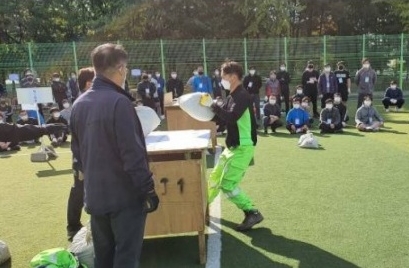
Geumcheon-gu will conduct a physical fitness test for applicants on February 10 at the multipurpose auditorium of Siheung 2-dong Community Center. The test includes ‘carrying a sack (25 kg for men, 20 kg for women) and running back and forth 40 meters’ and ‘sitting and standing while holding a sack (20 kg for men, 15 kg for women).’
Only those who pass the physical test will proceed to an interview on February 16. The final successful candidates will be announced on February 18 on the Geumcheon-gu website and notified individually.
Geumcheon-gu Mayor Yoo Sung-hoon said, “We aim to provide better jobs and create a clean Geumcheon-gu by hiring regular environmental officers,” and added, “We encourage many residents with strong dedication and sincerity to apply.”
For more details, inquiries can be made to the Cleaning Administration Division of Geumcheon-gu Office.

Seodaemun-gu (Mayor Moon Seok-jin) announced on the 19th that it has established and recently started operating the AI-based conversational messenger ‘Seodaemun-gu Angel Chatbot,’ which automatically answers welfare-related questions.
The name ‘Angel Chatbot’ combines ‘Angel’ (Seodaemun-gu Happiness Angel Call Center) and ‘Chatbot’ (chat + robot).
By searching for ‘Angel Chatbot’ on KakaoTalk and adding the channel, users can access it 24/7 every day.
It provides 138 types of answers related to seniors (54 types), disabled persons (43 types), pregnancy and infants (15 types), single-parent families and children (9 types), and middle-aged adults (17 types).
For example, if users input keywords such as basic pension, transportation card, emergency support, dementia, housing consultation, care, oral examination, food market, disabled job opportunities, home care allowance, unemployment benefits, or 50 Plus Center, related answers are automatically provided in the KakaoTalk chat window.
Instead of keyword input, users can also select information step-by-step by target, category, and detailed item, such as ‘Seniors → Economy → Various Reductions for Low-Income Groups,’ to find the information they want.
Additionally, it guides users to related information beyond the initial query. For example, entering ‘electricity bill’ displays discount information, Korea Electric Power Corporation customer service contact, related website links, and buttons for water bill discounts, city gas bill discounts, and communication fee discounts at the bottom. It is available to anyone, not just Seodaemun-gu residents.
Seodaemun-gu Mayor Moon Seok-jin said, “We expect many people to conveniently check various welfare information suitable for themselves, their families, and neighbors through the Seodaemun-gu Angel Chatbot, built in line with the spread of mobile messenger use.”
More detailed welfare information can be obtained from Seodaemun-gu’s welfare consultation ‘Happiness 1004 Call Center,’ welfare blind spot reporting window ‘Angel Talk (KakaoTalk),’ and customized welfare search service ‘Seodaemun-gu Bokjumeoni.’
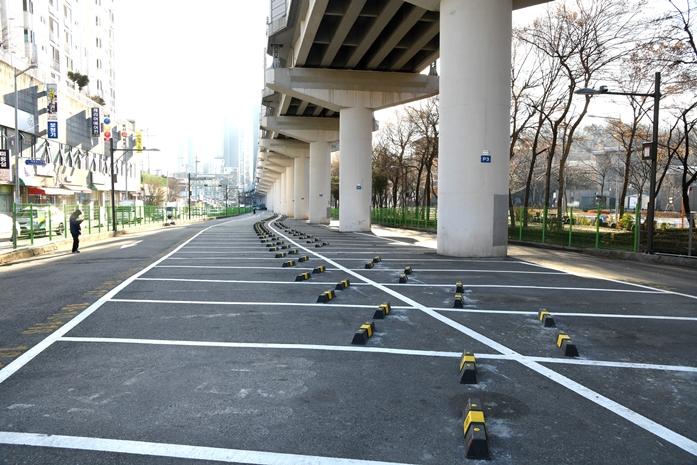
Nowon-gu (Mayor Oh Seung-rok) announced that the public parking lot under Danggogae Station will be renovated into a resident-priority parking area and will begin full operation.
The ‘Danggogae Underpass Public Parking Lot’ (Sanggye 3,4-dong), which was operated with 121 spaces on approximately 2,968㎡ under the elevated subway line near Danggogae Station on Seoul Subway Line 4, was closed in October 2020 at the request of the Sanggye 6 District Redevelopment Association while being operated by Seoul City.
The area near Danggogae Station was identified as having severe parking difficulties, with a nighttime parking availability rate of 85.9% compared to actual parked vehicles in a 2019 parking status survey conducted by the district. The closure of the existing parking lot worsened the parking shortage, leading to illegal parking and threatening pedestrian safety. Additionally, illegal dumping increased in the closed area, causing ongoing resident complaints.
The district sought ways to operate the parking lot itself to alleviate residents’ inconvenience and improve urban aesthetics, engaging in active negotiations with related organizations. As a result, agreements were reached with Seoul City, the Sanggye 5 and 6 District Redevelopment Associations, and Seoul Metro, and the parking lot redevelopment project was initiated in December last year.
To create a safe and pleasant parking environment, the entrance location was changed due to the site’s position on a Y-shaped road, which posed a high risk of accidents between pedestrians and vehicles.
Facility improvements included installing two parking barriers, 14 security lights, 14 CCTVs, 254 parking stoppers (car stoppers), and a boundary fence (1.5 m high, 320 m perimeter), as well as repainting parking lines.
The newly operated ‘Danggogae Underpass Public Parking Lot’ has a total of 140 spaces and will be operated as a resident-priority parking lot to alleviate parking difficulties and reduce parking fees. Through day and night allocation, more vehicles than the 140 spaces can be accommodated.
For inquiries about parking lot use, contact the Nowon-gu Service Corporation Parking Business Team.
Meanwhile, the district is making every effort to resolve residential parking difficulties through tailored local strategies. Last November, a comprehensive plan was established focusing on three main strategies: ‘providing ample parking spaces,’ ‘establishing a shared parking culture,’ and ‘creating a safe and pleasant parking environment,’ with detailed projects underway.
Nowon-gu Mayor Oh Seung-rok said, “The reopening of the Danggogae Underpass Public Parking Lot as a resident parking system is expected to greatly help alleviate parking difficulties,” adding, “We will continue efforts to resolve residents’ inconveniences caused by parking shortages through various approaches.”
© The Asia Business Daily(www.asiae.co.kr). All rights reserved.
![User Who Sold Erroneously Deposited Bitcoins to Repay Debt and Fund Entertainment... What Did the Supreme Court Decide in 2021? [Legal Issue Check]](https://cwcontent.asiae.co.kr/asiaresize/183/2026020910431234020_1770601391.png)

















