LG Chem Dangjin Builds Korea's First
Supercritical Pyrolysis Oil Plant
An Alternative to Physical Recycling
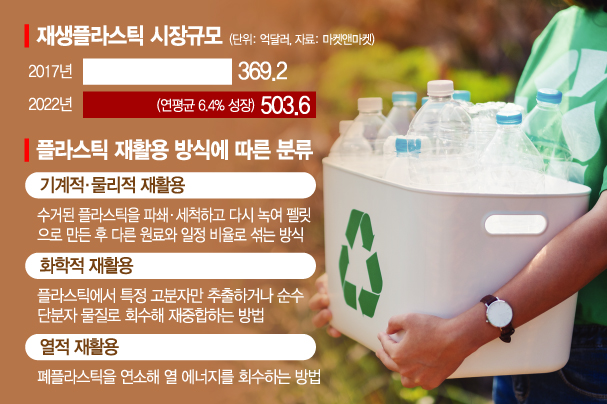
[Asia Economy Reporter Choi Dae-yeol] LG Chem has decided to actively promote its chemical recycling business that extracts recycled raw materials from used plastics.
Physical recycling, which involves shredding or melting waste plastics to make new plastics, has a low recycling rate. In contrast, chemical recycling is considered a better alternative as it enables the creation of a circular economy by producing plastic fuel through pyrolysis technology. It involves pyrolyzing complex materials such as polyethylene (PE) and polypropylene (PP), which are difficult to recycle like used snack bags or instant rice plastic lids and containers, to extract naphtha, a basic plastic fuel, which is then fed back into petrochemical processes.
LG Chem announced on the 18th that it plans to build a supercritical pyrolysis oil plant with an annual capacity of 20,000 tons in Dangjin, Chungnam, by the first quarter of 2024. The term supercritical literally means processing beyond the critical point, and pyrolysis oil refers to recycled fuel extracted from waste plastics that can be used to make new plastics. This is the first supercritical pyrolysis oil plant in Korea.
The supercritical pyrolysis technology applied in this plant works by decomposing used plastics using high-temperature and high-pressure steam. This means using steam that has passed the critical point of water as a heat source, similar to how a coffee machine extracts caffeine from ground coffee beans. Supercritical steam has the characteristics of both a liquid that dissolves well and a gas that diffuses easily, making it useful for extracting specific substances.
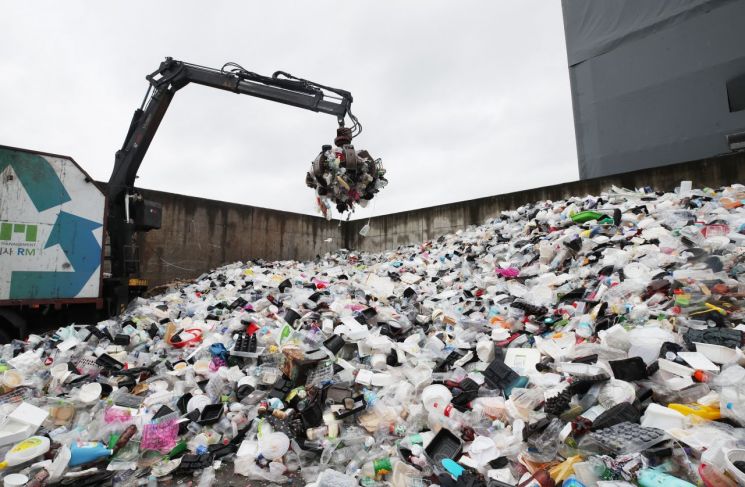 Officials are sorting plastic recycling waste at the Suwon City Resource Circulation Center in Yeongtong-gu, Suwon-si, Gyeonggi-do.
 Compared to other chemical recycling technologies, it has the advantage of being easy to maintain and service. Typically, pyrolysis requires direct heating, which produces soot-like carbon deposits that must be periodically removed. Supercritical technology eliminates this need. When 10 tons of vinyl or plastic are input, more than 8 tons of pyrolysis oil can be obtained, making its productivity one of the highest in the industry.
About 2 tons of by-product gas generated during the process is reused as energy for plant operations, including supercritical steam production. A company official explained, "While existing chemical recycling methods involve burning or roasting, this technology steams the material with hot steam," adding, "It is easy to maintain, and the equipment is compact, making efficient use of factory space."
To equip this facility, LG Chem decided to collaborate with Mura Technology of the UK, which holds the core supercritical pyrolysis technology. LG Chem invested in Mura in October last year. They completed a technical feasibility review with KBR, a US engineering and services company holding the license for Mura’s technology, and signed process license and engineering contracts for the plant’s basic design.
After fully operating the pyrolysis oil plant, LG Chem plans to verify the products and consider expansion based on market conditions. While conducting R&D to develop chemical recycling technologies including pyrolysis oil in-house, the company will also expand cooperation with research institutes, small and medium enterprises, and startups that possess recycling technologies or raw materials. According to market research firms, the global chemical recycling market based on pyrolysis oil extractable from waste plastics is expected to grow from 700,000 tons in 2020 to 3.3 million tons in 2030, with an average annual growth rate of over 17%.
No Guk-rae, head of LG Chem’s Petrochemical Business Division, said, "It is highly meaningful to internalize chemical recycling facilities and accelerate the establishment of a plastic circular economy by collaborating with companies leading sustainable technologies and processes," adding, "We will strengthen R&D in eco-friendly materials and technologies and pioneer new related markets."
© The Asia Business Daily(www.asiae.co.kr). All rights reserved.