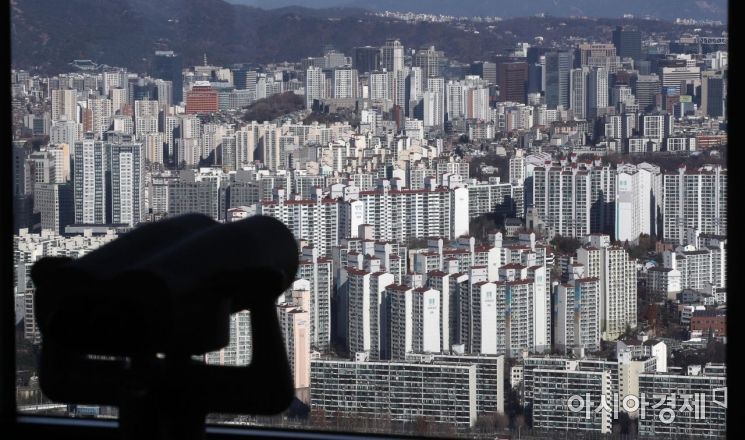
The amount of incidents where landlords fail to return the jeonse deposit to tenants after the lease contract expires has nearly reached 600 billion won, setting a new annual record high.
According to the Housing and Urban Guarantee Corporation (HUG) on the 18th, the number of jeonse deposit return guarantee incidents last year was 2,799 cases, amounting to 579 billion won. The amount of incidents related to the jeonse deposit return guarantee insurance product has been increasing every year since HUG began compiling performance data in 2015: 3.4 billion won in 2016, 7.4 billion won in 2017, 79.2 billion won in 2018, 344.2 billion won in 2019, and 468.2 billion won in 2020. This indicates that the number of landlords who do not return the jeonse deposit to tenants and tenants who do not receive their deposits on time is increasing accordingly.
Accordingly, the amount of deposits HUG has reimbursed to tenants using public funds on behalf of landlords exceeded 500 billion won for the first time last year. HUG’s subrogation payments were 2.6 billion won in 2016, 3.4 billion won in 2017, 58.3 billion won in 2018, 283.6 billion won in 2019, 441.5 billion won in 2020, and 503.4 billion won last year, showing an annual increase. The jeonse deposit return guarantee insurance system is designed so that when a landlord fails to return the jeonse deposit after the contract period ends, HUG pays the deposit to the insured tenant on their behalf (subrogation) and later exercises the right of recourse to claim the amount from the landlord.
There are concerns that the amount of incidents will increase further in the future. The so-called ‘empty-can jeonse,’ where the jeonse deposit is similar to or exceeds the housing sale price, is still rampant. According to a full survey of 6,642 jeonse transactions for newly built villas constructed last year based on actual transaction data from the Ministry of Land, Infrastructure and Transport conducted by the real estate platform Dabang, 27.8% (1,848 cases) of the total had a jeonse rate (ratio of jeonse price to sale price) exceeding 90%. In Gangseo-gu, among 858 jeonse transactions for newly built villas last year, 646 cases (75.3%) exceeded a jeonse rate of 90%. Entering an ‘empty-can’ house as a jeonse tenant can lead to situations where the tenant cannot recover the deposit from the landlord even after the contract period ends. If the landlord fails to repay the mortgage loan on time, the house may be auctioned, and the auction proceeds may be insufficient to cover the tenant’s jeonse deposit.
In particular, the scale of damage caused by ‘malicious landlords’ who repeatedly cause jeonse deposit return guarantee incidents is growing like a snowball. There are many rental business operators whose unreturned jeonse deposits amount to hundreds of billions of won. Accordingly, a revision to the Housing and Urban Fund Act is being promoted to disclose the personal information of landlords who have failed to return deposits more than twice in the past three years and for whom HUG has made subrogation payments.
© The Asia Business Daily(www.asiae.co.kr). All rights reserved.
![User Who Sold Erroneously Deposited Bitcoins to Repay Debt and Fund Entertainment... What Did the Supreme Court Decide in 2021? [Legal Issue Check]](https://cwcontent.asiae.co.kr/asiaresize/183/2026020910431234020_1770601391.png)