[Asia Economy Reporter Jeong Hyunjin] Concerns have been raised that the European Union's (EU) proposed Carbon Border Adjustment Mechanism (CBAM) and mandatory supply chain due diligence could increase the burden on domestic companies.
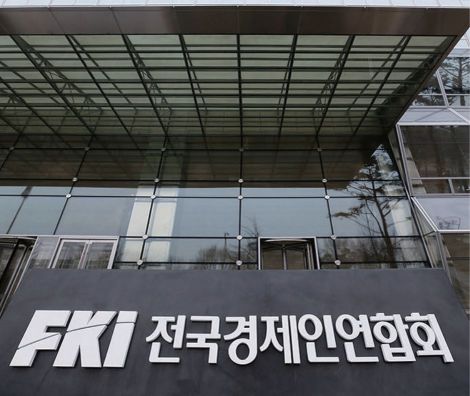
On the 18th, the Federation of Korean Industries (FKI) stated this during a breakfast meeting held with Maria Castillo Fernandez, the EU Ambassador to Korea, and domestic business leaders. Attendees included Kwon Tae-shin, Vice Chairman of FKI; Kim Hee-yong, Chairman of TYM; Hong Kwang-hee, Chairman of the Korea Importers Association; Lee Chang-han, Vice Chairman of the Korea Semiconductor Industry Association; as well as representatives from SK Nexilis, Doosan Heavy Industries, Samsung Electronics, POSCO, Hanwha Solutions, Hyundai Motor Company, and other major domestic companies.
Previously, the EU introduced CBAM, which requires importers to purchase certificates for the carbon emissions of products produced outside the EU, and adopted guidelines mandating companies to conduct due diligence on environmental and human rights protection throughout their supply chains.
At the meeting, FKI requested that the EU actively reflect Korea's opinions during the CBAM legislative process to minimize the burden on Korean companies. They also urged support to ensure that the supply chain due diligence obligation does not become a significant burden for companies, and proposed that Korean companies be allowed to participate in the pursuit of open strategic autonomy focused on establishing independent supply chains in strategic industries.
Vice Chairman Kwon said, "There are concerns that the EU CBAM may become a new trade barrier or an additional burden for export companies. Since Korea is one of the few countries implementing a carbon emissions trading system similar to the EU's, we ask that efforts be made to minimize the burden on our companies during the legislative process." Regarding the supply chain due diligence system, he pointed out, "It is practically impossible for companies to control and manage risks across all components and actors in the supply chain, so holding companies responsible for the entire supply chain may be excessive." He also requested that Korean companies creating jobs locally not be excluded from support by European governments simply because they are foreign or large corporations.
Ambassador Fernandez responded, "The EU and Korea are global leaders in green and digital transformation," adding, "We will strengthen partnerships in the green and digital sectors to explore new opportunities together."
Companies attending the meeting also made various proposals to the EU Ambassador. In particular, the steel industry referred to the EU's steel safeguard measures on Korea, which were extended for three years in July last year, and the steel tariffs agreement between the EU and the United States in October of the same year, proposing the suspension of the safeguard measures.
© The Asia Business Daily(www.asiae.co.kr). All rights reserved.