Landlord Notifies "Sold Land to JijuTaek Association, Please Vacate Office"
Millions Invested Vanish... Years-Long Lawsuits Over Building Handover and Demolition
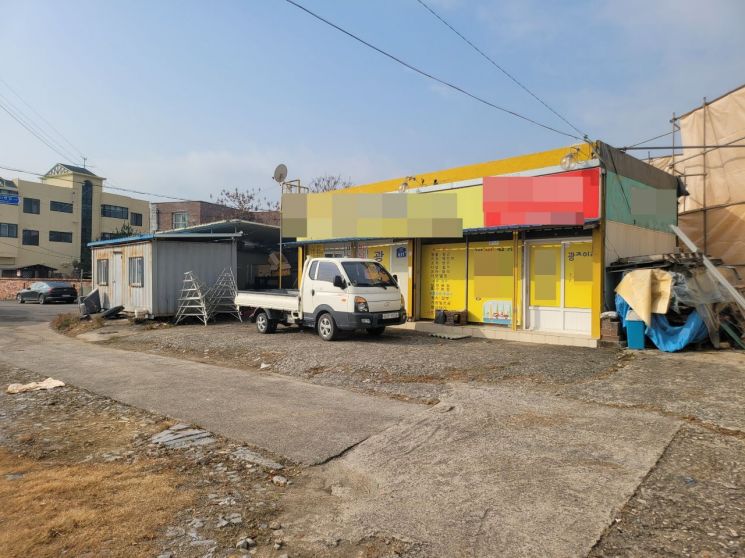
[Asia Economy Honam Reporting Headquarters Reporter Jin-hyung Park] A trusted axe cut the top of the foot. The trouble was believing the landlord’s words that if the monthly rent was paid diligently, the office could be used for more than 10 years.
The tenant, Mr. Jin, is now at risk of losing tens of millions of won invested in interior work after the landlord transferred the property to a local housing cooperative.
The issue dates back five years. On March 8, 2017, Mr. Jin signed a lease contract with landlord Mr. A for a deposit of 3 million won and a rent of 400,000 won, and opened a manpower office in a 48㎡ office located on Pochung-ro, Nam-gu, Gwangju Metropolitan City.
The initial lease period was until June 2018. After that, both parties tacitly renewed the contract without drafting an extension agreement by mutual consent.
To ensure smooth business operations, Mr. Jin repaired leaking office walls and ceilings and re-tiled the floor. He also built a separate building and brought in two containers to use as lodging and restrooms.
The building with restrooms and the containers were constructed without obtaining building permits, only with the landlord’s verbal consent. The total investment amounted to about 80 million won.
While running the business without major issues, conflicts began when a large apartment complex was planned for the area. This happened as Mr. A sold the property to the local housing cooperative.
Time passed, and on June 21, 2019, Mr. Jin received a notice from Mr. A asking him to vacate the office because the land had been sold to the cooperative.
So far, the only response regarding the invested costs was an offer of about 10 million won as moving expenses.
Hearing that he could only recover about one-eighth of the approximately 80 million won he had invested in renovations felt like the sky was falling on Mr. Jin.
A week later, Mr. Jin received a complaint for an eviction lawsuit, and about a year later, the court ruled, citing Article 635 of the Civil Act, that he must deliver the office to Mr. A.
This provision states, “If there is no agreement on the lease period, either party may notify the other of contract termination at any time.” The termination takes effect six months after the notification.
To make matters worse, during this process, Mr. Jin heard an unfair rumor that he was demanding 300 million won as a condition for vacating the office.
He lamented, “I clearly communicated that I would leave if only the investment costs were compensated, but it seems I was branded as a scoundrel in the local community,” adding, “I have become a ‘public enemy’ to about 500 members of the local housing cooperative.”
Although this rumor was cleared up through several meetings with the cooperative leader, Mr. Jin remains anxious about how compensation will be handled for the building and containers constructed on the vacant land around the office he invested in.
Currently, negotiations on compensation are ongoing with the cooperative, but it is reported that no agreement has been reached due to differences in the amount.
The cooperative stated, “We purchased Mr. A’s property with a condition in the contract to resolve the existing tenant issues. While we have not specified a concrete amount for moving expenses, we plan to negotiate by easing tensions between Mr. A and Mr. Jin and narrowing their differences.”
They added, “We won the building eviction lawsuit at the Supreme Court level, and the demolition lawsuit for the containers is also clearly going to be decided against the tenant. Since the court decision will take time and due to delays in the local housing project and other circumstances, we want to resolve the matter amicably with Mr. Jin.”
Currently, Mr. Jin is also involved in a lawsuit for a ‘demolition injunction’ filed by Mr. A in court. He argues, “When a tenant of a building or other structures has obtained the landlord’s consent for use and has attached fixtures, the tenant may claim purchase of those fixtures from the landlord.”
© The Asia Business Daily(www.asiae.co.kr). All rights reserved.
![User Who Sold Erroneously Deposited Bitcoins to Repay Debt and Fund Entertainment... What Did the Supreme Court Decide in 2021? [Legal Issue Check]](https://cwcontent.asiae.co.kr/asiaresize/183/2026020910431234020_1770601391.png)