Infection Control and Medical Response Measures
Preparedness Phase Up to 5,000 Cases
Response Phase Activated from 7,000 Cases
Introduction of Citizen Participation Epidemiological Investigation
PCR Testing Focused on High-Risk Groups
Paid Rapid Antigen Testing to Be Implemented at Clinics and Hospitals
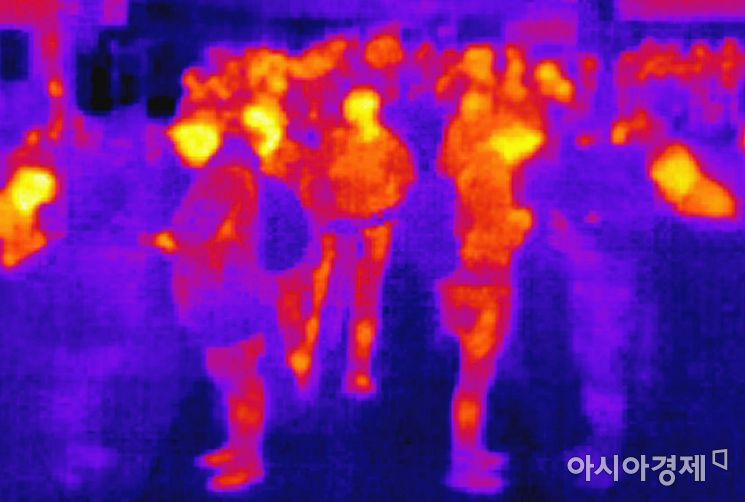 On the morning of November 29, when the Omicron variant, which is more contagious than the Delta variant (India), emerged in 13 countries, passengers arriving on flights from Frankfurt and Khabarovsk at Incheon International Airport Terminal 1 appeared red on the thermal imaging camera. The thermal imaging camera shows lower temperatures in blue and higher temperatures in red. (Thermal imaging camera footage) / Photo by Airport Photographers Group
[Asia Economy Reporter Seo So-jeong] The government forecasts that the Omicron variant of COVID-19 will become the dominant strain in South Korea around the 21st of this month and plans to significantly overhaul the quarantine and medical response systems. With social distancing measures easing, confirmed cases could surge to as many as 30,000 by the end of next month, and severe cases are expected to rise sharply to between 700 and 1,700. Given these projections, the current quarantine system is expected to reach its limits in coping with the situation. Accordingly, once daily confirmed cases exceed 7,000, the government will shift to a full-scale Omicron response phase and shorten the isolation period for patients from the current 10 days to 7 days. PCR testing will be focused on high-risk groups, and rapid antigen tests (test kits) will be conducted on a paid basis at hospital and clinic-level medical institutions.
 Health and Welfare Minister Kwon Deok-cheol is speaking at the government joint briefing on the extension of quarantine measures and support for small business owners held at the Government Seoul Office in Jongno-gu, Seoul, on the morning of the 14th. Photo by Kim Hyun-min kimhyun81@
◆Confirmed cases could rise to 30,000 per day= At a briefing of the Central Disaster and Safety Countermeasure Headquarters on the 14th, the government announced the 'Omicron Spread Response Strategy,' which involves transitioning the quarantine and medical systems in preparation for Omicron becoming the dominant strain. Kwon Deok-cheol, First Deputy Head of the Central Disaster and Safety Countermeasure Headquarters (Minister of Health and Welfare), stated, "Our quarantine system is facing a major challenge," adding, "Looking at the cases of leading countries, if the response is mishandled, confirmed cases can increase by tens of times, leading to a surge in hospitalizations and overburdening the medical system." Lee Ki-il, First Controller of the Central Disaster and Safety Countermeasure Headquarters, expressed concern, saying, "In Japan, confirmed cases were 450 on January 1, but today they have already reached about 18,500. During this period, cases increased 40-fold, which shows how significantly Omicron impacts the situation."
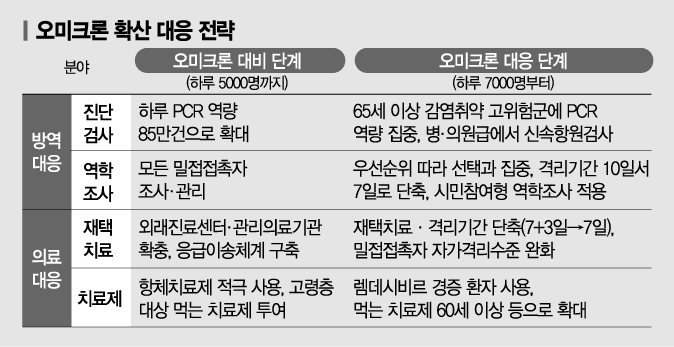
The government will categorize the response into an Omicron preparation phase for up to 5,000 new daily cases and a response phase starting from 7,000 cases. During the preparation phase, the existing 3T strategy?Test, Trace, Treat?will be maintained. PCR testing capacity will be increased from the current 750,000 tests per day to 850,000 tests per day to maximize testing capabilities. To block overseas inflow, entry restrictions will be imposed on travelers from 11 countries including South Africa, direct flights from Ethiopia will be suspended, and all arrivals will undergo a 10-day quarantine. The issuance of quarantine exemption certificates will be minimized under stricter criteria to continue policies preventing Omicron entry. The requirement for PCR negative certificates will be strengthened from testing within 72 hours before departure to within 48 hours, and the flight circuit breaker measure will continue. The flight circuit breaker restricts flights on the same route for one week if three or more foreign confirmed cases are found on a flight.
Additionally, to prevent transmission risks such as from vehicle co-passengers when moving to self-quarantine (testing) locations after arrival, the current quarantine transportation network for overseas arrivals will be expanded. Jeong Tong-ryong, Chief Coordinator of the Central Disease Control Headquarters (CDCH), explained, "Currently, quarantine buses can accommodate 1,500 to 1,600 people, but in cooperation with the Ministry of Land, Infrastructure and Transport, we are reviewing the possibility of increasing capacity to up to 4,600 people."
◆Paid rapid antigen tests if confirmed cases exceed 10,000= When confirmed cases exceed about 7,000, the government will shift from conventional infection control to a response strategy focused on preventing severe cases and promoting voluntary and responsible measures. Lee Ki-il, First Controller of the Central Disaster and Safety Countermeasure Headquarters, emphasized, "Once daily confirmed cases reach 7,000, due to Omicron's characteristics, cases can quickly rise to 8,000 to 10,000, so we will immediately declare and implement the response phase at the 7,000-case level."
Since the global dominance of Omicron reduces the significance of blocking overseas inflow, entry restrictions on the 11 countries will be lifted, and countries will be managed based on risk levels. To prepare for a surge in PCR testing demand, priority for testing will be narrowed to high-risk elderly groups prone to severe COVID-19, infection-vulnerable facilities with cluster infections, and those with epidemiological links. The role of private medical institutions in diagnostic testing will be expanded by increasing paid rapid antigen testing, which will be covered by health insurance. Park Hyang, Head of the CDCH Quarantine Division, stated, "The scale of the outbreak exceeding PCR testing capacity is about 10,000 confirmed cases per day. Rapid antigen tests, aside from PCR, can be used for vaccination proof and negative confirmation (quarantine pass), but self-tests will not be recognized."
During the response phase, citizen-participatory epidemiological investigations will be introduced to improve efficiency. The isolation period for confirmed cases will be shortened from 10 days to 7 days, with a recommendation to follow quarantine rules for 3 days after release. Contacts will be released from quarantine on the 7th day if a PCR test on the 6th day after last contact is negative. A self-reporting epidemiological investigation system will be fully implemented, where confirmed cases input their personal information and contacts, and health centers verify it, transitioning epidemiological investigations to a citizen participation model. Investigations will focus on families, workplaces, acquaintances, people aged 60 and over, nursing hospitals/facilities, and other infection-vulnerable facilities (schools, medical institutions, facilities for the disabled, etc.), while other facilities will not be investigated. To prepare for 20,000 new daily confirmed cases, 1,200 additional beds will be added to regional living treatment centers for patients who cannot be treated at home or assigned hospital beds, and the medical system will operate a daily care system centered on local hospitals and clinics.
◆Vaccination plan for children aged 5-11 to be prepared in February= Vaccination efforts will be accelerated. From February, the vaccination target will be expanded to children, and fourth doses will be gradually administered to immunocompromised and high-risk groups. Vaccination will be actively encouraged for unvaccinated elderly aged 60 and above, who are at high risk of severe illness and death, and vaccination for unvaccinated individuals will be implemented following domestic approval of the Novavax vaccine. Vaccination will also be encouraged for adolescents aged 12-17, and vaccination plans for about 3 million children aged 5-11 are under review considering the approval and introduction schedule of pediatric vaccines by the Ministry of Food and Drug Safety. During the response phase, plans to rapidly introduce updated vaccines effective against the Omicron variant will also be pursued. Additionally, post-vaccination response measures will be strengthened, including the establishment of a death consolation fund (50 million KRW) and other aftercare enhancements.
Minister Kwon said, "We are facing a new risk called the Omicron variant," and urged, "The best method is vaccination. Although vaccine effectiveness against Omicron is somewhat reduced, it remains effective in preventing severe illness and death. Therefore, we ask the public to actively participate in vaccination."
© The Asia Business Daily(www.asiae.co.kr). All rights reserved.
![User Who Sold Erroneously Deposited Bitcoins to Repay Debt and Fund Entertainment... What Did the Supreme Court Decide in 2021? [Legal Issue Check]](https://cwcontent.asiae.co.kr/asiaresize/183/2026020910431234020_1770601391.png)


















