OSCE Talks in Europe Also End in Failure
Military Tensions Rise... US "Must Prepare for Contingencies"
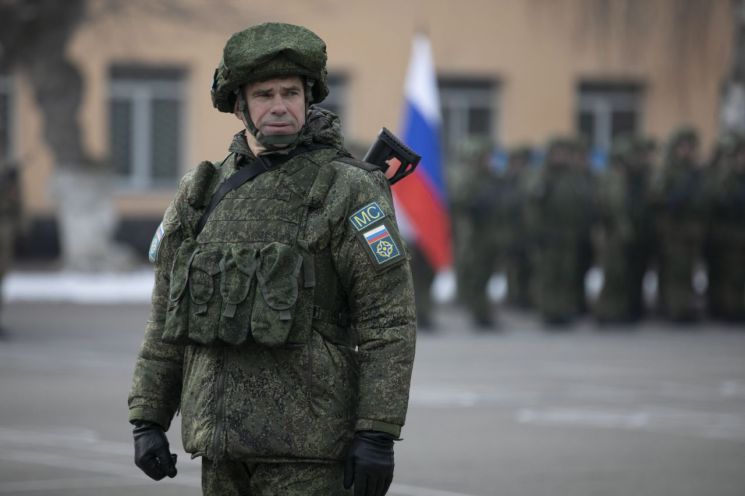
[Asia Economy Reporter Hyunwoo Lee] The third consecutive meeting held by the Organization for Security and Co-operation in Europe (OSCE) to resolve the Ukraine conflict has ended in failure, significantly escalating military tensions between the West and Russia. Russia has even hinted at the possibility of deploying weapons in Cuba and Venezuela if negotiations with the West collapse, raising concerns that the 'Cuban Missile Crisis' of 1962 during the Cold War could be reenacted.
On the 13th (local time), 57 OSCE member countries, including the United States and Russia, held a meeting in Vienna, Austria, to resolve the Ukraine conflict, but it ended with only reaffirming the differences between the West and Russia. As the two sides failed to find common ground, evaluations suggest that military tensions have intensified further.
Helga Schmidt, OSCE Secretary General, described the situation in Ukraine as "very dangerous" during the meeting and emphasized that "it is important to ease tensions through diplomacy and find ways to rebuild trust, transparency, and cooperation." However, the differences between the United States, major European countries, and Russia are so severe that negotiations have hardly progressed.
Zbigniew Rau, Foreign Minister of Poland, the OSCE chair country, expressed concern at a press conference after the meeting, stating, "No breakthrough was made in this meeting either. The risk of war in the OSCE region is greater than at any time in the past 30 years."
Russia pressured the West by stating that if negotiations fail, it could consider deploying weapons in Latin American countries. Sergey Ryabkov, Russian Deputy Foreign Minister, warned in an interview with Russian media after the meeting, "If talks with the West finally collapse and U.S. pressure on Russia intensifies, we will not rule out sending military infrastructure to Cuba and Venezuela," adding, "Given the current atmosphere, I see no reason to reconvene in the coming days to start the same discussions again."
Ryabkov’s remarks have been interpreted as threats reminiscent of the 1962 'Cuban Missile Crisis' between the U.S. and the Soviet Union during the Cold War, prompting a strong backlash from the U.S. Michael Carpenter, U.S. Ambassador to the OSCE, emphasized at a press conference, "We must prepare for all contingencies," and stated, "We must firmly reject Russia’s threats and ensure that aggression or intimidation is never rewarded."
Thus, the three consecutive meetings?including the U.S.-Russia security talks on the 10th, the NATO-Russia security talks on the 12th, and this OSCE meeting?have all ended in failure. Russia persistently demands assurances to prevent NATO’s further expansion, while the U.S. and Western countries insist on the prompt withdrawal of Russian troops deployed near the Ukrainian border, resulting in a stalemate. Concerns remain that even if follow-up talks are arranged, finding common ground will be difficult.
© The Asia Business Daily(www.asiae.co.kr). All rights reserved.