Introduced 9 Years Ago to Check Google and Others
Narrowed Position Due to Consumer Neglect
Taizen Phones Also Stopped Launching After 2017
Dedicated App Market Ceased Operation Late Last Year
[Asia Economy Reporter Cha Min-young] Samsung Electronics' independent operating system (OS) 'Tizen,' introduced 9 years ago to counter Google and Apple, is disappearing into history.
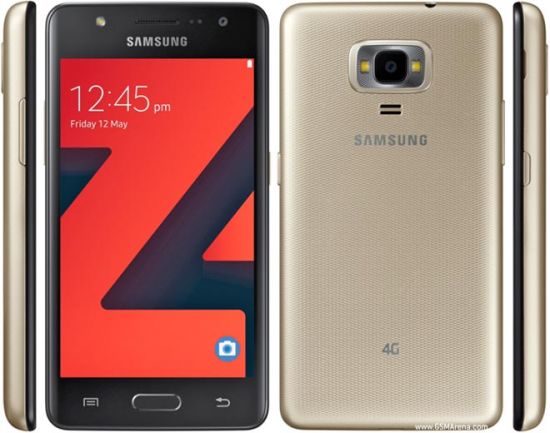
According to Samsung Electronics on the 12th, the application (app) market platform for Tizen OS, 'Tizen Store,' was closed on December 31 last year. After banning new app registrations on the Tizen Store in mid-last year and only allowing users to download existing apps, this decision was made within six months. It is also a measure taken about four years after the last Tizen smartphone was released in 2017.
Launched in 2012 in partnership with Intel and others, Tizen is an open-source, open multi-platform. At the time, Google acquired Motorola Mobility and developed devices like the 'X Phone,' shaking the collaboration system between Samsung and Google, leading Samsung to prepare an alternative strategy. The importance of OS was growing as the OS, which determines connectivity between smart devices, is directly linked to the lock-in effect that prevents customer churn. However, the Tizen alliance faced noise from the start due to the withdrawal of collaborating carriers. In August 2013, NTT DoCoMo barely introduced the first Tizen phone, but afterward, Tizen phones were neglected due to lack of popularity and various user inconveniences. Samsung released the last Tizen OS-applied smartphone, the 'Z4,' in 2017. Since then, the focus shifted to smart TVs and smartwatches, but last year, even the Galaxy Watch dropped Tizen and was replaced by Google's unified wearable platform, further narrowing Tizen's position.
Some express concerns over the disappearance of a competitor to counter Google and Apple. Following the past number one operator 'Symbian (Nokia),' recent mobile OS operators like 'BlackBerry (RIM)' and 'Firefox (Mozilla)' have also been phased out one after another. According to global market research firm Statista, as of December last year, the combined market share of mobile OSs other than Google Android (70.0%) and Apple iOS (29.2%) worldwide is less than 1%, a negligible level.
In the industry, it is widely believed that Samsung, specialized in hardware, found it difficult to close the software (SW) technology gap with existing operators like Google and Apple. An IT industry official said, "It was a predictable sequence," and pointed out, "Although Tizen advocated an OS open strategy, Samsung's closed aspects made third-party entry difficult, which was also a cause of failure."
© The Asia Business Daily(www.asiae.co.kr). All rights reserved.
![User Who Sold Erroneously Deposited Bitcoins to Repay Debt and Fund Entertainment... What Did the Supreme Court Decide in 2021? [Legal Issue Check]](https://cwcontent.asiae.co.kr/asiaresize/183/2026020910431234020_1770601391.png)