[Asia Economy Reporter Inho Yoo] As North Korea continues its military provocations since the beginning of the new year, the situation on the Korean Peninsula is rapidly freezing over.
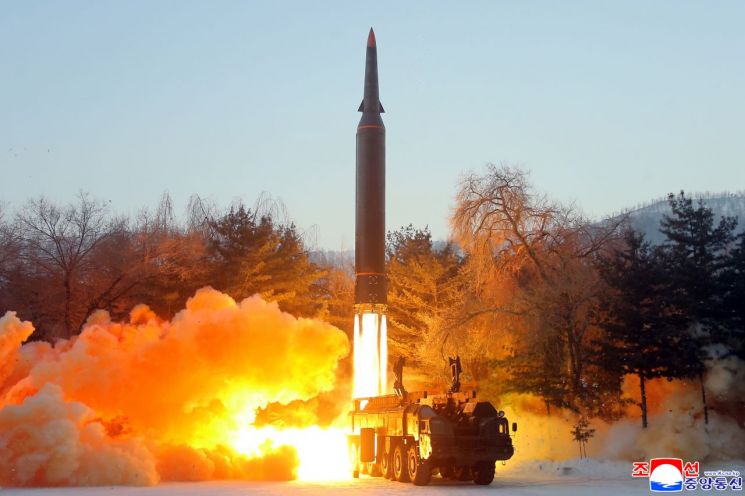
With the international community, including the United States and Japan, condemning North Korea's military provocations, North Korea is defiantly responding with missile launches, and it is expected that a tense atmosphere will persist on the Korean Peninsula for the time being.
According to diplomatic sources on the 11th, ambassadors to the United Nations from the United States, Japan, and European countries condemned North Korea's missile provocations on the 10th (local time) and urged North Korea to engage in talks for denuclearization.
Linda Thomas-Greenfield, the U.S. Ambassador to the UN, issued a statement on the afternoon of the same day just before a closed meeting of the UN Security Council regarding North Korea's ballistic missile launch, saying, "North Korea's continued pursuit of weapons of mass destruction poses a threat to international peace and security." The statement was joined by Albania, France, Ireland, Japan, and the United Kingdom, in addition to the United States.
Thomas-Greenfield, who read the joint statement on behalf of the group, criticized, "North Korea's missile launches increase the risk of miscalculation and heightened tensions, posing a serious threat to regional stability," and added, "North Korea is pursuing new technologies such as hypersonic weapons."
She continued, "Our goal is the complete, verifiable, and irreversible denuclearization (CVID) of the Korean Peninsula," and said, "We are ready to engage in serious and sustained diplomacy to achieve that goal. Now, the choice to engage in dialogue and peace lies with North Korea."
The six ambassadors emphasized, "We urge the Security Council to unite in opposing North Korea's illegal and destabilizing actions."
The Security Council held a closed meeting in the afternoon at the request of the United States and European countries to discuss responses to North Korea's ballistic missile launch on the 5th.
At that time, North Korea launched a ballistic missile into the East Sea from the Jagang Province area and the next day claimed through state media that the projectile was a hypersonic missile.
In response to such condemnation statements, North Korea launched a projectile presumed to be a ballistic missile on the morning of the 11th. This is the second missile launch this year following the one on the 5th.
Japan immediately criticized the launch. The Japanese government estimated that the projectile detected on the morning of the 11th was a ballistic missile and expressed deep regret.
Japanese Prime Minister Fumio Kishida said, "Just a moment ago, North Korea launched what is likely a ballistic missile," and added, "It is extremely regrettable that North Korea continues to launch missiles."
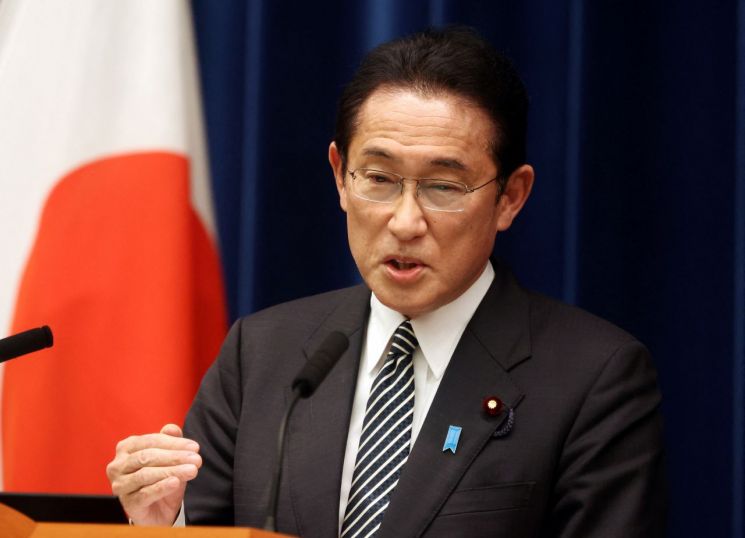
About an hour after the news of the launch was reported, Prime Minister Kishida mentioned this during a brief press conference broadcast on the public broadcaster NHK, saying, "Previously (on January 5), North Korea launched a ballistic missile, and the UN Security Council was just about to discuss a response to that."
He added, "I have instructed related agencies to do three things: to put all efforts into intelligence gathering and analysis and provide prompt and accurate information to the public; to thoroughly ensure the safety of aircraft and ships; and to be fully prepared for any unforeseen situations."
The United States is keeping the door open for dialogue with North Korea but maintains a firm stance against military provocations. There is also the possibility of strengthening sanctions through the UN Security Council.
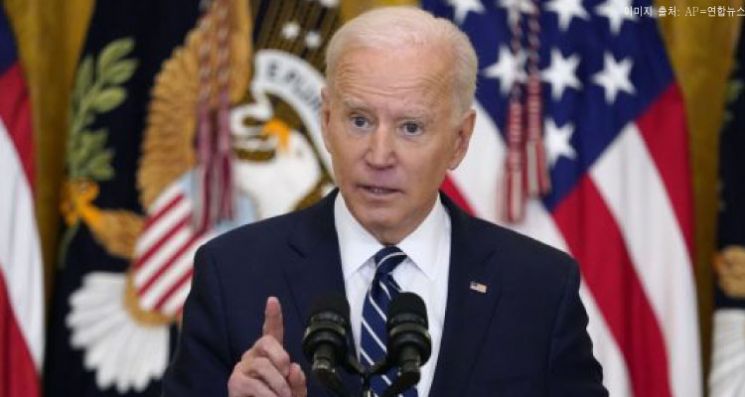
However, since President Joe Biden is currently confronting Russia over the Ukraine situation, the North Korea issue seems to be deprioritized in his diplomatic agenda.
While the Biden administration condemned North Korea's claim of testing a hypersonic ballistic missile recently, it has shown no particular moves beyond convening a UN Security Council meeting.
The U.S. Indo-Pacific Command's statement immediately after North Korea's missile launch, saying, "This launch is not considered an immediate threat to the United States, its territory, or our allies," is in line with this context.
© The Asia Business Daily(www.asiae.co.kr). All rights reserved.
![User Who Sold Erroneously Deposited Bitcoins to Repay Debt and Fund Entertainment... What Did the Supreme Court Decide in 2021? [Legal Issue Check]](https://cwcontent.asiae.co.kr/asiaresize/183/2026020910431234020_1770601391.png)

















