[Asia Economy Reporter Yujin Cho] In Hong Kong, which has implemented the high-intensity lockdown measure 'Zero COVID' policy along with mainland China, concerns about an air logistics crisis are becoming a reality as the new Omicron variant is introduced. As Hong Kong, Asia's air logistics hub, strengthens quarantine measures due to the Omicron outbreak, worries are growing that global supply chain pressures will intensify.
On the 10th (local time), Bloomberg reported that inflationary pressures are rising due to restrictions on the operation of service businesses such as restaurants and cafes caused by strengthened social distancing, as well as a decrease in flights carrying major imported air cargo such as Australian cherries and beef.
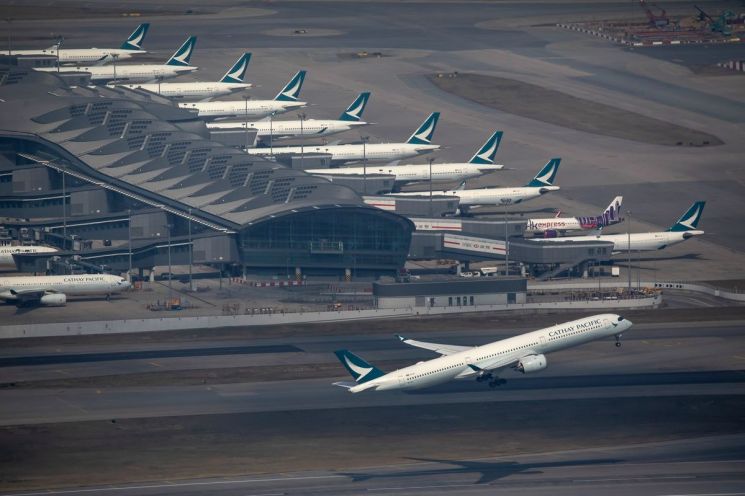
Cathay Pacific Airways, Hong Kong's representative airline, has already canceled hundreds of flights. As a result, air cargo volume is expected to fall to less than one-fifth of pre-COVID-19 pandemic levels. There are also forecasts that air logistics costs could surge by up to 40% within three weeks. Due to the decrease in cargo transport, importers expect fruit prices to rise by 10% soon.
Earlier, Cathay Pacific extended the self-quarantine period for flight crew from the previous 3 days to more than double, 7 days, in accordance with government policy. With strengthened quarantine regulations for crew members, the number of flights has dropped to about 20% compared to pre-COVID-19 levels.
Additionally, since the 7th, Hong Kong has completely banned entry of flights departing from eight countries including the United States, the United Kingdom, Canada, and Australia, where Omicron is spreading rapidly, which is expected to reduce the air cargo load transported via passenger plane belly cargo.
In Hong Kong, which has implemented the Zero COVID policy along with mainland China, companies handling items with high import dependence such as berries, yogurt, premium seafood, and cheese have already reached their limits due to supply chain collapse.
Richard Pun, Executive Director of On Kee Dry Seafood, a dried seafood distributor, said, "Due to the ban on flights from Australia, orders for abalone and canned conch products imported from Australia have not been placed," adding, "We rely on air cargo for more than 30% of raw material supply, so product inventory will run out soon."
Jacques Deremo, co-founder of Cheese Club, which imports cheese and fruits from France, said, "With the ban on passenger flights from France, we are using sea logistics as an alternative, but if air transport disruptions continue for a long time, the impact on all importers will be enormous."
In Hong Kong, retail sector sales including restaurants in the first quarter of last year, when social distancing was eased, amounted to HKD 326 billion (approximately 50 trillion KRW), a sharp 30% decline compared to the same period in 2018 when the Hong Kong democracy protests occurred.
© The Asia Business Daily(www.asiae.co.kr). All rights reserved.

















