[Seoul District News] Songpa-gu "Will Promote Sustainable History and Culture Development Projects by Establishing Royal Tomb Urban Culture Belt"... Dongjak-gu 'Kkamangdol Library' Surpasses 1,200 Visitors Two Days After Opening... Dongdaemun-gu Launches Focused Support Projects for Infants and Toddlers to Overcome Low Birthrate... Gwanak-gu Receives 'Minister of SMEs and Startups Award' for 2021 Small Supermarket Support Project... Seocho-gu Operates 'Seocho 4th Industrial College' Preparing for the 4th Industrial Revolution, Producing 90 Employed Graduates, Including 10 Regular Employees... Gangdong-gu, Ministry of the Interior and Safety 'Data-Based Administration Status'
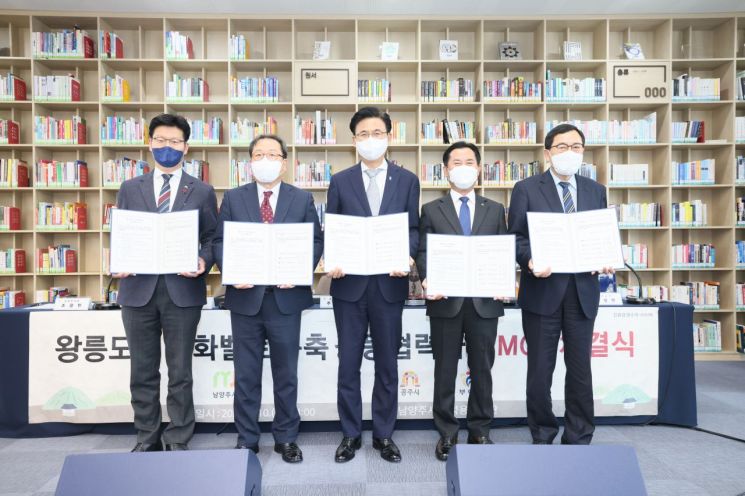
[Asia Economy Reporter Park Jong-il] Songpa-gu, Namyangju-si, Gyeongju-si, Gongju-si, and Buyeo-gun, five local governments managing royal tomb sites, are joining forces for sustainable historical and cultural development among these cities.
Songpa-gu (Mayor Park Seong-su) announced that on the 10th, together with Namyangju-si, Gyeongju-si, Gongju-si, and Buyeo-gun, it signed a business agreement for the ‘Royal Tomb City Cultural Belt Construction Joint Cooperation Project’ at the Jeong Yak-yong Library in Namyangju-si.
The signing ceremony was attended by Park Seong-su, Mayor of Songpa-gu; Jo Gwang-han, Mayor of Namyangju-si; Joo Nak-young, Mayor of Gyeongju-si; Kim Jeong-seop, Mayor of Gongju-si; and Park Jeong-hyun, Mayor of Buyeo-gun, completing the agreement.
Through the ‘Royal Tomb City Cultural Belt Construction Joint Cooperation Project’ agreement, the parties plan to promote ▲exchange activation for historical and cultural development and tourism among cities ▲external promotion of major projects using the promotional channels and networks of the signatory institutions, and other projects necessary for mutual interests and development.
In particular, Songpa-gu plans to develop content integrating digital technology targeting Baekje’s representative relics, the Seokchon-dong Tumuli Cluster and Bangi-dong Tumuli Cluster, and share the historical significance and value of the royal tombs worldwide through social networks and internet sharing media, making it easy and quick for anyone to access.
Additionally, they will actively support projects to establish ▲historical education exploration programs and ▲tourism linkage plans that local residents can directly participate in, to facilitate practical exchange activation.
Since all five participating cities are emerging as representative historical tourism cities of domestic cultural heritage, it is expected that sharing excellent cases and various business exchanges will greatly contribute to creating more developed historical cities.
Park Seong-su, Mayor of Songpa-gu, said, “We are pleased to establish a support system for cooperation in the historical and cultural development of royal tomb cities through this agreement,” adding, “We will do our utmost to ensure that all generations can share and enjoy our splendid cultural heritage through active communication and collaboration among the five cities, including developing cultural content that modernly reinterprets the royal tombs.”
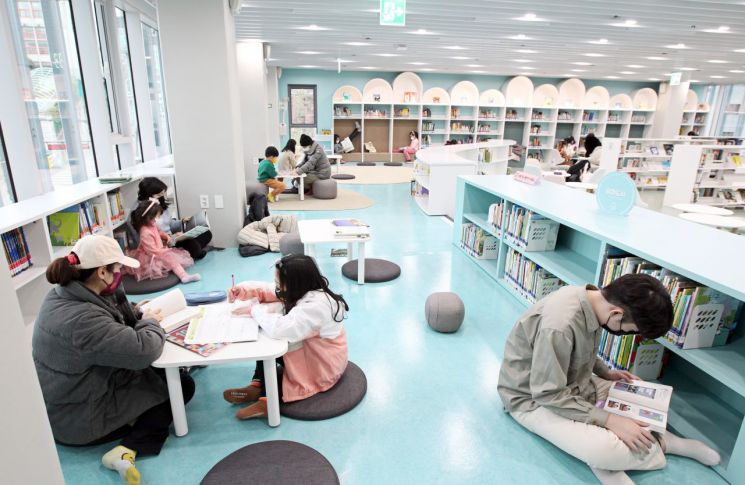
Dongjak-gu (Mayor Lee Chang-woo) announced on the 11th that the ‘Kkamangdol Library’ (129 Seodal-ro), a space for culture and communication, is receiving great response from residents.
Since opening on the 28th of last year, the ‘Kkamangdol Library’ saw 1,232 visitors within two days of opening, with new member registrations and book loans exceeding those of other local libraries by more than 30% on the opening day.
Residents who showed high interest even before the opening most frequently mentioned that “a comfortable and free space to read books with children has been well established,” followed by opinions such as “it is good that a library has been created in Heukseok-dong, where there was no public library.”
The ‘Kkamangdol Library,’ with a total floor area of 4,456㎡ and spanning from two basement floors to five above-ground floors, is a complex facility combining ▲library ▲daycare center ▲Mom’s Heart Cafe. It includes ▲a performance hall on basement level 1 ▲daycare center, Mom’s Heart Cafe, and book cafe on floors 1 and 2 ▲family reading room and a multipurpose creative workshop on floor 3 ▲general reading room on floor 4 ▲cultural and arts reading room and rooftop garden on floor 5.
The library provides residents not only with library functions but also ▲a space for culture and communication ▲play and rest, offering lifestyle-oriented public services. It plans to promptly reflect residents’ inconvenience reported during operation to gradually improve user convenience.
Also, it plans to present various performances under the theme ‘Kkamangdol embracing cultural events,’ and on the 15th, it will operate a cultural program where visitors can appreciate artworks displayed throughout the library with explanations from professional docents.
Information on various cultural programs at the library can be found on the Dongjak-gu Integrated Library website, and program applications and other details can be inquired about at Kkamangdol Library.
Operating hours are Tuesday to Sunday, excluding Mondays and legal holidays, from 9 a.m. to 6 p.m. on weekdays and 9 a.m. to 5 p.m. on weekends.
Jung Jong-rok, Director of the Education Policy Division, said, “We are glad that many residents have visited and responded positively,” adding, “We hope it becomes a space where anyone can comfortably gather, communicate, and want to revisit.”
Additionally, the Shindaebang-dong Complex Library (686-48 Shindaebang-dong), which began construction in October last year, is scheduled to open in July this year. It will be a community cultural space for residents, consisting of a daycare center and library with a total floor area of 1,850㎡ and spanning from one basement floor to four above-ground floors.

Dongdaemun-gu (Mayor Yoo Deok-yeol) will establish or expand various infant and toddler support projects in 2022 to overcome low birth rates.
First, the district will introduce a ‘First Meeting Voucher’ for infants born and registered after January 1 this year, providing a 2 million KRW National Happiness Card voucher per infant.
Additionally, the infant care allowance of 200,000 KRW, previously paid to children aged 0 to 1 who do not attend daycare or kindergarten, will be increased by 100,000 KRW to 300,000 KRW.
The child allowance of 100,000 KRW, previously paid to children under 7 years old, will be extended by one year to cover children under 8 years old. Pregnancy and childbirth medical expenses support will increase from 600,000 KRW to 1 million KRW for families with one child, and from 1 million KRW to 1.4 million KRW for families with two or more children.
The district also strives to reduce the economic burden on families with newborns and multiple children by providing childbirth congratulatory goods worth 50,000 KRW and entrance congratulatory money for multi-child families.
Applications for various vouchers and allowances can be made at the local community service center after birth registration or through the ‘Bokjiro’ welfare portal. For more details, contact the community service center or the Family Welfare Division of Dongdaemun-gu Office.
Yoo Deok-yeol, Mayor of Dongdaemun-gu, said, “We hope that the newly introduced and expanded childbirth encouragement projects this year will help families raising infants, who face high costs, and contribute to overcoming low birth rates and creating a society favorable to childbirth,” adding, “We will continue to do our best to make Dongdaemun-gu a top city for childcare where having and raising children is easy.”
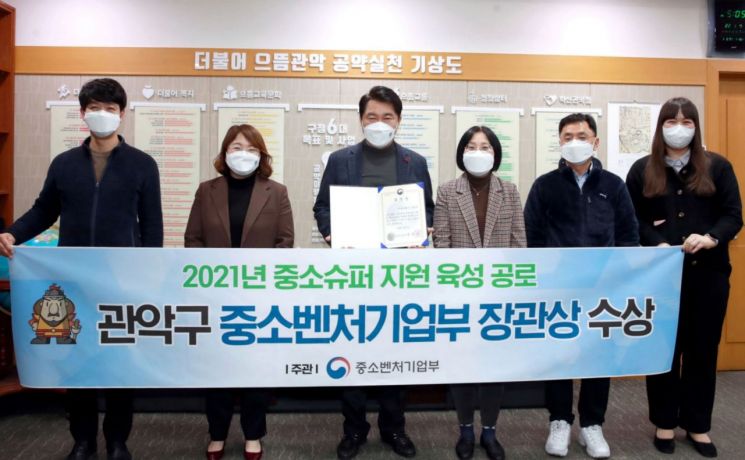
Gwanak-gu (Mayor Park Jun-hee) achieved a great success by being selected as an excellent institution in the 2021 Small Supermarket Support Project and receiving the Minister of SMEs and Startups Award.
The district was finally selected in the ‘2021 Smart Supermarket Development Project’ contest hosted by the Small Enterprise and Market Service (SEMAS), recognized for encouraging neighborhood supermarket owners to actively participate in the project.
The ‘Smart Supermarket Development Project’ supports neighborhood supermarkets in adapting to non-face-to-face and digital distribution environments by introducing smart technologies and unmanned stores, with SEMAS and local governments providing project funds to enhance competitiveness and improve owners’ quality of life.
The district achieved excellent results with 20 stores selected for the project and supported up to 50% of the project cost, the maximum local government support rate, minimizing the owners’ self-pay to the amount corresponding to value-added tax.
Currently, the district has completed smart supermarket equipment installation and consulting for 12 supported stores that have fully paid their self-pay costs. It plans to continuously convert neighborhood supermarkets into smart supermarkets to improve consumer convenience during late-night hours and enhance owners’ quality of life by improving poor business environments.
Furthermore, the district’s continuous administrative support for small business owners, including support for businesses affected by gathering bans, interest-free loans, integrated platforms for revitalizing traditional markets, and expanded support for digital transformation, is also considered a background for this award.
Recently, Haengun-dong and Daehak-dong were selected as target areas for the second phase of Seoul’s Living Commercial District Development Project, receiving budgets of up to 1.5 to 2 billion KRW over three years, demonstrating the district’s active efforts for small business owners will continue.
An official from the district said, “Receiving the Minister of SMEs and Startups Award for the Small Supermarket Support Project recognizes our district’s active efforts to support small business owners,” adding, “We will continue to discover and promote projects that help small business owners struggling due to COVID-19.”
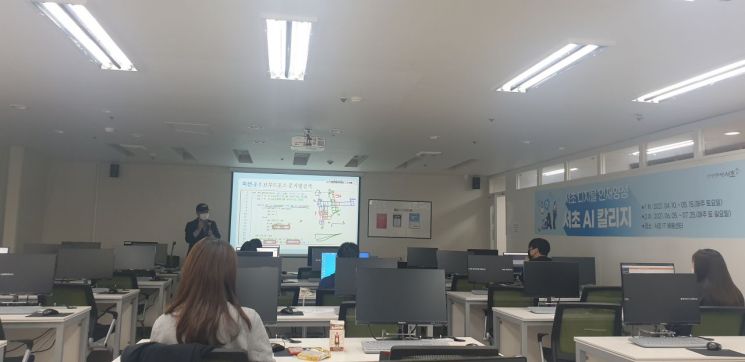
Seocho-gu announced that as a result of operating the ‘Seocho 4th Industrial Revolution College’ amid prolonged COVID-19 employment difficulties and the 4th industrial revolution trend last year, a total of 90 people found jobs, including 10 who were hired as regular employees.
This shows that the district’s practical education suited for the 4th industrial revolution era, combined with administrative and financial support, resulted in high satisfaction for both companies and job seekers, moving beyond one-time simple resume building.
An official said, “This education opened new job opportunities in the 4th industrial sector for young people and supported employment connections by subsidizing labor costs for local companies.”
The ‘Seocho 4th Industrial Revolution College’ consists of seven projects including AI College and Robot Coding College, with a budget of about 500 million KRW and a total of 541 participants.
Among them, the district’s representative 4th industrial college is the ‘Seocho AI College,’ operated jointly with KAIST. This program consists of 24 weeks and includes coaching by mentors who are AI practical researchers, portfolio projects, and task execution for AI companies, linking with corporate work.
As a result, 21 excellent graduates were hired as interns at related companies, with six of them successfully employed as regular employees.
Kim San-ha (resident of Bangbae-dong, Seocho-gu), who was hired as a regular employee at a 4th industrial-related company after participating in Seocho AI College last year, said, “I received free education and professional curriculum at Seocho AI College, gaining relevant experience,” adding, “Mentoring by professional teaching assistants helped me get a regular job and set my future direction.”
Additionally, the district actively worked to strengthen youth employment competitiveness by operating programs such as the ‘Robot Coding College,’ which was the first in Seoul’s autonomous districts in 2020 to provide hands-on robot learning, ‘Data Labeling Education’ for processing photos and documents into AI-learnable formats, and ‘Media Creator Training Course’ teaching video editing skills and promotional know-how from active creators.
The district also operated the ‘Foreign Company Employment Academy’ online last year, with participation from Google and L’Or?al, providing customized employment strategy lectures and resume writing tips from corporate HR managers for young people aspiring to work in foreign companies.
This year, the district plans to continue operating the 4th Industrial Revolution College and expand participation to educate about 600 people.
Cheon Jeong-wook, Acting Mayor of Seocho-gu, said, “We will continue to provide differentiated, customized employment services unique to Seocho-gu to meet the demands of young job seekers in the 4th industrial era and help realize their dreams.”
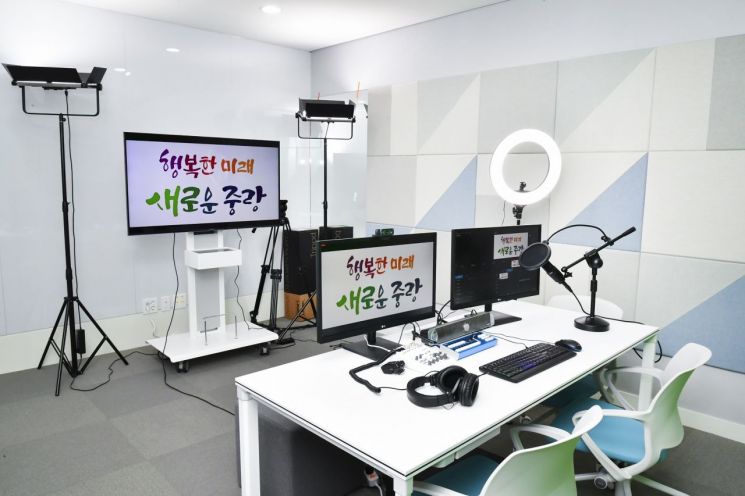
Jungnang-gu (Mayor Ryu Gyeong-gi) has prepared various programs to help families spend meaningful time together at the newly opened Jungnang Media Center during the winter vacation period.
The winter vacation programs include three types: ‘YouTube Class with Parents,’ ‘News Production Experience,’ and ‘Free Movie Screenings.’
In the YouTube Class with Parents, elementary school children and their parents form teams of two to create YouTube videos. They will create animation dubbing videos and unboxing videos, learning basic knowledge about copyrights and portrait rights.
The News Production Experience targets youths aged 12 and above, teaching them about news and allowing them to produce news themselves. YTN announcer Eom Ji-min will explain the news production process, voice training, news reading practice, and news article writing. After the lecture, participants will record and watch news produced about their neighborhood.
The movie screenings are open to all Jungnang-gu residents. Four family-friendly movies were selected under the theme of New Year’s special harmonious films. The movies can be watched for free in the multipurpose studio.
All programs can be applied for through the Jungnang Media Center website, and except for the movie screenings, there is a small tuition fee. For detailed information on schedules and programs, visit the website or contact the Jungnang Media Center.
Ryu Gyeong-gi, Mayor of Jungnang-gu, said, “We hope families can spend safe and meaningful time at the media center during winter vacation,” adding, “We will continue to do our best to help local residents learn and experience diverse media cultures.”
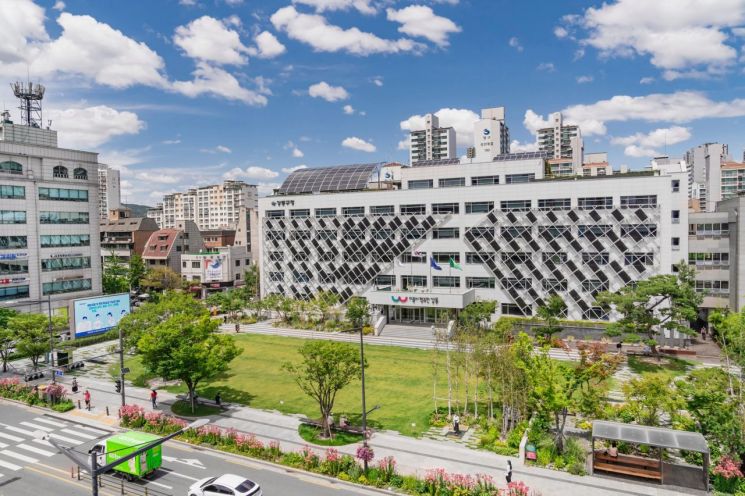
Gangdong-gu (Mayor Lee Jeong-hoon) was selected as an excellent institution in the ‘2021 Data-Based Administration Status Evaluation’ conducted by the Ministry of the Interior and Safety.
The ‘Data-Based Administration Status Evaluation’ was conducted for the first time in 2021 to inspect the operation status of data-based administration across institutions nationwide and promote the establishment of data-based administration following the enforcement of the Act on the Promotion of Data-Based Administration.
In October last year, based on ‘4 major fields and 8 indicators,’ the operation status of data-based administration was evaluated for 288 institutions nationwide. Gangdong-gu received a score of 95.73, ranking among 40 excellent autonomous districts (average score 83.16) with a significantly higher evaluation score.
Since establishing the Big Data Team in July 2019, the district has utilized big data analysis results using artificial intelligence in various fields for policy purposes, and the excellent policies using big data received high evaluations in this assessment.
In particular, the district received high marks for applying AI and big data analysis techniques to district administration, such as AI analysis of local currency (Bitsal Money and Gangdong Love Gift Certificates), analysis for installing heatwave shade shelters, building and operating data platforms like ‘Gangdong at a Glance’ and ‘Gangdong-gu Big Data Portal’ (GBP), promoting inter-agency data sharing, and conducting AI data labeling education and big data education in collaboration with Seoul National University.
Lee Jeong-hoon, Mayor of Gangdong-gu, said, “2021 was the inaugural year for introducing data-based administration, laying the foundation to integrate scattered Gangdong-gu data into one place and utilize it for district administration,” adding, “We will lead data-based administrative policies with scientific policies that residents can feel through continuous data utilization.”
© The Asia Business Daily(www.asiae.co.kr). All rights reserved.



















