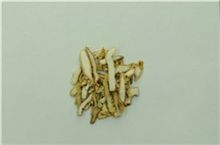
 Baeksuo herbal medicine.
[Asia Economy Reporter Kim Bong-su] A research team at Seoul National University has confirmed that the medicinal herb 'Baeksuo,' widely cultivated in Korean rural areas, is native to Korea. They also deciphered the plant genome structure for the first time in the world, laying the foundation for various cultivar improvements.
According to Seoul National University on the 10th, Professor Yang Tae-jin's team from the Department of Agricultural Biology Resources, College of Agricultural and Life Sciences, conducted a study on the genomic structural characteristics and genetic diversity of Baeksuo genetic resources cultivated nationwide in Korea, which was published in the international journal 'BioMed Central Plant Biology' on the 3rd.
Baeksuo is a native Korean plant distributed throughout the mountains and fields nationwide. Farmers have been collecting wild Baeksuo and cultivating it in fields for decades. It possesses various pharmacological effects such as alleviating menopausal symptoms, anti-inflammatory, and antioxidant properties, making it widely used as a raw material for medicinal herbs and health functional foods. However, even within Baeksuo, there is significant diversity in morphological, functional, and agricultural production aspects, increasing demand for developing superior Baeksuo cultivars and customized products using them.
Belonging to the family Polygonaceae and genus Fallopia, Baeksuo is a plant native to the Korean Peninsula, known for its excellent effects in alleviating female menopausal symptoms. The production and sales of female menopausal products based on Baeksuo increased significantly until 2015 and were evaluated as one of the most exemplary cases complying with the Nagoya Protocol.
Although the Baeksuo industry was severely contracted due to the fake Baeksuo incident, which was cleared without charges in 2015, it has been gradually recovering recently. The plant known as fake Baeksuo, Ilyeopupiso, is a close relative of Baeksuo and is called Baishouwu (白首?) in China, where it is used as food and medicinal herb. Ilyeopupiso was introduced to Korea about 30 years ago and cultivated by farmers, but due to the fake Baeksuo incident, it was once mistakenly recognized as a poisonous plant domestically.
In a 2020 research paper, the team revealed that Baeksuo and Ilyeopupiso are genetically the closest plants, making morphological and genetic characteristics difficult to distinguish. Applying only one or two genetic testing methods can cause species identification errors such as false positives or false negatives.
The team presumed that this is due to the rich genetic diversity of Baeksuo, native to the Korean Peninsula, and conducted research to elucidate the structural characteristics and genetic diversity of Baeksuo genomes collected nationwide. Using next-generation sequencing methods on Baeksuo samples collected nationwide, they completed chloroplast genomes, identified genetic variations, developed various genetic testing methods, and analyzed genetic diversity within Baeksuo populations.
As a result, many variations were observed in the chloroplast genome, and the nuclear genome showed even greater diversity and high heterozygosity. This indicates that Baeksuo is a native resource originating from the Korean Peninsula and suggests the possibility of developing superior cultivars by applying molecular breeding technologies in the future.
The research team, for the first time worldwide, revealed essential basic information for Baeksuo genome research, including chromosome morphology and structure, and genome size information. Based on this, they plan to complete the whole genomes of Baeksuo as well as its close relatives Ilyeopupiso and Fallopia, establishing foundational data for Baeksuo breeding and related research fields. Morphological analysis of Baeksuo showed great diversity in both leaves and roots, and they discovered resources with excellent traits in agricultural and physiological activity aspects. They confirmed that Baeksuo, a native Korean resource, has high potential and excellence as breeding material due to its morphological and genetic diversity.
The research team stated, "We are conducting genome research on Baeksuo, a plant native to Korea, collecting diverse resources, and simultaneously pursuing breeding research integrating molecular breeding technologies. This will serve not only as a model for systematic research on native resource plants of the Korean Peninsula but also as foundational research for securing sovereignty over Korea's biological resources and fostering growth in the green bioindustry."
© The Asia Business Daily(www.asiae.co.kr). All rights reserved.
















