[Seoul District News] Gwanak-gu to Pilot Small Group Meetings at Existing Nangok-dong Mugunghwa Senior Center (Nangok-ro 26da-gil 17) 1st Floor... Songpa-gu Provides Free Laundry Service for Vulnerable Households in Samjeon-dong... Mapo-gu Awarded ‘2021 Audit Report Handling Excellence’ by Board of Audit and Inspection... Jung-gu Conducts Social Security Benefit Verification... Yongsan-gu Youth Center Achieves Highest Grade in 2021 National Youth Training Facility Evaluation by Ministry of Gender Equality and Family... Dongjak-gu Issues Vaccination Stickers... Yangcheon-gu Opens Yangcheon Safety Experience Education Center
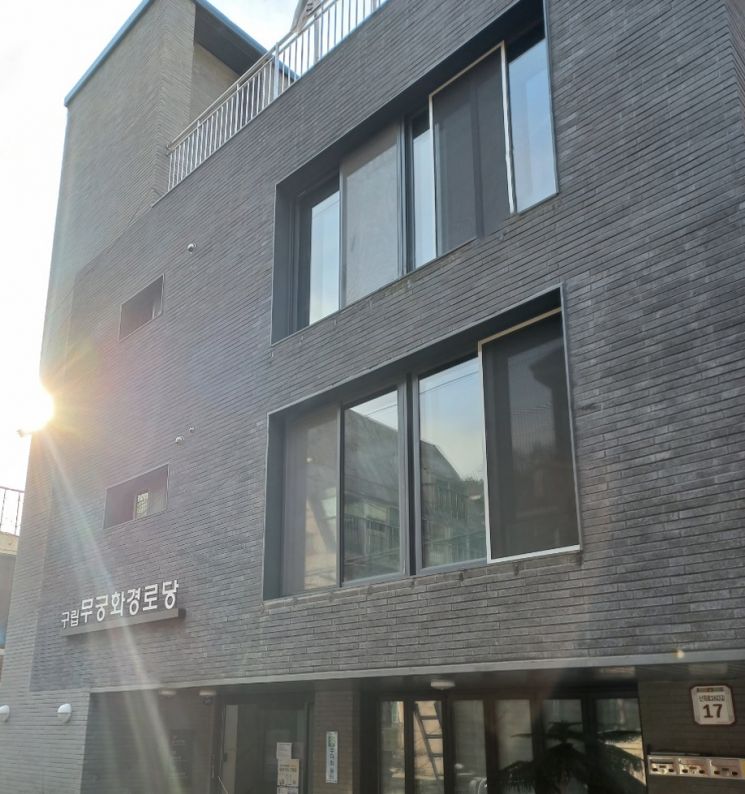
[Asia Economy Reporter Park Jong-il] Gwanak-gu (Mayor Park Jun-hee) opened the ‘Multicultural Sarangbang’ on the 1st of last month for elderly members of multicultural families who are socially marginalized.
The district accepted requests that elderly members of multicultural families find it difficult to socialize in existing senior centers and lack comfortable resting spaces, and created a new space to promote elderly welfare and revitalize senior centers.
The newly opened ‘Multicultural Sarangbang’ was reborn as a space for multicultural elderly to use by utilizing about 60㎡ of the multipurpose room on the first floor of Mugunghwa Senior Center (17, Nangok-ro 26da-gil), located in Nangok-dong.
The district plans to pay close attention to ensure no inconvenience for the elderly during actual use by placing necessary items such as refrigerators, TVs, dining tables, and utensils, and by providing additional operating expenses for Mugunghwa Senior Center proportional to the number of users for meal costs.
The Multicultural Sarangbang, intended for about 15 elderly people from naturalized and multicultural families, will be operated on a trial basis as a small group within Mugunghwa Senior Center due to the number of members not meeting the legal requirements for establishing a senior center. The district will spare no effort in multicultural programs and various administrative support.
A district official said, “Respect for the elderly in the upcoming super-aged society is an issue that transcends nationality and race and must be addressed by the international community,” adding, “We hope the opening of the Multicultural Sarangbang will be an opportunity for multicultural families to settle stably in Korean society and for local residents to accept a multicultural society.”
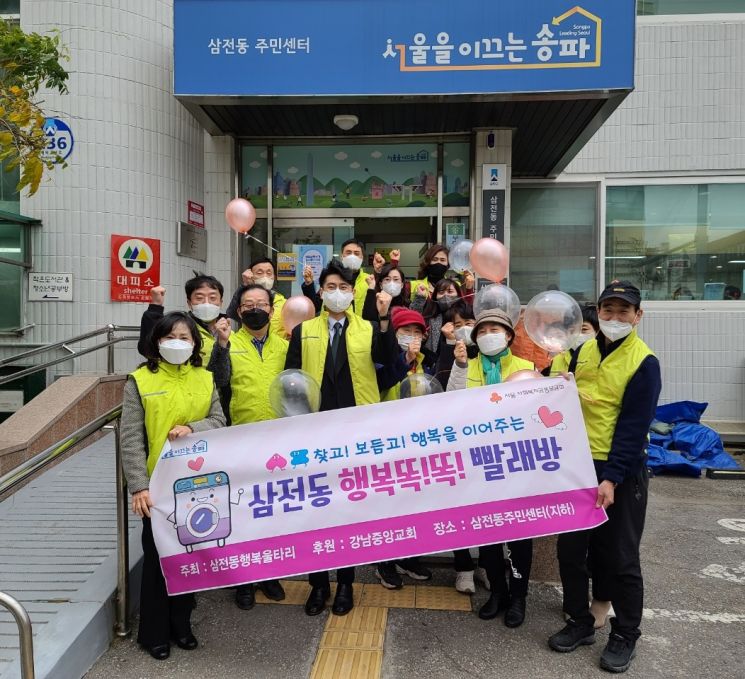
Songpa-gu (Mayor Park Seong-su) announced that it is supporting laundry services through the operation of the ‘Happy Knock Knock Laundry’ for housing-vulnerable households facing increased difficulties due to the prolonged COVID-19 pandemic and the winter season.
Samjeon-dong is a densely populated area of multi-family housing, with relatively many households having elderly living alone, severely disabled persons, and other mobility-impaired residents compared to other areas in Songpa-gu. There are also 17 goshiwon (small lodging houses), making it an area with many single-person households aged middle-aged and above.
Accordingly, the district set up a laundry room (with Wash Tower installation) in the basement level 1 of Samjeon-dong Community Service Center using designated donation funds from Gangnam Central Church to help vulnerable residents who find it difficult to wash large laundry items such as blankets and those with mobility difficulties.
The ‘Happy Knock Knock Laundry’ project involves about 20 members of the local welfare community, including Our Neighborhood Care Group and Neighbor Watchers, participating through the Dong Happiness Fence (local community security council). They identify housing-vulnerable households in the area and have been providing free laundry services since the end of November last year.
This laundry service supports low-income housing-vulnerable groups (within the lower-income bracket) living in semi-basements or including children, disabled persons, and elderly residents. Those who wish to apply can contact the Samjeon-dong Community Service Center in Songpa-gu.
In addition to laundry services, the program also conducts welfare service needs surveys, links resources, identifies risk factors in the living environment, and provides preventive guidance.
An elderly person who received laundry support said, “It was difficult to do large laundry due to the recent cold wave, so I am grateful for this help.”
Songpa-gu Mayor Park Seong-su said, “We hope this laundry service support will help vulnerable residents whose lives have become more constrained due to the prolonged COVID-19 pandemic and winter season to create a healthy and pleasant living environment,” adding, “We will continue to strive to improve residential welfare for Songpa-gu residents through customized welfare services.”
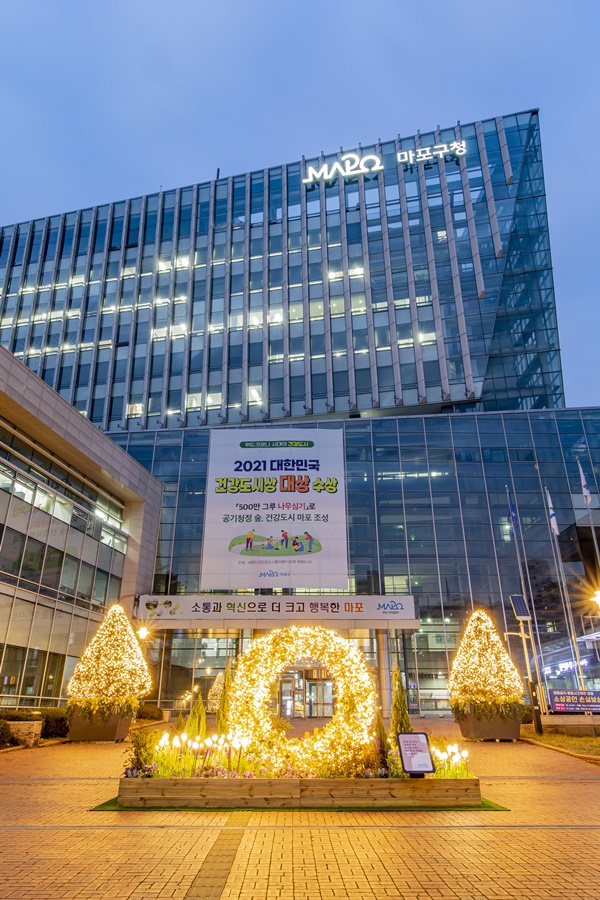
Mapo-gu (Mayor Yoo Dong-gyun) has been selected as an ‘Excellent Institution for Handling Audit Reports in 2021’ by the Board of Audit and Inspection and will receive an institutional commendation.
The Board of Audit and Inspection annually awards the Audit Commissioner’s Commendation to central government agencies, local governments, and public institutions that contribute to public interest by detecting corruption among public officials, saving budgets, improving unreasonable systems, and diligently investigating and handling audit reports.
This time, Mapo-gu was highly evaluated for its thorough and sincere handling of audit report complaints and related matters, becoming the only basic local government nationwide to be selected as an excellent institution in 2021 and receiving a commendation.
The district is making multifaceted efforts to build a trustworthy public service for residents. It enhances administrative transparency and reliability through solid audit and integrity policies and leads the protection of residents’ rights by operating an ombudsman and conflict management center to resolve chronic complaints.
In particular, the Mapo-gu Ombudsman, launched in 2015, has handled over 70 difficult complaints so far, playing a significant role as a representative of residents by improving unreasonable administrative systems and mediating disputes among residents. In August last year, it contributed to creating a safe pedestrian environment around Yeomni Elementary School by mediating complex complaints involving multiple institutions such as Mapo-gu Office and the police station.
As social complexity increases and the need for dispute resolution among stakeholders around public policies grows, the district established a Conflict Management Center within the Audit Office in December 2019 to proactively respond to public conflicts. The center aims to mediate conflicts among stakeholders and reduce unnecessary social costs through systematic public conflict management, thereby enhancing public trust.
Mapo-gu Mayor Yoo Dong-gyun said, “We will not be satisfied with this achievement and will do our best to improve resident satisfaction by correcting unreasonable administrative practices that cause inconvenience to residents,” adding, “We will also strictly hold accountable those involved in corruption revealed through public interest reports to foster a clean public service culture.”
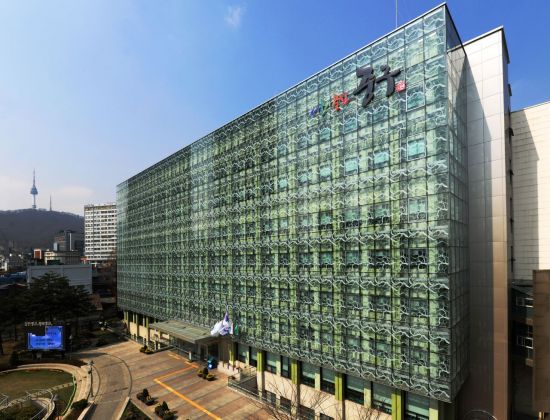
Jung-gu, Seoul (Mayor Seo Yang-ho) announced that it conducted a ‘Social Security Benefit Verification Survey’ for three months from October last year to verify the eligibility and appropriateness of benefits for welfare recipients.
The survey targeted 1,549 cases among 13 social security benefit recipients, including basic livelihood security, basic pension, and lower-income welfare, where there were changes in income, property, or other eligibility requirements.
An official from the Welfare Support Division of Jung-gu Office explained, “Following the relaxation of the livelihood benefit support obligation criteria in October last year, we focused on readjusting benefits based on updated public data and on-site consultations to reflect the actual situation of recipients.”
The survey resulted in 245 cases of increased benefits and 250 cases of decreased benefits, adjusting the eligibility. For households previously excluded from basic livelihood security due to exceeding the income and property criteria of support obligations, 104 households were newly designated as recipients by applying the revised criteria.
Meanwhile, benefits were discontinued for 146 households due to increased income. Among them, 115 households, excluding 31 with relatively high recognized income, will be separately managed through case management, visiting community center projects, and private sponsorships for continuous monitoring.
For example, Mr. Yoon, a couple in their 70s, was previously receiving medical benefits but was excluded due to increased income and property of his son, the support obligor. However, through continuous monitoring by the district, he was rescued and able to receive medical benefits again.
Thirty-six cases of fraudulent receipt were also detected. These involved failure to report income increases due to employment or omission of income. The district plans to recover about 10 million won improperly received.
Jung-gu Mayor Seo Yang-ho said, “We will do our best to ensure welfare funds are used fairly and appropriately through regular verification surveys,” adding, “We will continuously monitor those whose benefits are discontinued to prevent welfare blind spots.”

Yongsan-gu (Mayor Seong Chang-hyun) Youth Center and Youth Culture House received the highest grade in the 2021 National Youth Training Facility Comprehensive Evaluation conducted by the Ministry of Gender Equality and Family.
The comprehensive evaluation of youth training facilities is hosted by the Ministry of Gender Equality and Family and organized by the Korea Youth Policy Institute, conducted every two years. The 2021 evaluation covered 497 facilities nationwide, including youth training centers, youth culture houses, and youth specialized facilities.
Yongsan Youth Center (24, Ichon-ro 71-gil) achieved excellent results in mid- to long-term development plans, youth participation, external cooperation, and publicity. Yongsan Youth Culture House (329, Baekbeom-ro) received high evaluations across all categories. Both facilities received A grades in architecture, civil engineering, mechanical, and fire safety categories, proving their safety.
An official from the district said, “Facility usage has decreased compared to two years ago due to COVID-19,” adding, “The Youth Center plans to develop digital experience content this year to enable activities in virtual spaces.”
In December 2021, Yongsan Youth Culture House introduced ‘Kkum;Dam,’ a youth-exclusive space equipped with facilities and equipment necessary for learning, discussion, and media creation activities. Anyone aged 14 to 24 can use it free of charge.
Yongsan-gu Mayor Seong Chang-hyun said, “Youth are excellent local resources capable of critical thinking and proposing productive alternatives,” adding, “We will continue customized policies for nurturing future talents, such as providing virtual spaces where youth can freely express their energy during the COVID-19 era.”
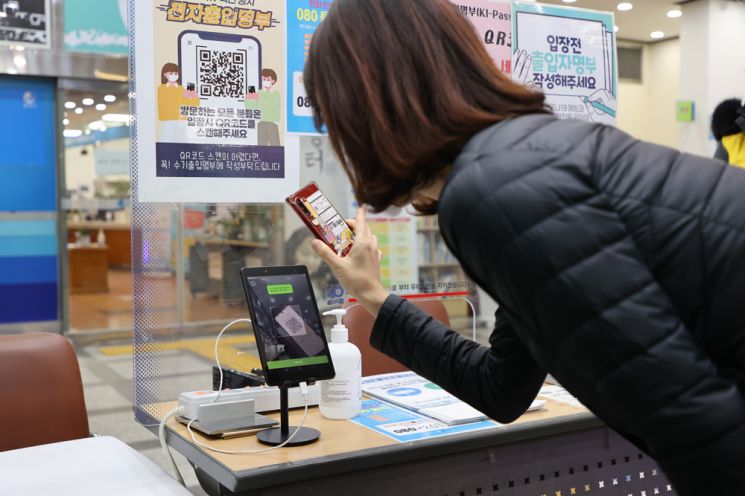
Dongjak-gu (Mayor Lee Chang-woo) announced that it will issue customized vaccination certificates for elderly people vulnerable to smartphone use and information following the implementation of the vaccination validity period for the quarantine pass.
The district will issue paper and sticker certificates in addition to electronic vaccination certificates for information-vulnerable groups such as elderly and disabled persons who find it difficult to use electronic certificates.
If it is difficult to issue an electronic vaccination certificate, residents can visit the community service center to receive a vaccination sticker or obtain a paper certificate from the hospital where they were vaccinated (some medical institutions may charge a fee), public health center, or community service center.
Electronic vaccination certificates can be verified through the ‘COOV’ app and electronic entry platforms such as Kakao, Naver, and Toss.
The quarantine pass validity period will be applied starting from the 10th after a one-week grace period from the 3rd. The quarantine pass is valid from 14 days after completing the COVID-19 vaccination and expires after six months.
Therefore, people vaccinated before July 6 last year cannot use facilities requiring the quarantine pass unless they have a negative PCR test or an exemption certificate.
The district explained that even third-dose recipients who do not update their vaccination information on electronic entry apps will be treated as unvaccinated or expired and face difficulties using facilities.
Additionally, when scanning QR codes on electronic entry apps, the user’s vaccination status will be announced audibly.
If the vaccination certificate is valid and updated, the voice will say “Vaccination completed.” For invalid certificates, a separate alert sound “Ding-dong” will ring. When hearing “Ding-dong,” facility managers must check PCR negative test results, quarantine release certificates, or exemption certificates.
The expansion of the quarantine pass is not merely to increase vaccination rates but to minimize infections among unvaccinated severe patients and secure capacity in the severe medical system to resume daily life.
As of the 3rd, the overall third-dose vaccination completion rate in the district is 35.59% (137,189 people), and the third-dose completion rate for those aged 60 and over is 82.5% (74,525 people).
Lee Seon-hee, head of the Elderly and Disabled Division, said, “With the expansion of the quarantine pass, we have prepared to issue paper and sticker certificates in addition to electronic vaccination certificates so that residents can use facilities safely and conveniently.”
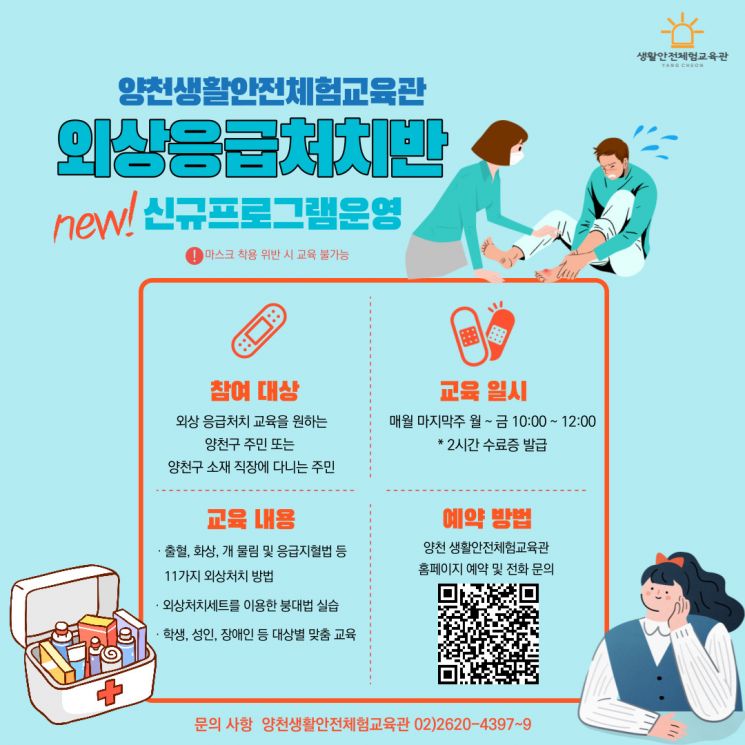
Yangcheon-gu (Mayor Kim Soo-young) announced that it will officially operate the newly established ‘Trauma Emergency Treatment Class’ program at the Yangcheon Life Safety Experience Education Center starting in 2022.
The Yangcheon Life Safety Experience Education Center is a hands-on experiential education space where residents can learn CPR, fire suppression and evacuation methods, virtual disaster experiences, and safe operation of household facilities such as electricity and gas. Visitors can cultivate safety awareness and learn safety rules in daily life through realistic experiences.
Since its opening in August 2016, 51,293 people have completed safety education at the center through 2,233 sessions. Even during the past two years when on-site education was difficult due to COVID-19, the district quickly switched to real-time remote education, receiving great responses from local residents.
The newly established Trauma Emergency Treatment Class is a year-round regular education course held during the last week of each month (Monday to Friday) from 10 a.m. for two hours. The education covers practical, easy-to-learn topics such as bleeding, burns, animal bites, emergency hemostasis, bandaging, and the use of triangular bandages.
Those wishing to participate can apply through the Yangcheon Life Safety Experience Education Center website or by phone at least seven days before the class. For more information about the center’s rich programs, including remote CPR education, contact the Safety and Disaster Division of Yangcheon-gu Office.
Yangcheon-gu Mayor Kim Soo-young said, “Safety experiential education that simulates real situations is crucial to prepare for various safety accidents and emergencies in daily life,” adding, “We ask for active participation in the well-structured education courses at the Yangcheon Life Safety Experience Education Center and will do our best to make Yangcheon-gu a safer city.”
© The Asia Business Daily(www.asiae.co.kr). All rights reserved.
![User Who Sold Erroneously Deposited Bitcoins to Repay Debt and Fund Entertainment... What Did the Supreme Court Decide in 2021? [Legal Issue Check]](https://cwcontent.asiae.co.kr/asiaresize/183/2026020910431234020_1770601391.png)


















