[Seoul District News] Yongsan Exploration Trail 4 Routes, 12 Attractions with Virtual Reality QR Codes... "More Fun and Informative!" Guro-gu Revamps Newsletter 'Smart Guro'... Dongdaemun-gu Recruits Youth Mentors... Walk Along Anyangcheon with Me?… Yeongdeungpo-gu Creates Anyangcheon Riverside Walkway... Geumcheon-gu Selects 6 'The Best' Beauty Salons... Gangnam-gu Installs LED Floor Pedestrian Signals and Crosswalk Spotlights Across the District... Jung-gu Applies Safe Living Design to School Routes at Jangchung Elementary, Cheonggu Elementary, and Pildong Daycare... Yangcheon-gu, Seo
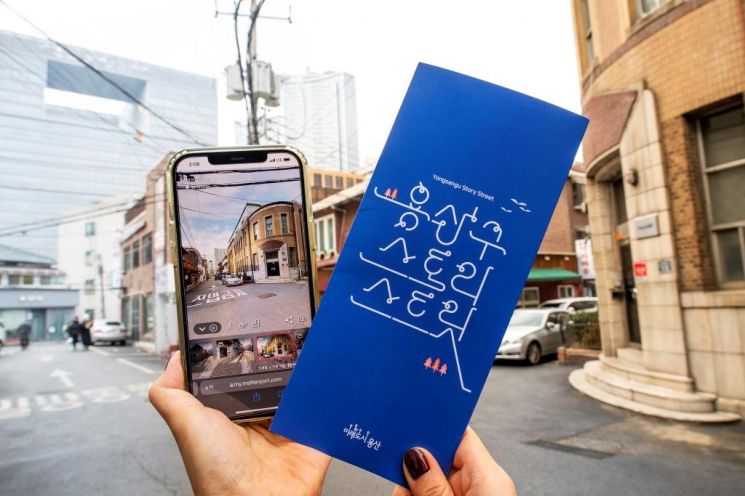
[Asia Economy Reporter Park Jong-il] Yongsan-gu (District Mayor Seong Jang-hyun) has produced and distributed 3,000 copies of the Yongsan QR Map with Stories. This is to introduce local attractions encountered while walking through the neighborhood alleys to residents and visitors.
The map is titled ‘Yongsan-gu Story Street’. It is a four-fold map featuring four exploration routes in the center: ▲Path of Independence Will ▲Walking Together in Newtro ▲MZ Generation’s Food and Style Exploration Route ▲Walking with Family.
On both sides, the map includes estimated exploration times, descriptions of attractions, and QR codes for virtual reality previews of the attractions, adding interest.
Among the exploration routes on the map, the ‘Path of Independence Will’ is a course where one can learn about the history of Japanese imperialist invasion and anti-Japanese resistance. It starts from Hyochang Park Station and continues to Lee Bong-chang History Hall, Hyochang Park Uiyeolsa Shrine, and the Colonial History Museum. The distance is 1.7 km (25 minutes on foot, 6 minutes by bicycle).
The ‘Walking Together in Newtro’ route introduces Yongridan-gil, a retro-style alley famous for unique shops in old buildings, Yongsan Urban Memory Exhibition Hall, and Baekbin Crossing. The distance is 2.3 km (33 minutes on foot, 8 minutes by bicycle).
The ‘MZ Generation’s Food and Style Exploration Route’ starts from Itaewon Station and connects to Itaewon World Food Street, Haebangchon Food Street, and Namsan Tower Road. The distance is 3.9 km (66 minutes on foot, 16 minutes by bicycle).
The ‘Walking with Family’ route consists of attractions where children can experience, learn, exhibit, and play. It starts from Hangangjin Station and connects Yongsan Craft Center, War Memorial of Korea, and Yongsan Family Park. The distance is 6.1 km (90 minutes on foot, 22 minutes by bicycle).
A district official said, “At a time when traveling is burdensome due to the spread of COVID-19, exploring the neighborhood with the QR map will be a unique pleasure.”
The district distributed the QR maps to community service centers, the War Memorial, Urban Memory Exhibition Hall, and the Colonial History Museum. VR videos filmed at 12 attractions will also be included on the Yongsan-gu website.
Yongsan District Mayor Seong Jang-hyun said, “Yongsan-gu Story Street is one of the 2021 cooperative governance project achievements where the public and private sectors worked together to solve local issues,” adding, “We thank the residents who took an interest in the community and created the exploration courses.”
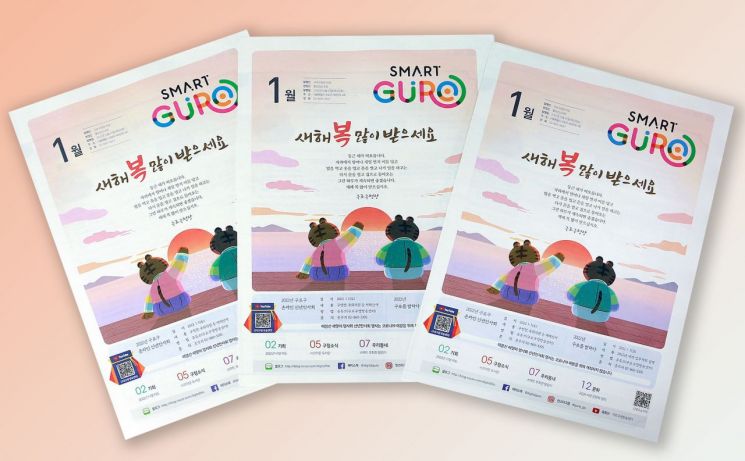
“The 16-page newsletter will be filled with stories about neighbors.”
Guro-gu (District Mayor Lee Seong) is revamping its district newsletter ‘Smart Guro’.
Guro-gu announced on the 6th, “We plan to increase the number of pages and expand the resident participation section to include various content in the newsletter,” adding, “We are pushing for the newsletter revamp to create a ‘Smart Guro’ newsletter with more information and fun.”
With this revamp, the existing tabloid-sized newsletter of 12 pages will increase by 4 pages to a total of 16 pages.
The page composition, which was mainly focused on district projects such as planning, district administration, education, and our neighborhood, will add resident participation content such as resident interviews and honorary reporter coverage, and introduce a ‘Large Font Page’ for seniors.
The ‘Large Font Page’ is a page with enlarged font size to make it easier for seniors to view information in areas of high interest such as education and jobs.
Guro-gu will apply the revamp starting from the February issue this year. It also plans to strengthen promotion of various subscription methods such as mail and e-books so that more residents can access the newsletter.
In line with the revamp, Guro-gu is recruiting child honorary reporters until the 12th of this month. While there were already four adult honorary reporters, child honorary reporters will be newly selected to deliver various district news from a child’s perspective.
Child honorary reporters will write articles through on-site coverage for one year and receive a reporter ID, a commendation from the district mayor, and cultural gift certificates (30,000 KRW per article).
The recruitment is for eight elementary school students in grades 4 to 6 residing in Guro-gu. Children who wish to apply can download the application form from the district website’s news section and submit it via email (guronews@guro.go.kr) by the 12th of this month.
A Guro-gu official said, “Through this revamp, opportunities for resident participation in the newsletter production process will expand, allowing us to capture vivid voices from all over the community,” adding, “We will continue to strive to expand communication channels with residents beyond one-way information delivery.”
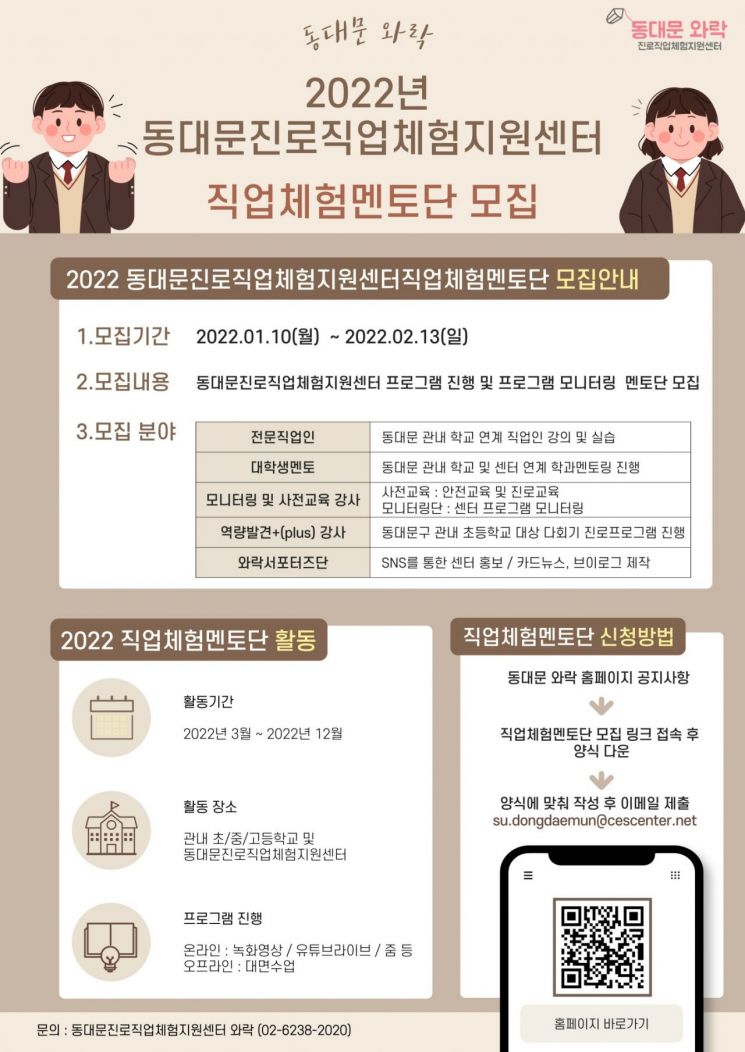
Dongdaemun-gu (District Mayor Yoo Deok-yeol) is publicly recruiting a ‘Career Experience Mentor Group’ to jointly operate various career programs that provide youth with opportunities to discover their aptitudes and career capabilities and design their career paths.
The ‘Career Experience Mentor Group’ supports career education activities for elementary, middle, and high school students in areas such as ▲on-site career experience programs ▲career lectures visiting schools ▲department mentoring ▲career special lectures ▲discovery and management of free semester experience sites.
The district plans to provide high-quality educational programs to Dongdaemun-gu students and offer practical help in exploring and designing careers by building a career education network within the local community through the ‘Career Experience Mentor Group.’
Any resident interested in youth career education can participate in the ‘Career Experience Mentor Group’ by downloading the application form from the Dongdaemun Career Experience Support Center website starting from the 10th and submitting it via email (su.dongdaemun@cescenter.net). Applications are accepted until February 13.
Mentors will be selected through screening and notified individually after February 16. For more details, contact the Dongdaemun Career Experience Support Center Warak.
District Mayor Yoo Deok-yeol said, “We ask experts from various fields to join us in helping youth explore their careers,” adding, “We will continue to support the development and operation of diverse career education programs this year so that students can find their aptitudes and develop their potential.”
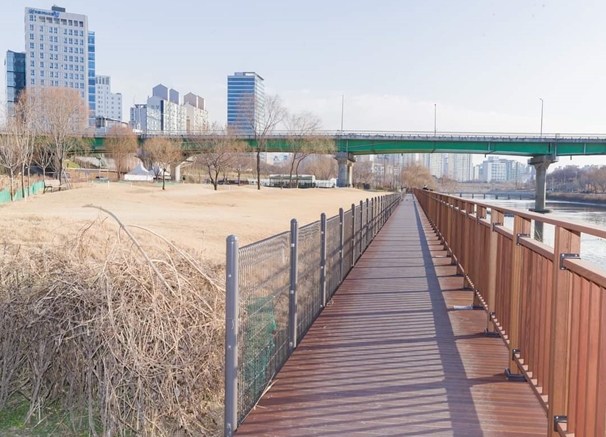
Yeongdeungpo-gu (District Mayor Chae Hyun-il) announced that it has newly refurbished the riverside walking path along Anyangcheon to provide residents with a safe and pleasant walking environment.
The newly created riverside walking path extends 4.5 km along the right bank of Anyangcheon from Sinjeong Bridge to the confluence with the Han River. The detailed design service began in February last year, construction started in August, and all processes were completed on the 22nd of last month.
The construction divided the entire section into four parts and refurbished each section differently according to the sidewalk conditions. Section 1, from the Han River confluence to Yanghwa Bridge, features a 700m-long, 1.5m-wide walking path. Section 2, from the Traffic Safety Experience Center to the Park Golf Course, has a walking path 800m long and 3m wide, and a separate 700m-long, 2m-wide bicycle detour to prevent collisions between pedestrians and cyclists.
Section 3, from the Park Golf Course to Yangpyeong Pedestrian Overpass, was cleaned up by adding a walking deck and coconut fiber mats to the previously overgrown path, with benches and photo zones installed for visitors to enjoy the beautiful waterside scenery and rest briefly. Section 4, connecting Yangpyeong Pedestrian Overpass and Sinjeong Bridge, has a 2.6 km-long, 4m-wide walking path.
Additionally, bollards to prevent vehicle entry and parking lot entrance barriers were installed throughout the walking path to block vehicle traffic, and LED streetlights were expanded to allow visitors to enjoy a safe and comfortable walk.
The district plans to continuously monitor facility aging, walking obstacles, and disconnections, actively collect and supplement user feedback, and strive to establish the area as a safe and pleasant urban healing spot.
Yeongdeungpo District Mayor Chae Hyun-il said, “Previously, there was no proper walking path along Anyangcheon, so residents used maintenance roads as walking paths. With this construction, we can now provide safe and sturdy walking paths and nature-friendly resting spots to residents,” adding, “We will do our best to maintain and manage the walking paths so that many visitors can enjoy a healthy daily life and leisurely leisure time along Anyangcheon.”

Geumcheon-gu (District Mayor Yoo Seong-hoon) announced that it conducted a public hygiene service evaluation targeting 707 beauty and hair salons and selected ‘The Best Establishments.’
This evaluation was conducted to diagnose the hygiene service level of beauty and hair salons among public hygiene businesses, aiming to improve the quality of hygiene management and contribute to residents’ health promotion.
In particular, to prevent the spread of COVID-19, guidance on quarantine rules was provided during on-site evaluations, and promotional activities for small business support projects such as ‘Himnaeso (Small Business Reboot Support Fund)’ and ‘080 Safe Call Entry Management Service’ were conducted to assist small business owners suffering from management difficulties due to the pandemic.
Geumcheon-gu evaluated 628 beauty salons and 79 hair salons on legal compliance regarding hygiene management and implementation of recommended service improvements, selecting 480 top establishments, 166 excellent establishments, and 61 general management establishments.
Among the top establishments, six (one hair salon and five beauty salons) with high evaluation scores were selected as ‘The Best Establishments’ after review by related associations. The six final establishments will receive plaques certifying them as ‘The Best Establishments.’
Geumcheon-gu selects ‘The Best Establishments’ every two years to boost morale among public hygiene business operators and promote service competition, ensuring high-quality hygiene services.
The public hygiene service evaluation results can be found on the Geumcheon-gu website under ‘Prior Information Disclosure.’
Geumcheon District Mayor Yoo Seong-hoon said, “I hope this evaluation encourages business operators to voluntarily manage hygiene thoroughly,” adding, “We will continue efforts to improve the quality of public hygiene services through ongoing inspections.”
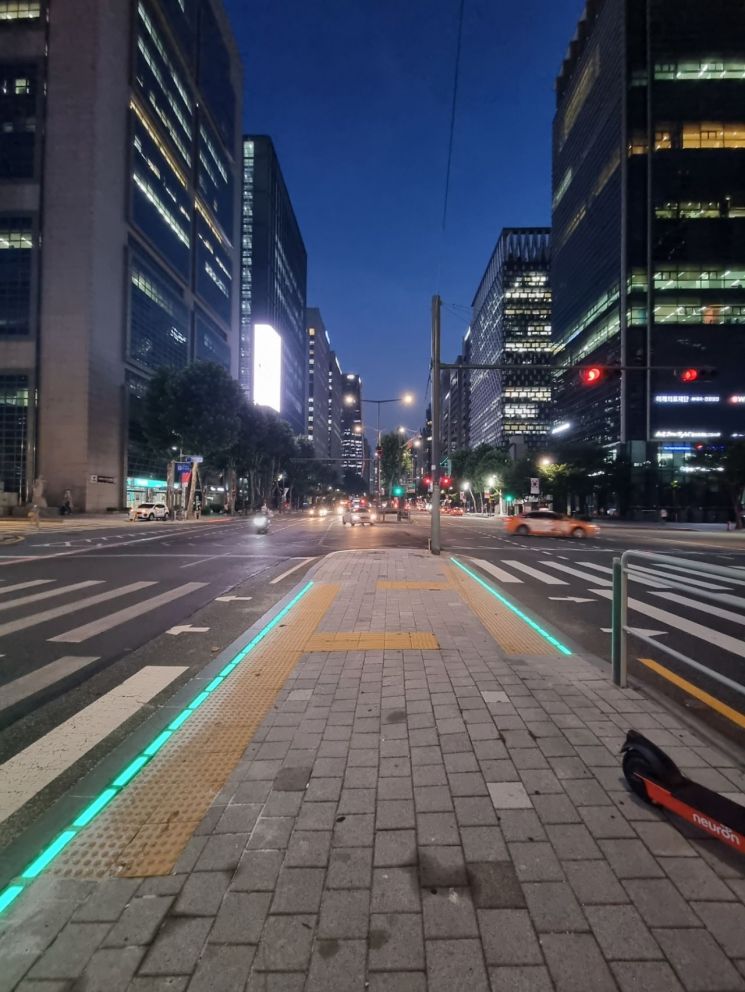
Gangnam-gu (District Mayor Jung Soon-gyun) recently completed the installation of ‘traffic safety facilities incorporating light,’ such as ground-level pedestrian signals and LED traffic safety signs, which have been promoted since 2018.
To build an ‘ICT Smart Traffic System,’ a key pledge of the 7th local government, the district has been installing intelligent traffic safety facilities throughout Gangnam-gu since 2018, striving to improve residents’ traffic safety and urban environment.
Currently, Gangnam-gu has installed 138 ground-level pedestrian signals that are highly visible at night or in rain, 420 crosswalk spotlights, 578 LED traffic safety signs, 39 speed warning systems, 3,846 LED road delineators, and 2 AI pedestrian traffic accident prevention systems.
Additionally, signal and speed enforcement cameras, pedestrian signal voice guidance aids, and other devices have been installed to create synergy. High-visibility facilities such as yellow carpets, yellow footprints, safety boundary stones, and anti-slip pavements have been installed in local protected zones.
Lee Hee-hyun, head of the Traffic Administration Division, said, “By adding ‘light’ and ‘color’ to traffic safety facilities, we are protecting residents’ traffic safety while improving urban aesthetics,” adding, “We will continue to identify areas needing improvement and work to create a safe traffic environment.”
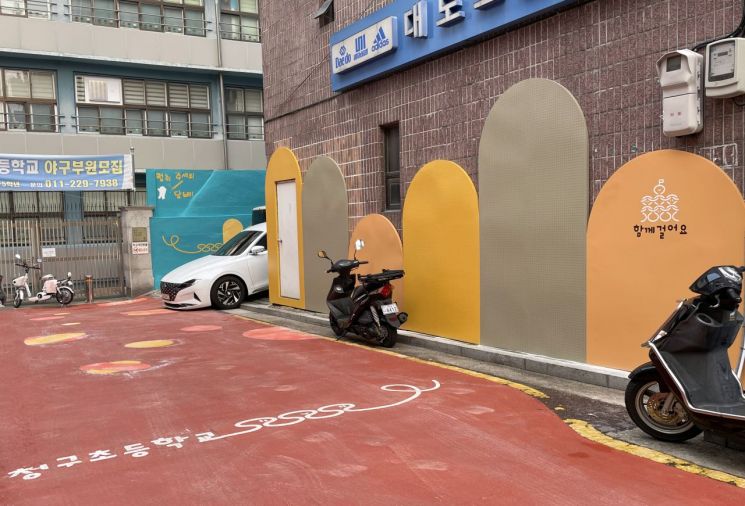
Jung-gu, Seoul (District Mayor Seo Yang-ho) announced on the 6th that it applied Safe Living Design to the school routes around Jangchung Elementary School, Cheonggu Elementary School, and Pildong Daycare Center to enhance children’s pedestrian safety.
Safe Living Design refers to design that not only improves the physical environment but also provides psychological stability to users and considers social and cultural environmental improvements based on community neighbor relationships.
Jung-gu is a typical old downtown area where commercial and residential zones are mixed. Naturally, there are many shared pedestrian and vehicle roads, and frequent traffic of motorcycles and large trucks poses threats to children’s pedestrian safety, making improvements urgent.
Accordingly, since last year, the district formed a governance group of 465 people including parents, local residents, related organizations, and experts from various fields to conduct surveys and interviews. Workshops were held multiple times with school staff and children to diagnose problems and seek solutions together. Based on this, the Safe Living Design was applied to the school routes around Jangchung Elementary, Cheonggu Elementary, and Pildong Daycare, completed at the end of last year.
The improvements are summarized into four categories: ▲strengthening the school route’s territoriality ▲traffic calming ▲creating safe spaces ▲improving blind spots.
First, a waiting area for parents was created at the elementary school entrances so parents can naturally supervise their children’s after-school activities while sitting on benches. Life rule signs drawn by children were posted on school walls, and mural graphics and art walls were applied to indicate the child protection zone and improve street scenery.
Additionally, traffic calming design was applied to induce vehicle speed reduction and prevent child traffic accidents. Speed reduction graphic stamping was applied in child protection zones so drivers recognize the school route before entering. The pavement was colored and patterned differently to separate pedestrian and vehicle paths. Solar-powered markers and high-intensity lighting were installed for easy identification of the protection zone at night.
Near Cheonggu Elementary, an additional ‘Child Safety House’ was designated. A ‘Child Safety House’ temporarily shelters children in emergency situations until police arrive. Also, part of the parking space at the ‘Child Safety House’ near Jangchung Elementary was converted into a walking path so children can easily recognize and evacuate in emergencies.
To improve blind spots, signs were installed to block entry to hazardous areas, and visible fire extinguisher boxes were installed in fire-risk locations to eliminate hidden dangers and prepare for potential accidents.
The district made ‘Creating a Child-Safe Jung-gu’ a key strategy of the 7th local government and devoted administrative efforts to safe school route projects last year. As a result, it received the Minister of the Interior and Safety Award for Child Safety in December.
Jung-gu District Mayor Seo Yang-ho said, “To create streets where children, the most vulnerable to pedestrian safety, can commute safely, we will expand the safe school route project applying Safe Living Design in the new year.”
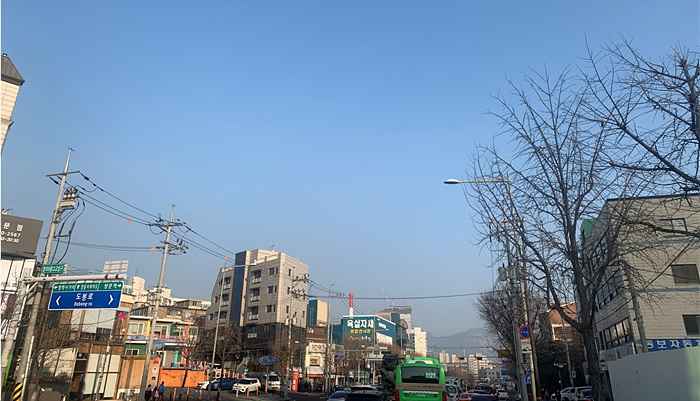
Dobong-gu (District Mayor Lee Dong-jin) announced on the 29th of last month that two sections?the school route of Changdong High School (Jeongui Girls’ Middle School Entrance Intersection to Changwon Elementary School Intersection) and the Dobong-ro area near Dobong Station (Sindobong Intersection to Dobong Station Intersection)?were finally selected as target sites in the 2022 Public Line Undergrounding Project contest.
The undergrounding project involves burying overhead lines (electricity and communication lines) underground and removing utility poles.
Last year, the district applied for contests in the Green New Deal undergrounding project, which receives national funding, and the general undergrounding project. The Changdong High School school route section was selected for the Green New Deal undergrounding project, and the Dobong Station nearby section was selected for the general undergrounding project.
Notably, among Seoul’s 25 autonomous districts, only five were selected for the Green New Deal undergrounding project, and only three for the general undergrounding project. Dobong-gu’s selection of two areas adds significance.
The selected undergrounding projects will invest a total of 11.8 billion KRW, including 8.2 billion KRW from national, city, and district funds, and 3.6 billion KRW from Korea Electric Power Corporation and telecommunications companies, covering 800m of the Changdong High School school route (Jeongui Girls’ Middle School Entrance Intersection to Changwon Elementary School Intersection) and 1,000m of Dobong-ro (Sindobong Intersection to Dobong Station Intersection).
Dobong-gu is sequentially promoting undergrounding projects on major roads according to its mid- to long-term plan. The 1,440m section from Dobong Health Center Intersection to Banghak Intersection on Dobong-ro is scheduled for completion in the second half of 2022, and the 1,000m section from Homeplus Banghak Branch to Sindobong Intersection on Dobong-ro is scheduled to start construction in the first half of 2022.
Dobong District Mayor Lee Dong-jin said, “We will continue to promote public line undergrounding projects to create clean street environments. Road excavation will be conducted at night to minimize residents’ inconvenience.”
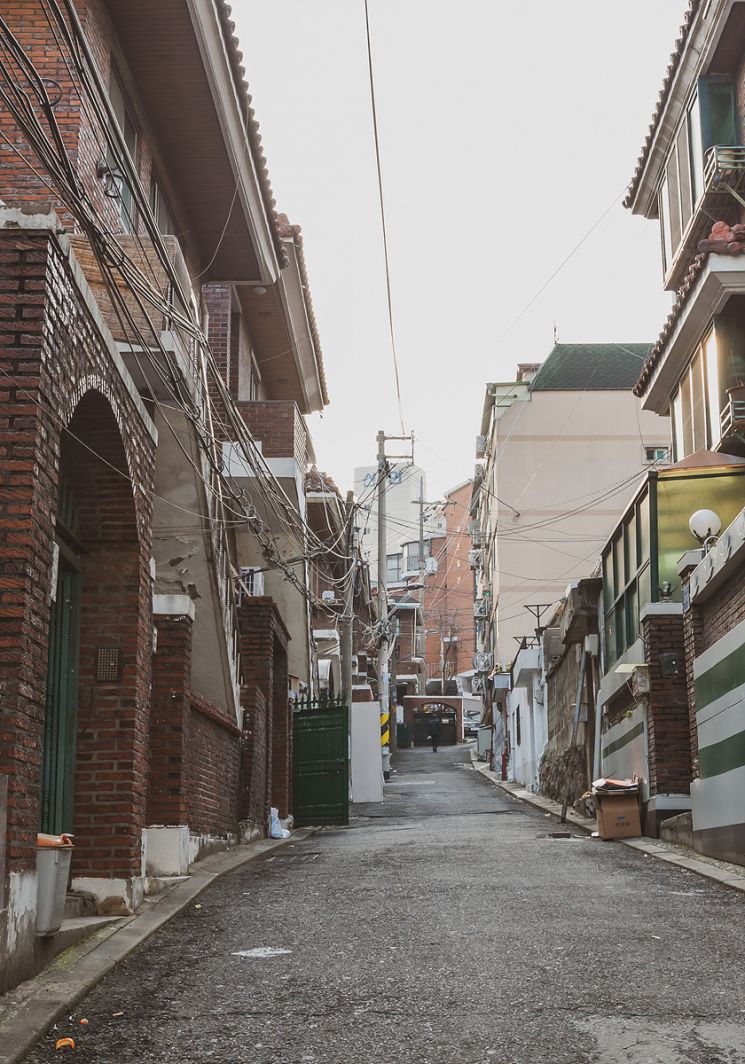
Yangcheon-gu (District Mayor Kim Soo-young) announced that it will actively promote the Seoul-type Housing Voucher project in 2022 to reduce the monthly rent burden for low-income tenants living in goshiwons and similar accommodations by supporting part of their monthly rent.
The Seoul-type Housing Voucher project provides 80,000 KRW per month for single-person households among low-income monthly rent households such as those who are not selected as basic livelihood security recipients, non-public rental housing residents in the near-poverty class, and single-parent families.
Eligibility requirements include rental deposit of 110 million KRW or less, income evaluation amount at or below 60% of the median income, and property value of 160 million KRW or less. However, basic livelihood security recipients (living, medical, housing benefits) and public rental housing residents are excluded.
Additionally, since October last year, the district has been operating an ‘Child Housing Voucher’ that provides an additional 40,000 KRW per month for households receiving the existing Seoul-type Housing Voucher with children under 18. For example, a two-person household with a single parent and one child receives 80,000 KRW for the guardian plus 40,000 KRW for the child, totaling 120,000 KRW in housing vouchers.
Residents wishing to apply for the Seoul-type Housing Voucher can visit their local community service center based on their resident registration address for ongoing applications. The district will determine eligibility after income and property investigations. If selected, support is retroactively paid from the application month, and payments are deposited into the recipient’s account on the 25th of each month.
This year, the district plans to actively identify eligible recipients through welfare planner visits, text messages, and notices in cooperation with community service centers. For detailed information about the Seoul-type Housing Voucher project, contact the Housing Division.
Yangcheon District Mayor Kim Soo-young said, “We will actively promote the Seoul-type Housing Voucher project to reduce housing cost burdens and support housing stability for low-income households facing economic difficulties such as prolonged recession and rent burdens, ensuring more eligible people benefit.”
© The Asia Business Daily(www.asiae.co.kr). All rights reserved.



















