[Seoul District News] Dongjak-gu Expands Entrance Preparation Fund to 200,000 KRW for New Elementary Students from This Year... 300,000 KRW per Middle and High School Student... Gwanak-gu, Seoul City, and Seoul Metropolitan Office of Education Share Finances to Provide 200,000 KRW Zero Pay per Elementary Student... Geumcheon-gu Recruiting Passionate Conductor for Geumcheon-gu Women's Choir... Yongsan-gu Publishes 300 Copies of "Reading Yongsan, Walking Yongsan" Booklet... Nowon-gu Opens 'Wonteo Park' and 'Wonteo Eoulmaru' Blending Nature and Community... Yangcheon-gu Creates Safe Green Forest for Children around Galsan and Yangwon Elementary Schools... Jongno-gu Hong Ji
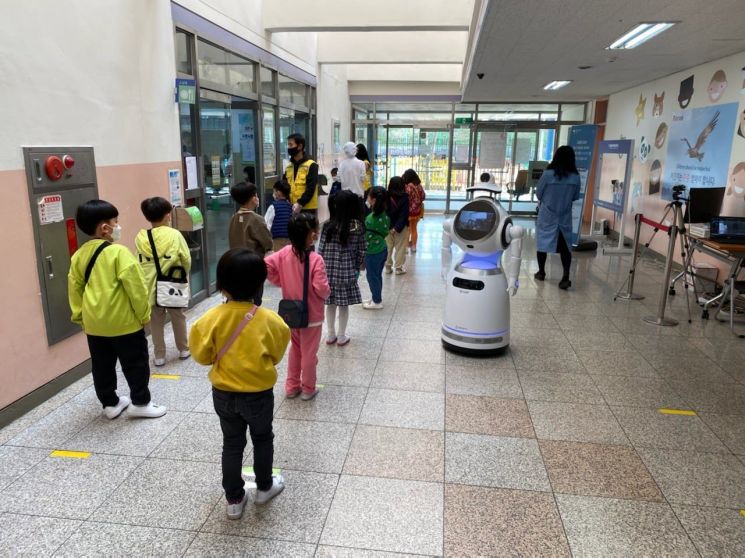
[Asia Economy Reporter Park Jong-il] Dongjak-gu (Mayor Lee Chang-woo) announced on the 5th that starting this year, it will provide entrance preparation funds to celebrate and encourage the first steps of new elementary school students in Dongjak-gu.
The entrance preparation funds were first implemented last year for middle and high school students. This year, the scope has been expanded to support elementary school entrants as well, aiming to strengthen the public nature of education and realize universal educational welfare.
Since June last year, the district has continuously consulted with Seoul City and the Seoul Metropolitan Office of Education to decide on supporting entrance preparation funds for elementary school students. Accordingly, an ordinance related to the support was established and the budget was allocated. The costs for the entrance preparation fund support project will be shared by Dongjak-gu, Seoul City, and the Education Office.
Currently, the support targets about 7,200 first graders in elementary, middle, and high schools within Seoul who reside in Dongjak-gu. Elementary students can receive 200,000 KRW, and middle and high school students can receive 300,000 KRW.
It is also noteworthy that support is provided to first graders residing in Dongjak-gu who enter schools outside Seoul to minimize educational condition disparities.
The support method involves paying the entrance preparation funds collectively to schools, which then provide support for uniform purchases, or sending Zero Pay points to parents' smartphones so they can autonomously purchase necessary clothing (uniforms, daily wear, gym clothes, and other daily clothing) and school-recommended books.
New students and their parents who wish to receive the entrance preparation funds should fill out the application form within the school's application period and submit it to the school principal or the district office. For more details, contact the respective schools or the Dongjak-gu Office Education Policy Division.
Last year, the district supported about 4,400 first graders in middle and high schools with entrance preparation funds, contributing to the improvement of educational welfare.
Additionally, last year, the district expanded common expense support for school-specific necessary projects such as COVID-19 response costs, promoted educational expense subsidy projects to strengthen future education including AI robot support and future creative classrooms, aiming to nurture future talents and secure educational competitiveness.
Lee Chang-woo, Mayor of Dongjak-gu, said, "Through the support of entrance preparation funds, we will lead universal education policies by alleviating the educational cost burden on new students' parents who have been struggling due to COVID-19. We will also do our best to prepare future education support policies in line with the transition to a digital society."
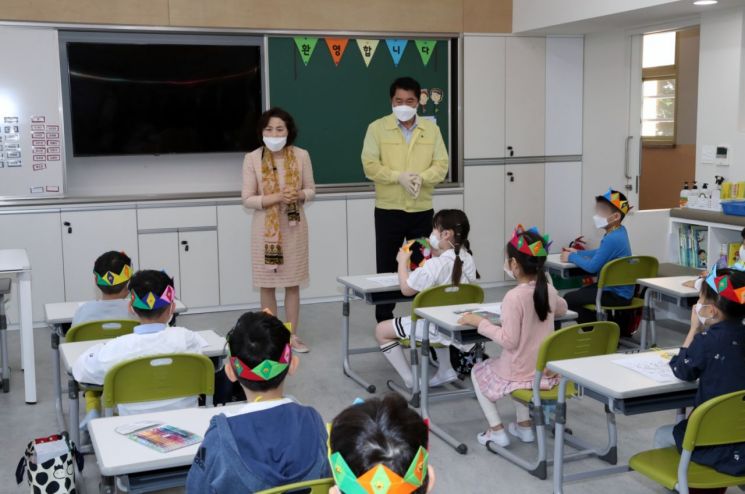
Gwanak-gu (Mayor Park Jun-hee) announced that starting this year, it will provide entrance preparation funds to all new elementary school students entering schools within Gwanak-gu.
Since last year, the district has supported entrance preparation funds for new middle and high school students to alleviate the educational cost burden on new students' families and realize universal educational welfare. This year, the scope has been expanded to include elementary school entrants.
This year, a total of 7,562 students are expected to benefit from the entrance preparation funds, including 2,420 new elementary school students and 5,142 new middle and high school students entering schools located in Gwanak-gu.
The support amount is 300,000 KRW per middle and high school student, provided as Zero Pay points or uniforms, and 200,000 KRW per elementary student, provided as Zero Pay points.
New students can apply for the entrance preparation funds according to the guidance of their entering school. The funds can be used to purchase uniforms, gym clothes, daily wear, and school-recommended books.
However, smart devices, which were purchasable last year, are restricted this year due to overlap with the Seoul Metropolitan Office of Education's new project for lending smart devices to first-year middle school students.
The elementary school entrance preparation funds are shared by the Seoul Metropolitan Office of Education, Seoul City, and the district at a ratio of 4:3:3. Compared to the cost-sharing ratio for middle and high school entrance preparation funds (Seoul Metropolitan Office of Education 5 : Seoul City 3 : District 2), the district's share has increased.
A district official said, "To reduce the educational cost burden on parents at the start of school, we have promoted the entrance preparation fund support project together with the Seoul Metropolitan Office of Education and Seoul City. Going forward, the district will continue to implement various educational policies that can provide practical help to students."
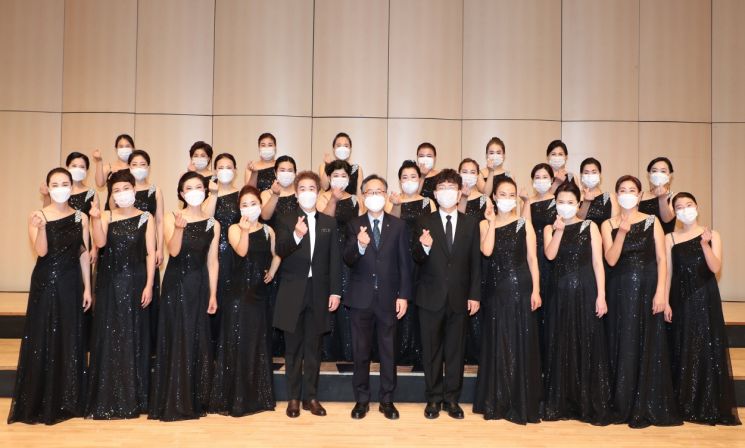
Geumcheon-gu (Mayor Yoo Sung-hoon) is publicly recruiting a permanent conductor to lead the Geumcheon-gu Women's Choir.
Applicants must have no disqualifications under Article 31 of the Local Public Officials Act and meet the following criteria: ▲Bachelor's degree or higher in music (4-year university) ▲Rich experience and ability in conducting ▲Ability to attend regular rehearsals twice a week and special rehearsals during various performances ▲Ability to present future choir activity plans and vision ▲Other qualities such as strong interest in Geumcheon-gu and a spirit of volunteerism.
Applicants can submit their application documents by visiting the Geumcheon-gu Office Culture and Sports Division or by registered mail from the 5th to the 10th. In-person submissions are accepted only on weekdays from 9 a.m. to 6 p.m. during the application period, and mailed documents must arrive by 6 p.m. on the deadline day.
Required documents include an application form (with two passport-sized photos attached), resume and self-introduction letter, choir operation plan, final academic certificate, career certificates and supporting documents, and resident registration abstract. Forms can be downloaded from the Geumcheon-gu Office website under Notices and Announcements.
After receiving applications, document screening will be conducted on January 11, followed by practical and interview evaluations on January 13. The final successful candidate will be announced on January 17 on the Geumcheon-gu Office website.
Upon appointment, the conductor will perform roles such as leading the choir, conducting regular and special rehearsals (at least twice a week), proposing annual activity plans for the municipal choir, and participating in various local events and national competitions. The term is two years, with monthly remuneration provided according to the budget.
The Geumcheon-gu Women's Choir was founded in 1995 and has enhanced the district's prestige through awards such as the Silver Prize at the 3rd National Saemaul Choir Festival in 2011, the Encouragement Prize at the 6th Changwon National Grand Prix Choir Festival, and the Bronze Prize at the 14th Geoje National Choir Competition in 2017. The choir also participates in various cultural events and welfare facility performances for local residents.
Yoo Sung-hoon, Mayor of Geumcheon-gu, said, "We look forward to many applications from individuals with professional musical knowledge and excellent organizational skills to contribute to the development of local culture in Geumcheon-gu."
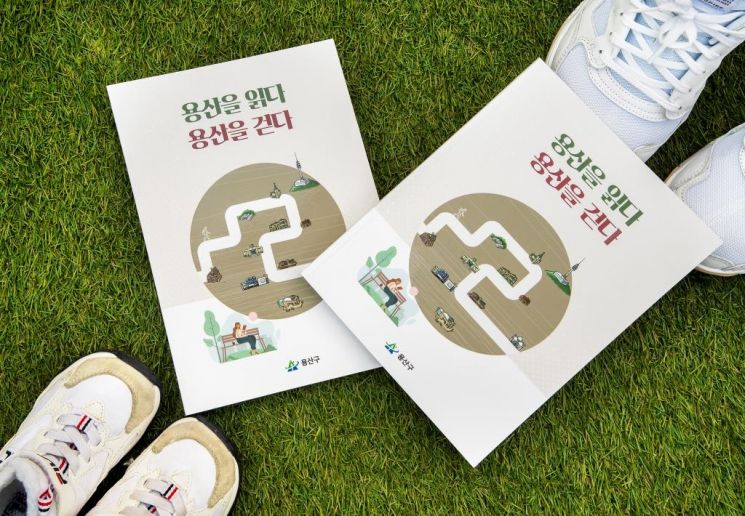
Yongsan-gu (Mayor Seong Chang-hyun) has published 300 copies of the booklet titled "Reading Yongsan. Walking Yongsan," which develops tour courses centered on 100 historical and cultural sites in Yongsan selected in 2020.
"Reading Yongsan. Walking Yongsan" contains old maps, photos, themed courses, and stories to allow readers to visually confirm the changes in Yongsan over time. The first pages include illustrated maps by course such as ▲Sunseongnori (castle wall walking game) ▲Railroad path ▲Yongsan US military base ▲Foreigner village ▲Religious sacred sites ▲Museums, memorial halls, and art galleries to aid understanding.
The first course is the Sunseongnori path. Sunseongnori was a cultural game of walking along the fortress walls, circling the Hanyang Fortress. In May 1916, when the Japanese demolished parts of the fortress walls, the Maeil Shinbo newspaper hosted a Sunseong event that was very popular at the time. This course includes the Hanyang Fortress relic exhibition hall, Namsan beacon mound, Namsan Octagonal Pavilion, and Namsan Tower.
The second course is the railroad path. Starting from Yongsan Station, the largest private railway station in Korea, it passes through sites such as the Yeonboksa Pagoda restoration monument, Baekbin crossing, Hangang Railroad Bridge, Hangang Bridge, Yongsan Railroad Hospital (Yongsan History Museum), the old Punggukje confectionery (Orion), Samgakji, Gyeongseong Electric Yongsan branch office, the old Kanzo (Hazama Gumi) Gyeongseong branch, Yongsan Post Office, and the site of Yongsan Railroad School. Particularly, the Baekbin crossing area is unique with over 180 trains passing daily and old alleys.
The third course covers the Yongsan US military base, a mysterious space currently undergoing return. It includes sites still existing or traceable such as the Joseon Army warehouse, Camp Kim, South Post bunker, Yongsan Governor's residence site, air-raid shelter, Dunjisan summit, detention prison, US Forces Korea 8th Army headquarters, officer housing complex 5, Dragon Hill Hotel, Japanese military weapons depot, US military barracks, southern site, US-ROK joint military affairs office, Mancho Stream tributary, and the ROK-US Combined Forces Command.
The fourth course is the Foreigner Village path, introducing three areas: Huam-dong, a high-end residential area for Japanese; Haebangchon, where displaced persons gathered; and Itaewon, a small global village. The fifth course is the Religious Sacred Sites path, featuring Yongsan Seminary, Sacred Heart of Jesus Cathedral, Yongsan Cathedral clergy cemetery, Danggogae martyrdom site, Saenamteo martyrdom site, Waegogae sacred site, Won Buddhism Seoul Church, and the Central Mosque.
Finally, the booklet includes ▲Museum path (National Museum of Korea, National Hangeul Museum, Sookmyung Women's University Museum) ▲Memorial Hall path (Lee Bong-chang Patriot History Hall, Baekbeom Kim Gu Memorial Hall, Colonial History Museum, Democracy and Human Rights Memorial Hall, War Memorial) ▲Art Gallery path (Han Ik-hwan Seoul Art Museum, Yongsan Craft Museum, Samsung Leeum Museum of Art, Amorepacific Museum of Art, Kim Se-jung Art Museum).
The district distributes the booklet to local schools, libraries, related institutions, and community centers to share the historical and cultural value of the area with residents.
Seong Chang-hyun, Mayor of Yongsan-gu, said, "2022 marks the time when Yongsan development, which had paused briefly, will be in full swing. Understanding the origin and culture of the area will be a good foundation for sound development."
Besides selecting historical and cultural sites and developing tour courses, the district has continued historical restoration projects such as erecting a memorial for activist Yu Gwan-sun, opening the Hyochang Park Martyrs' Shrine permanently, and establishing the Lee Bong-chang Patriot History Hall. The Yongsan History Museum will open in March this year.
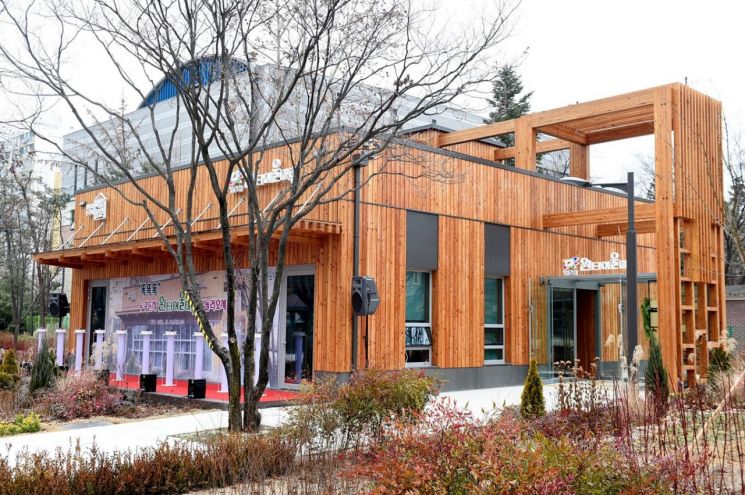
Nowon-gu (Mayor Oh Seung-rok) has completed the regeneration project of Wonteo Park, a resting space for residents, and announced the opening of Wonteo Eoulmaru, a community space for residents.
The old park was remodeled into a pleasant and safe healing space to allow residents to enjoy leisure in daily life. Additionally, Wonteo Eoulmaru, a community space, was created to activate the village community and lay the foundation for resident autonomy.
□
First, the Wonteo Park regeneration project. The district created a cork-paved circular walking path (608㎡) within the existing 10,121㎡ Wonteo Park for strolling, installed a lawn yard (870㎡) and an outdoor stage (55㎡) for small-scale cultural performances.
A toddler play area equipped with a combination play structure, safari playhouse, seesaw, swings, and sand playground was newly created. Near Wonteo Spring, 10 exercise machines were installed for residents to enjoy physical activities, with rubber chips used to pave the floor for safety.
Additionally, a membrane structure pergola, backrests, and benches were installed to provide resting spaces. Landscaping was carried out by planting 26 large trees, 16,980 shrubs, and 22,736 flowers to allow residents to feel seasonal changes. To maintain hygiene for children using the lawn yard, pet access is restricted, and a separate temporary pet shelter (100㎡) was created.
The 1,500㎡ Singiru Children's Park was also renovated. Play equipment, which previously only included slides and swings, was replaced with an adventure playground featuring combination play structures. The basketball court was refurbished to ensure safety for teenagers.
□ Incorporation of cutting-edge and eco-friendly Korean ecological architectural systems... 'Wonteo Eoulmaru'
The 137.95㎡, single-story 'Wonteo Eoulmaru' within the park, equipped with a book caf?, program room, and volunteer room, has also opened. Its eco-friendly appearance is evident at a glance, and it incorporates Korea's most advanced eco-friendly architectural technologies.
In 2019, the district signed an MOU with the Korea Institute of Civil Engineering and Building Technology to pilot an ecological architectural system at Wonteo Eoulmaru.
Wonteo Eoulmaru is the first in Korea to use ▲100% domestically produced wood ▲eco-cement that reduces CO₂ emissions by 90%, cutting total CO₂ emissions by 27 tons compared to conventional materials.
Additionally, it uses ▲wood fiber insulation instead of general chemical insulation materials, offering impact resistance, lightness, noise reduction, vapor permeability, and no environmental pollution upon demolition ▲a 'bio wall' green wall system with air purification, antibacterial, and antiviral functions ▲rainwater recycling ▲solar power generation for electricity supply, integrating various eco-friendly technologies.
The Korea Institute of Civil Engineering and Building Technology evaluated Wonteo Eoulmaru as significant for being the first attempt to apply a Korean ecological architectural system to realize carbon neutrality by 2050.
□ 'Wonteo Eoulmaru'... Utilized as an open community space leveraging geographic advantages
Wonteo Eoulmaru is located within a 5-minute walk of Sangsu Elementary School, Sinsang Middle School, Sangye Middle School, Sangye Jugong Apartments complexes 4, 5, and 6, and Sangye Hanyang Apartments.
The district plans to operate this as an open space for residents, leveraging its geographic advantages. To this end, an operating committee was formed in June with active participation from parents and residents.
The operating committee will lead various activities such as facility rental management, program operation, and discovering resident groups, playing a leading role in revitalizing the village community.
Oh Seung-rok, Mayor of Nowon-gu, said, "Wonteo Park, a resting space for residents, has become a more beloved place with walking paths, toddler areas, and the opening of Wonteo Eoulmaru. We will continue to strive so that residents can find comfort and rest close to home."
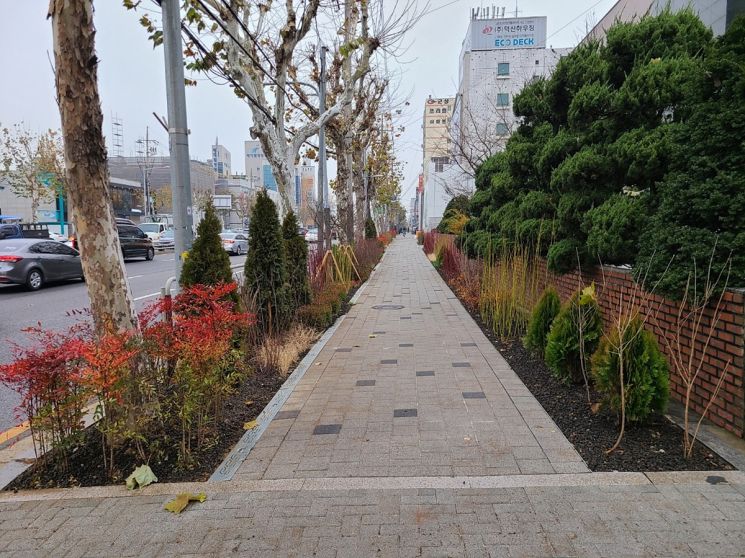
Yangcheon-gu (Mayor Kim Soo-young) announced the completion of a 1,500㎡ Child Safety Green Forest project around the school routes of Galsan Elementary School (Sinjeong-dong) and Yangwon Elementary School (Sinwol-dong).
The Child Safety Green Forest project creates a strip of green forest between sidewalks and roads. It was planned to address social issues such as safety accidents in school zones and fine dust generation, responding to the climate crisis. By supplementing understory and side planting, it expands rich greenery around living areas, contributing to mitigating urban heat island effects and improving residents' quality of life.
The project cost a total of 400 million KRW from national and city funds. The district planted ▲78 large trees such as Cornus officinalis ▲11,954 shrubs including white spiraea and emerald green ▲6,996 herbaceous plants such as top grass along school routes.
Especially, three Konica spruce trees, reminiscent of a garden that stays green all year, were planted on the traffic island between the front and back gates of Galsan Elementary School, freshly expressing the Brand Identity (BI) of 'Garden City Yangcheon.' The district plans to fully utilize the characteristics of these trees, which are used as Christmas trees, to develop the area into a local attraction that brings joy to children every year.
Kim Soo-young, Mayor of Yangcheon-gu, said, "I hope our young dream trees, who will lead the bright future of Yangcheon-gu, will keep freshness in their hearts as they see the green garden planted along their school routes. I also expect the richly created green spaces throughout the district to provide beautiful streetscapes and places for daily rest to all residents."
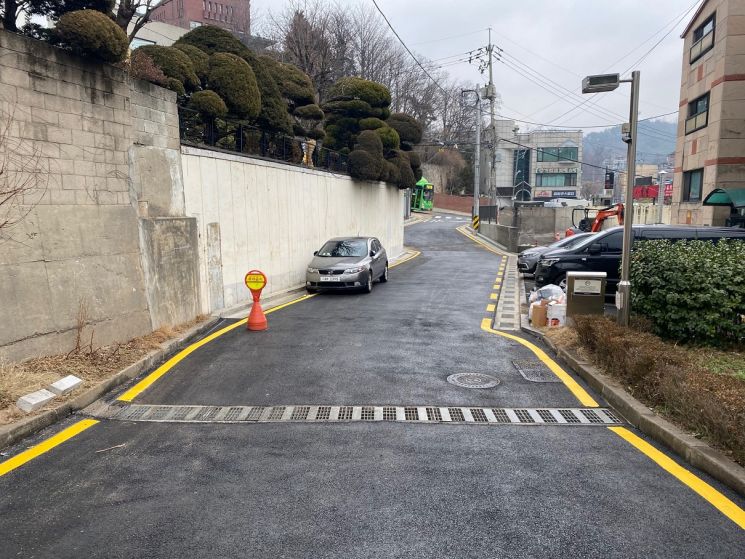
Jongno-gu completed the road construction project in the area of 36 Hongji-dong, which has been underway since 2018 to provide residents with a pleasant walking environment and contribute to preventing safety accidents, on the 31st of last month.
The target area corresponds to the section from 47-9 to 36-4 Hongji-dong. This area is located on high ground and vehicle entry is only possible by passing through a side road next to Segumjeong-ro. When exiting, vehicles sometimes drive against traffic on Segumjeong-ro, making it a place with a very high risk of safety accidents.
Accordingly, Jongno-gu judged that prompt road construction was necessary. Following the urban planning facility (road) decision in December 2013, the implementation plan approval procedure was taken in June 2018.
Considering that compensation and demolition negotiations for some buildings were essential for road expansion, the project was expedited by dividing the target area into sections 1 and 2 and conducting construction in stages according to compensation phases.
As a result, after breaking ground for section 1 construction in November 2020, section 2 construction was completed in 2021, finishing the road construction (width 6m, length 40m).
To prevent various complaints caused by repeated construction, Jongno-gu simultaneously carried out maintenance of aging infrastructure linked to the road construction.
Moreover, the water supply pipe serving the area of 36 Hongji-dong was installed on the Okcheon 3 Bridge, causing difficulties in maintenance and smooth supply due to freezing problems in winter. The district carefully relocated the water pipe. Additionally, cooperation with related agencies allowed relocation of utility poles and maintenance of aging communication conduits.
To prevent accidents in the newly renovated area of 36 Hongji-dong, the side road next to Segumjeong-ro, which was originally the only access road in the area, was designated as a one-way street. The old sidewalks in the road construction section were transformed into eco-friendly sidewalks.
Eco-friendly sidewalks are paved using only sand and granite. Using natural granite allows long-term maintenance, reduces repaving costs, prevents slip accidents through surface processing, and improves urban aesthetics through edge processing, attracting attention.
A district official said, "This project includes various aspects such as road construction, eco-friendly sidewalk paving, infrastructure maintenance, and water pipe relocation. With the completion of construction, residents' walking and vehicle movement will become more convenient, and safety accidents can be prevented."
© The Asia Business Daily(www.asiae.co.kr). All rights reserved.



















