
"As long as I do not harm others, I have the right to destroy myself."
This is a famous statement made by novelist Fran?oise Sagan when she was prosecuted for cocaine possession. What did the judge say in response at that time? Although the answer is unknown, Judge Moon Yoo-seok said in his book At Least Goodwill (Munhakdongne), "What would I have said? It wouldn't have been easy to answer," and added, "Honestly, as someone with a strong liberal inclination, I might have first agreed. Indeed. Do I have the right to punish you?"
The individualist author argues, "As long as no harm is done to me, I have the freedom to do anything. It doesn't have to be something valuable or admirable. Individuals have the freedom to be eccentric, the freedom to be miserable, the freedom to be subversive." He suggests that so-called "victimless crimes" such as drugs, gambling (not fraud), and suicide might fall under the right to pursue happiness. In fact, the Constitutional Court has ruled that "the freedom to freely exchange and smoke marijuana falls under the 'general freedom of action' derived from the right to pursue happiness."
However, reality is different. Victimless crimes tend to be defined as crimes. Especially in the case of gambling, some might say, "I am wasting my own money, so what's the problem?" but it is clearly illegal. Based on his experience working in the bankruptcy division of a court, the author says, "I have encountered countless cases where addiction to gambling or speculative stock trading has led entire families to ruin," and adds, "'The right to destroy myself'?in most cases, it is not only the individual who is destroyed, but also those around them are dragged into the mire like drowning ghosts."
The same applies to drugs. One might argue that using drugs alone in a private room has no social impact, but "where there is demand, supply arises." The state has no choice but to "control the demand first."
Whether suicide is considered a crime varies by country. The UK criminalized attempted suicide until 1962. In the US, until 1964, nine states including Alabama, Kentucky, New Jersey, North Carolina, North Dakota, and Oklahoma regarded attempted suicide as a serious crime. Is this old history? No. On August 4 last year, a Malaysian court fined a person who attempted suicide by jumping 3,000 ringgit (about 850,000 won). Besides Malaysia, Pakistan, Bangladesh, Lebanon, Myanmar, Ghana, Kenya, Sudan, and Uganda also criminalize attempted suicide. South Korea does not criminalize attempted suicide itself but punishes those who assist or encourage another's suicide under the crime of suicide instigation and assistance.
At first glance, punishing suicide may seem to infringe on an individual's right to pursue happiness, but considering the organic nature of society, the impact on the community is significant, making regulation necessary. According to research by Professor Song In-han, who conducted a survey on suicide, "One person who takes their own life affects about six family members, and approximately 20 acquaintances become 'suicide survivors' who are impacted." This is even more true in a densely populated and relationship-oriented society like South Korea.
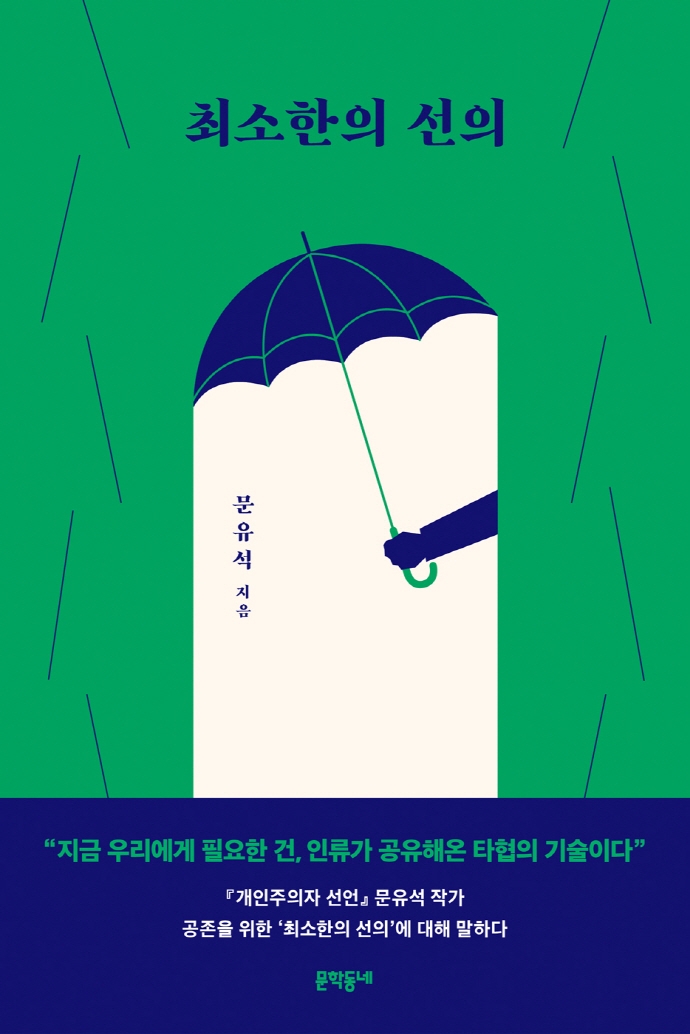
However, the author emphasizes, "Even if all these arguments are correct, freedom remains the principle and restriction the exception. The society that seeks to restrict freedom must prove the necessity and appropriateness of each restriction, and individuals should not accept such restrictions too easily or take them for granted," adding, "'If acts of self-destruction are regulated so readily as if they are natural, other acts will be regulated even more easily. If citizens become lax in guarding boundaries, society will be tempted to intrude into all areas of personal freedom under the pretext of 'social impact.'" He continues, "A society that accepts restrictions on freedom too easily will eventually lose freedom itself," and expresses, "Even if someone claims a right to freedom that seems frivolous, unfamiliar, or of little value from my perspective, we should not dismiss it lightly but listen to their claims first."
© The Asia Business Daily(www.asiae.co.kr). All rights reserved.