Government: "Measures Aimed at Protecting Against Infection Among the Unvaccinated"
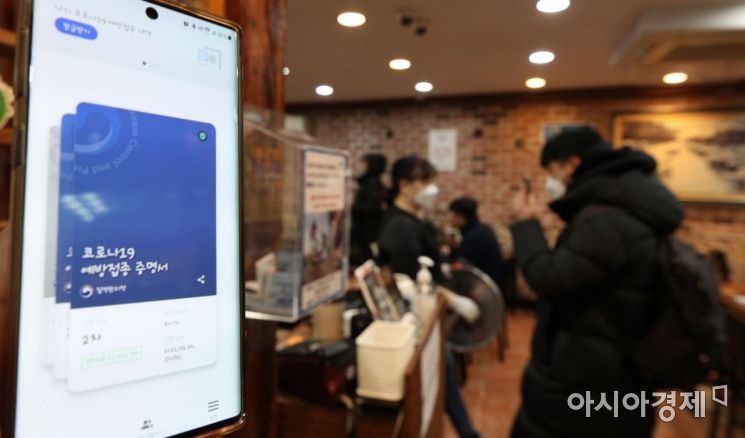
[Asia Economy Reporter Han Seung-gon] "There is also anxiety about vaccine side effects," "Isn't this treating us like criminals?"
Considering the risk of COVID-19 infection and the progress of vaccinations, the government included department stores and large supermarkets in the facilities subject to the quarantine pass (vaccination certificate and negative test confirmation system). However, since supermarkets are considered essential facilities for purchasing daily necessities, controversy seems inevitable.
Some criticize it as "discrimination against the unvaccinated" and mention anxiety about vaccine side effects, so conflicts surrounding the quarantine pass are expected to continue. The quarantine authorities explained that for large supermarkets, the quarantine pass criteria are based on area, not all supermarkets.
According to the Central Disaster and Safety Countermeasure Headquarters (CDSCH), from the 10th, large-scale stores such as department stores and large supermarkets will be included in the mandatory quarantine pass targets. The implementation of the youth quarantine pass, which had been controversial, has been postponed and will begin on March 1.
Earlier, the government expanded the quarantine pass application facilities to indoor multi-use facilities such as restaurants, cafes, academies, and PC rooms in the special quarantine measures announced on the 3rd. However, department stores and supermarkets were excluded, causing fairness controversies, so this time these facilities were included again.
Prime Minister Kim Boo-kyum said at the CDSCH meeting on the 31st, "We will strengthen quarantine by mandating the quarantine pass for department stores and large supermarkets crowded with many people," and "We will extend social distancing for two more weeks." However, to minimize confusion on site, a one-week guidance period will be given before the implementation on the 10th. Accordingly, the total number of multi-use facilities subject to the quarantine pass has increased to 17.
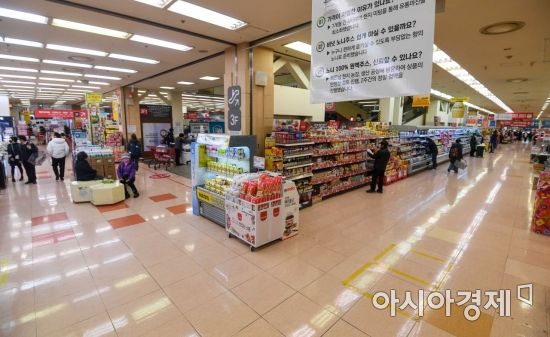 Amid the COVID-19 pandemic causing a contraction in consumer sentiment, a large supermarket in Seoul is seen with a quiet atmosphere. The photo is unrelated to specific expressions in the article. Photo by Jinhyung Kang aymsdream@
The 17 types include large-scale stores such as department stores and large supermarkets, movie theaters and performance halls, entertainment facilities, karaoke rooms (including coin karaoke), indoor sports facilities, bathhouses, bicycle racing, motorboat racing, horse racing, casinos, restaurants and cafes, academies, reading rooms and study cafes, multi-rooms, PC rooms, indoor sports stadiums, museums, art galleries, science centers, party rooms, libraries, massage parlors, and therapy centers. Large-scale stores currently applying electronic entry logs are shopping malls, supermarkets, and department stores with an area of 3,000㎡ or more.
The issue is the controversy over discrimination against the unvaccinated. For quarantine pass facilities such as restaurants and cafes, unvaccinated individuals can enter alone without a PCR negative certificate. However, from the 10th of next month, unvaccinated individuals will not be allowed to enter department stores and large supermarkets even alone. Unvaccinated persons must present a PCR negative certificate issued within 48 hours.
Small stores, supermarkets, convenience stores, etc., that do not check QR codes are not subject to the quarantine pass. Also, exceptions such as COVID-19 recovered persons or those exempted for medical reasons require a quarantine release certificate or exemption certificate. Without these certificates, unvaccinated individuals cannot use large-scale stores.
Civilians raise issues of discrimination and fairness. Kim, a company employee in his 40s who is unvaccinated, said, "It's practically forcing vaccination," and questioned, "Isn't vaccination a personal choice?" He added, "It can only be seen as forcing vaccination through the quarantine pass, which causes stress."
Another unvaccinated office worker in his 30s, Park, cited vaccine side effects as his reason for not getting vaccinated. He pointed out, "Many people die after getting vaccinated, as seen in the Blue House national petition, but there are no measures." He criticized the government, saying, "They should create an environment where unvaccinated people can get vaccinated with peace of mind. What is this about?"
In response to such concerns, Son Young-rae, head of the Social Strategy Division at the Central Disaster Management Headquarters, said, "The quarantine pass does not apply to general supermarkets or stores. Alternative measures exist." Kim Yumi, head of the Daily Quarantine Management Team at the Central Quarantine Headquarters, also explained, "The quarantine pass applies only to supermarkets with an area of 3,000㎡ or more, not all supermarkets."
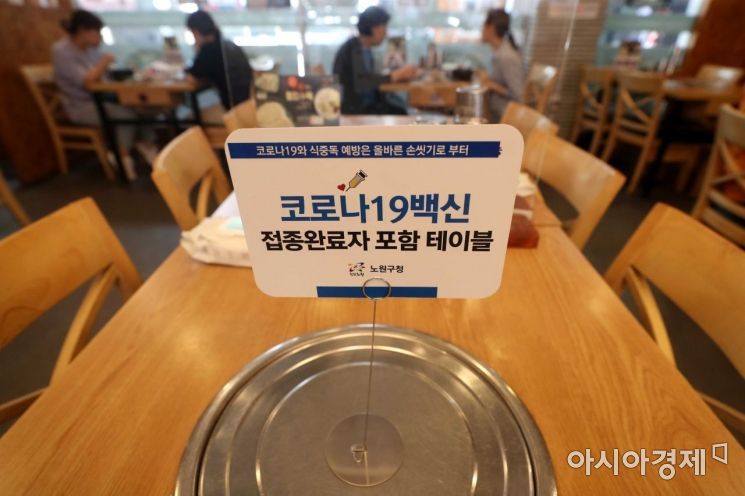 On September 3rd last year, a sign indicating 'Table including COVID-19 vaccinated individuals' was installed at a restaurant in Nowon-gu, Seoul. The photo is unrelated to specific expressions in the article. Photo by Asia Economy DB
Meanwhile, fairness controversies regarding the quarantine pass application criteria continue. For example, religious facilities such as churches are excluded from the quarantine pass targets. Since department stores and large supermarkets are crowded places with a high risk of cluster infections, religious facilities also inevitably gather many people.
Regarding this, Son emphasized, "Currently, churches are subject to measures stricter than the quarantine pass." Currently, churches can allow up to 70% of their capacity if the congregation consists of fully vaccinated individuals. If unvaccinated persons are included, only up to 30% of capacity is allowed, with a total limit of 299 people.
Meanwhile, complaints remain about the "ding-dong" sound that alerts facility managers immediately when unvaccinated people enter multi-use facilities such as restaurants.
The COVID-19 vaccination certificate validity period has been applied since the 3rd. Accordingly, the quarantine pass expires 180 days after the second vaccination (or first vaccination for Janssen recipients), and the pass can be used immediately from the date of the third vaccination. If the quarantine pass is invalid, a "ding-dong" sound is heard during electronic entry log recognition, and facility managers must take measures such as restricting entry.
Because of this, unvaccinated people raise their voices, saying, "Isn't this clear discrimination?" Choi, a 30-something office worker, expressed frustration, "Do unvaccinated people have to be publicly humiliated?" According to the quarantine authorities, the quarantine pass validity period is six months (180 days) from 14 days after the second COVID-19 vaccination (or first for Janssen). Those nearing expiration must get a third vaccination to maintain the pass's validity, which takes effect immediately upon receiving the third dose.
Regarding the backlash from unvaccinated people, the government emphasized on the 30th, "The quarantine pass is not a measure to prevent unvaccinated people from infecting others but a measure to protect unvaccinated people from infection."
Son said at the briefing, "We believe that the quarantine pass can be reconsidered only when the infection level among the unvaccinated and severe cases and deaths caused by the unvaccinated significantly decrease," adding, "If the infection risk significantly lowers, we plan to gradually lift the quarantine pass starting with low-risk facilities." He continued, "Currently, unvaccinated people make up only 7% of the adult population, but their severe case and death rates are 4 to 5 times higher than those fully vaccinated, accounting for about 52% of severe cases and deaths. Since the quarantine pass was significantly strengthened, the infection proportion among the unvaccinated has gradually decreased."
© The Asia Business Daily(www.asiae.co.kr). All rights reserved.



















