Expert: "Infectious period varies depending on patient's immunity"
Health authorities: "Insufficient evidence yet... Difficult to match US level immediately"
[Asia Economy Reporter Kim Daehyun] Domestic quarantine and infectious disease experts have given cautious evaluations regarding the U.S. Centers for Disease Control and Prevention (CDC) recommendation to shorten the isolation period for COVID-19 confirmed cases and contacts from 10 days to 5 days. They point out that it is 'premature' to immediately apply such guidelines to the domestic medical field. The majority opinion is that it is difficult to conclude that the transmissibility of COVID-19 disappears within 5 days, and it is a priority to carefully review related studies and application cases.
In Korea, Delta variant isolation is 11 days, Omicron 14 days... "Omicron isolation period to be shortened"
According to the quarantine authorities and foreign media on the 28th, the CDC explained that the shortening of the isolation period is based on studies showing that the transmissibility of COVID-19 infected individuals is strongest from 2 days before symptom onset to 3 days after onset, and also considers the rapid increase in infections due to the Omicron variant.
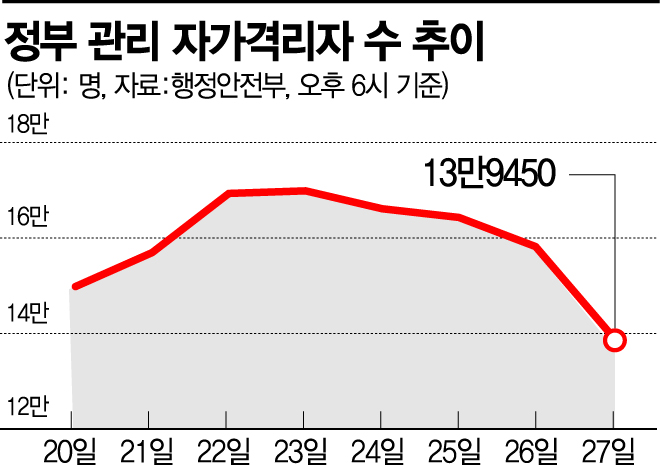
Currently, the isolation period for Delta variant infected individuals in Korea is 11 days. The quarantine authorities require a longer isolation period of 14 days for Omicron variant infections. Similar principles apply to the isolation of contacts.
The quarantine authorities plan to shorten the isolation period for close contacts of the new Omicron variant infected individuals from the current 14 days to 10 days starting next week. Park Youngjun, head of the epidemiological investigation team at the Central Disease Control Headquarters, said in a briefing on the 28th, "The isolation period for close contacts related to other variants such as Delta is 10 days, but for Omicron, due to many unknowns, it is 14 days. However, based on recent analysis results related to Omicron, we are reviewing the possibility of reducing the self-isolation period to 10 days as we secure evidence data related to the isolation period."
Park explained, "Based on the follow-up management results of 107 contacts related to the domestic Omicron variant, 99.1% could be confirmed by the 9th day from the last exposure," adding, "Based on these research results, we plan to change the isolation period for Omicron close contacts to 10 days, the same as other variants." He also added, "The implementation date will be organized by the related team today and is expected to be implemented around next week."
"With Omicron becoming the dominant strain... Caution needed until adaptation"
Experts analyzed that research on Omicron is still insufficient, and since the infection patterns of patients overseas such as in the U.S. differ from those domestically, caution is needed regarding the hasty shortening of the isolation period.
Professor Han Changhoon of the Respiratory Medicine Department at Ilsan Hospital said, "It is difficult to immediately apply this in the medical field," adding, "There are cases where the condition worsens immediately after self-isolation is lifted, and even if the virus transmissibility is considered absent, the situation may differ for those with weakened immune functions, so caution is exercised in the field."
Professor Han added, "Although the isolation period ends, there are patients whose condition worsens immediately afterward, so in the field, treatment continues while maintaining isolation and monitoring responses," and "Related research results will be published in the future, and the government should review and confirm data from the U.S., which adopted this earlier, before responding."
Jang Youngwook, a senior researcher at the Korea Institute for International Economic Policy, said, "Scientifically, transmissibility decreases after 5 days, but this applies only to asymptomatic individuals," and analyzed, "The U.S. is essentially giving up managing the probability of infection transmission after release. Instead, they judged that the benefits outweigh the risks."
Jang added, "The U.S. was in a situation where it was difficult to bear the costs incurred when asymptomatic individuals were isolated for 10 days and unable to engage in economic activities," and "In Korea, the prevalence is not as high as in the U.S., and the virus is perceived as more dangerous, so immediate application is difficult."
On the same day, Park also said in the briefing regarding the CDC's recommendation to shorten the COVID-19 isolation period, "The self-isolation period is determined based on evidence from transmissibility studies of each variant virus to minimize risks and damages," and "Review is possible depending on changes in such evidence and feasibility, but we still lack sufficient evidence, so it is difficult to immediately adopt the same level as the U.S."
New COVID-19 cases reach 3,000 range after about a month... Omicron community transmission intensifies
Meanwhile, as of midnight on the same day, 3,865 new COVID-19 cases were reported, bringing the cumulative total to 615,532. The number of new cases is 341 fewer than the previous day (4,206). Compared to a week ago (the 21st) when there were 5,194 cases, it decreased by 1,329. The number of cases in the 3,000 range is the first in 28 days since 3,032 cases on the 30th of last month.
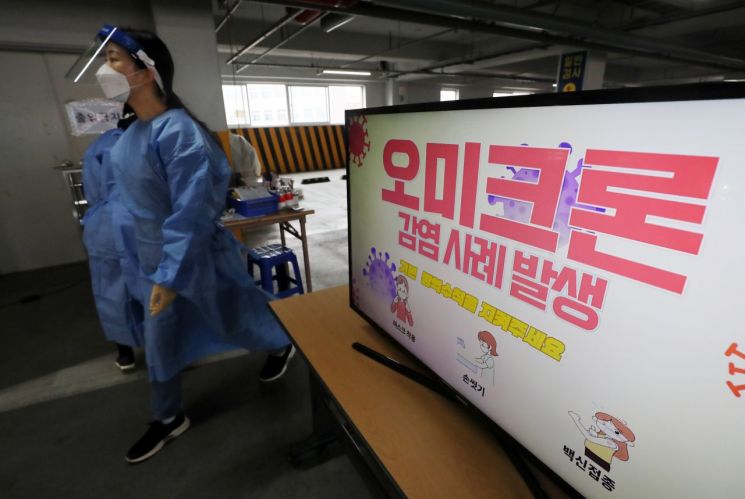
Four additional domestic Omicron variant infections were confirmed, bringing the cumulative total to 449. Initially, Omicron spread mainly among overseas entrants, but recently, cases with unknown infection routes have been continuously reported in the community, indicating that transmission is intensifying. When the Omicron variant analysis PCR (polymerase chain reaction) reagent is distributed on-site on the 30th, the number of hidden confirmed cases is expected to increase significantly.
© The Asia Business Daily(www.asiae.co.kr). All rights reserved.













