Announcement of the Finalization of the 6th Comprehensive Plan for Nuclear Promotion on the 27th
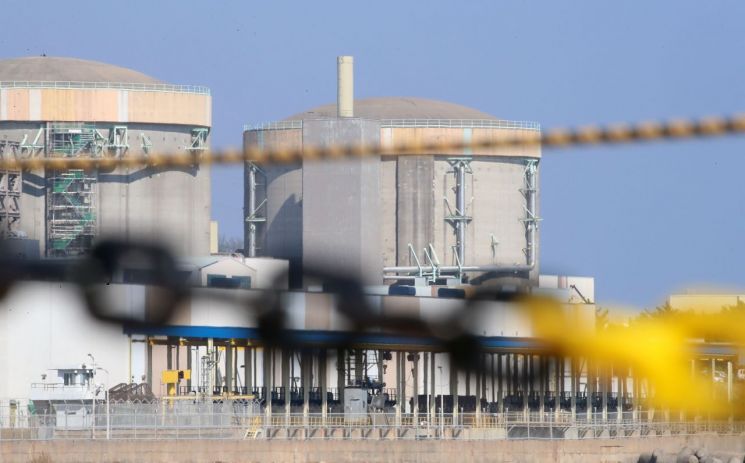
[Asia Economy Reporter Kim Bong-su] The 6th Comprehensive Plan for Nuclear Promotion announced by the government on the 27th includes a massive research and development (R&D) project with a total budget of 2.7 trillion won over the next five years. There are concerns that this essentially represents a policy shift, reflecting recent trends in Europe and the United States, which had previously adopted 'denuclearization' but have now started to choose nuclear power as an alternative for 'carbon neutrality.'
On this day, the government presented the vision of nuclear power as a clean energy source that can be safely utilized by 'future generations' by leveraging advanced convergence technologies such as small modular reactors and spent nuclear fuel recycling technology. First, active R&D investments will be made to enhance the safety of operating nuclear power plants and reduce the environmental burden of radioactive waste. By utilizing advanced convergence technologies, the safety of operating nuclear power plants will be maximized, and management plans for spent nuclear fuel and radioactive waste will be developed to reduce the environmental burden on future generations. Specifically, the government plans to invest a total of 642.4 billion won in operating nuclear power plant safety R&D over eight years from next year until 2029. Additionally, it plans to invest a total of 430 billion won in spent nuclear fuel storage and disposal R&D over nine years from 2021 to 2029.
In particular, at this meeting, the government approved the 'Current Status and Future Directions of Spent Nuclear Fuel Treatment Technology R&D (Draft)' based on the recommendations of the Spent Nuclear Fuel Treatment Technology R&D Appropriateness Review Committee. This technology has been under development in South Korea since 1997, with plans to develop a pyro-sodium-cooled fast reactor (SFR) to alleviate the management burden of intermediate-level radioactive waste. In other words, it is a technology that separates transuranic elements (TRU) from spent nuclear fuel through pyroprocessing and then incinerates them in a sodium-cooled fast reactor (SFR) to reduce the volume and toxicity of spent nuclear fuel. To this end, joint research with the United States has been conducted over the past 10 years, and in July of this year, a report from the Korea-US Joint Fuel Cycle Study (JFCS) containing these results was approved. Subsequently, the Appropriateness Review Committee reviewed this report and recently recommended continued promotion, stating that it is a feasible spent nuclear fuel management technology with technological, safety, and nuclear non-proliferation characteristics. The government officially approved this on the day of the meeting.
Alongside this, the government also decided to actively pursue the expansion of the nuclear power export market and the development of new markets such as decommissioning and SMRs. It aims to expand the export market across the entire nuclear power cycle, including construction, operation, and maintenance, and to secure core technologies in promising future fields such as decommissioning and SMRs to gain export competitiveness. To this end, the government plans to conduct a preliminary feasibility study related to i-SMR development next year and complete standard design as well as core technology development and verification from 2023 to 2028. Furthermore, it will strive to create innovation and performance by utilizing nuclear and radiation convergence technologies. The goal is to secure next-generation nuclear technologies that can be used in various fields such as polar regions, marine, and space, and to advance industries through the development of new radiation fusion and complex technologies. To achieve this, the government plans to complete the 'Munmu Daewang Science Research Institute' in Gyeongju, Gyeongbuk, a future nuclear system research infrastructure, by 2025, and to newly launch R&D projects worth a total of 50 billion won for radiation utilization in rare and intractable diseases and plastic waste reduction.
© The Asia Business Daily(www.asiae.co.kr). All rights reserved.

















