Institute for Basic Science Announces Simulation Results Showing Average Temperature Rise of 4°C and 6% Increase in Precipitation
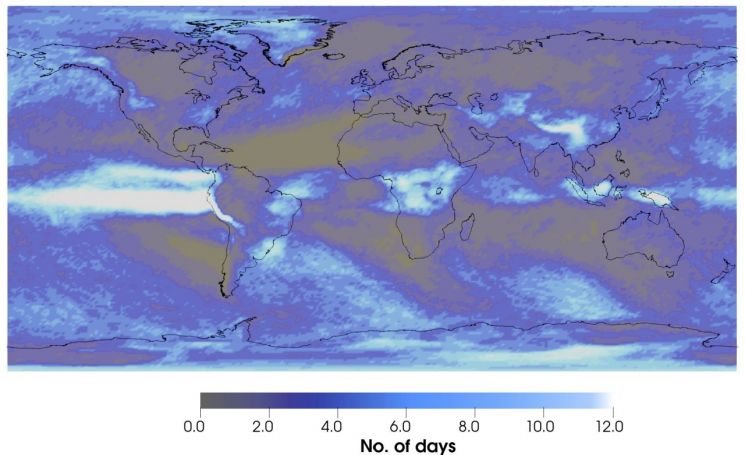 [Figure 1] Changes in Extreme Precipitation Occurrence Due to Global Warming
The method for defining extreme precipitation occurrence is as follows. Extreme precipitation during the current period (2000-2009) was defined as the 100th highest daily maximum precipitation value from 10-year and 100-ensemble simulations for each region. Additionally, the number of days in 2090-2099 when precipitation exceeded the extreme precipitation value of the current period was calculated. A value of 1 means no change in extreme precipitation days in the future, while a value of 6 means that the extreme precipitation days in the region increase by 5 days compared to the present. To emphasize changes in extreme precipitation days over land areas, future precipitation day changes of 11 days or more are shown in the same color.
[Asia Economy Reporter Kim Bong-su] If greenhouse gas emissions continue to increase, the global average temperature is predicted to rise by about 4℃ by the end of the 21st century, and some regions may experience extreme weather events with daily rainfall reaching up to 800mm.
The Institute for Basic Science (IBS) announced on the 9th that a research team led by Axel Timmermann, head of the Climate Physics Research Division and adjunct professor at Pusan National University, in collaboration with the Complex Earth System Model (CESM) group at the U.S. National Center for Atmospheric Research (NCAR), conducted an unprecedented large-scale Earth system model ensemble simulation project over 15 months, arriving at this conclusion.
The research team used the latest Earth system model to simulate not only the average climate between 1850 and 2100 but also variability across multiple timescales?from weather lasting several days, El Ni?o events occurring every few years, to various climate fluctuations spanning decades?at a spatial resolution of about 100 km. Simulating at a 100 km spatial resolution means dividing the Earth into 100 km grids and calculating various climate-related variables, including temperature and wind, for each grid.
In particular, the team performed 100 repeated simulations by slightly altering initial conditions such as ocean state and atmospheric temperature. This can be understood as calculating 100 possible climate scenarios that could occur on Earth. Thanks to this, they were able to closely analyze extensive changes in the climate system caused by the butterfly effect (where tiny changes in initial conditions lead to unexpectedly large future changes). Approximately 5 petabytes (PB; 1 PB = 1024 TB) of disk space were required to store the output results from this study.
The results confirmed that continuous greenhouse gas emissions cause significant changes not only in average climate but also in nearly all aspects of ecosystems. For example, by the end of the 21st century, the global average temperature is expected to increase by about 4℃ compared to the year 2000, and precipitation is projected to increase by approximately 6%.
Changes in extreme weather events may be much greater than changes in average values. The frequency of extreme rainfall events exceeding 100mm per day in the tropical Pacific region is expected to increase about tenfold by the end of the 21st century compared to the present, and extreme events with daily rainfall exceeding 800mm, which do not occur under current climate conditions, may also occur.
Additionally, the El Ni?o phenomenon, which currently has an average recurrence period of 3.5 years, is predicted to shorten to 2.5 years by the end of the 21st century. This change is expected to affect the annual variability of global temperature and precipitation. The frequency of wildfires in California is also expected to increase, and the plankton population in the North Atlantic Ocean is projected to decline significantly.
Due to ongoing warming and seasonal changes caused by shifts in winter snowfall distribution, the growing season of vegetation in high-latitude regions of the Northern Hemisphere is predicted to increase by about three weeks by the end of the 21st century compared to the present.
Keith Rogers, a research fellow at the IBS Climate Physics Research Division, stated, "It has been confirmed that greenhouse gas emissions not only change the intensity and frequency of extreme weather events such as heavy rain and heatwaves but also affect seasonal cycles. This provides strong evidence that human activities will bring changes across ecosystems including the atmosphere, ocean, land, and cryosphere."
The results of this study were published in the international academic journal Earth System Dynamics on the same day.
© The Asia Business Daily(www.asiae.co.kr). All rights reserved.
![Clutching a Stolen Dior Bag, Saying "I Hate Being Poor but Real"... The Grotesque Con of a "Human Knockoff" [Slate]](https://cwcontent.asiae.co.kr/asiaresize/183/2026021902243444107_1771435474.jpg)
















