Korea Real Estate Board Apartment Price Trends for First Week of December
Capital Region's Increase Rate Shrinks for 9 Consecutive Weeks... Purchase Slowdown
Sejong Falls 0.33%, Largest Drop in 7 Years 4 Months
However, Seoul Shows Signs of Recovery with Record High Transactions in High-End Complexes
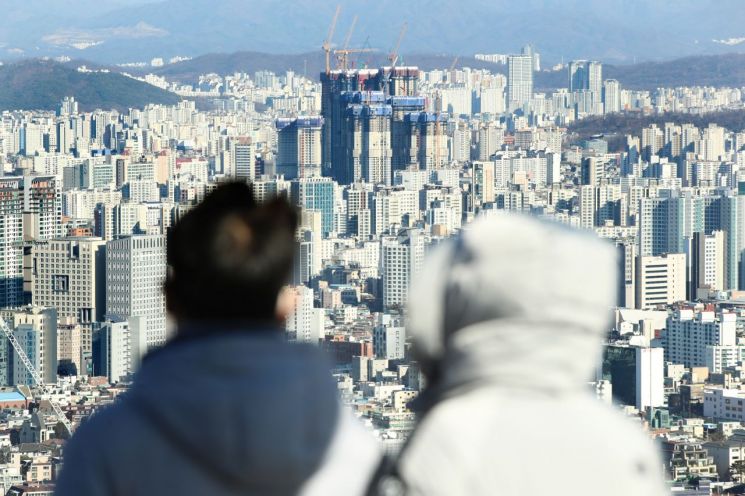
Due to the government's strengthened loan regulations and weakened buying sentiment, the rate of increase in apartment prices in the Seoul metropolitan area has shrunk for nine consecutive weeks. In some areas, transactions are being made at prices thousands of thousands of won lower than the existing market prices, indicating a cooling off in the housing price surge. In particular, Sejong City saw apartment prices fall by -0.33% in one week, marking the largest decline in about 7 years and 4 months.
However, in Seoul, some reconstruction promotion complexes and high-priced apartments saw prices rise further, maintaining last week's rate of increase.
According to the weekly apartment price trend for the first week of December announced by the Korea Real Estate Agency on the 9th, as of the 6th, apartment prices in the metropolitan area rose by 0.14%, a slowdown compared to the previous week (0.16%). The metropolitan area has seen a shrinking rate of increase for nine consecutive weeks since the first week of October when prices rose by 0.34%.
Incheon (0.22%→0.17%) and Gyeonggi Province (0.17%→0.15%) both saw a decrease in the rate of increase compared to the previous week. In Gyeonggi Province, cities such as Icheon (0.49%), Anseong (0.39%), Pyeongtaek (0.32%), and Ansan Sangnok-gu (0.22%) continued their upward trend, but overall, the buying inquiries decreased, causing the general upward momentum to slow.
Seoul rose by 0.10%, the same as last week. The Real Estate Agency explained, "Buying demand has weakened and a wait-and-see attitude has spread, with 22 out of 25 districts in Seoul showing a reduced or maintained rate of increase. However, some reconstruction or high-priced complexes are rising, showing a differentiated market by region and price."
Yongsan-gu (0.22%) saw significant apartment price increases mainly in Ichon-dong and Hannam-dong, where redevelopment expectations exist. Seocho-gu (0.19%) also expanded its rate of increase compared to last week as record-high transactions continued in medium to large and (quasi) new buildings. Songpa-gu (0.14%) and Gangnam-gu (0.14%) also maintained their upward trends. Gangbuk-gu (0.01%), which recorded a flat trend last week, also rose slightly, mainly in mid- to low-priced apartments.
Sejong City’s decline widened from -0.26% last week to -0.33% this week. This is interpreted as an effect of increased supply, such as the 1,210-unit Sejong Eoullim Famille Central last month. The Real Estate Agency explained, "Sejong City recorded the largest decline in about 7 years and 4 months since July 2014 due to an increase in new housing supply and inventory backlog."
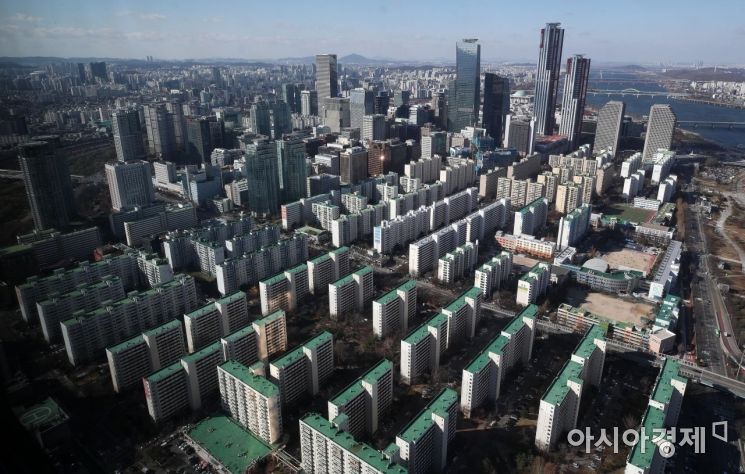
The jeonse (long-term lease) market generally showed a similar pattern to last week.
Seoul apartment jeonse prices rose by 0.10%, the same as the previous week. Prices increased mainly in areas with good school districts, stations with proximity to workplaces, and preferred new buildings. After the college entrance exam, jeonse demand occurred mainly in school districts such as Gangnam-gu (0.10%) and Yangcheon-gu (0.12%), showing a similar upward trend to last week.
Incheon’s jeonse prices rose by 0.17%, an increase from 0.15% the previous week. Yeonsu-gu (0.34%) saw significant jeonse price increases centered around Yeonsu-dong, which has a good educational environment.
Gyeonggi Province’s jeonse price increase rate slightly shrank from 0.12% last week to 0.11% this week. Icheon (0.45%) and Ansan Sangnok-gu (0.34%) saw relatively large jeonse price increases. On the other hand, Suwon Yeongtong-gu (0.00%) shifted to flat after 26 weeks since the first week of June due to jeonse inventory backlog. Anyang Dongan-gu (-0.18%) also saw a larger decline due to new housing supply effects.
Sejong City’s jeonse prices also fell further from -0.08% last week to -0.29% this week. The Real Estate Agency explained, "the decline widened due to seasonal off-season and the impact of new housing supply."
© The Asia Business Daily(www.asiae.co.kr). All rights reserved.


















