The Bank of Korea's '2021 Second Half Systemic Risk Survey Results'
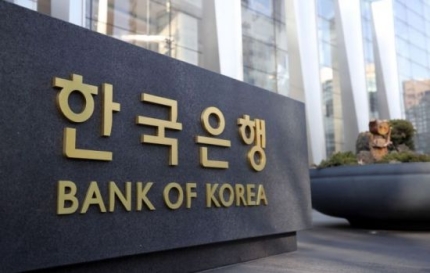
[Asia Economy Reporter Jang Sehee] The high level of household debt was identified as one of the top risk factors for South Korea's financial system.
According to the "2021 Second Half Systemic Risk Survey Results" released on the 8th by the Financial Stability Department of the Bank of Korea, major risk factors for South Korea's financial system included inflation caused by global supply chain disruptions, the high level of household debt, and uncertainties in monetary policy such as the U.S. Federal Reserve's (Fed) tapering.
The survey was conducted from the 9th to the 22nd of last month, targeting a total of 80 respondents including executives and employees of domestic financial institutions, representatives from financial sector associations, staff from financial and economic training institutes, and Korean investment officers at overseas financial institutions.
Respondents cited the high level of household debt (20%) and inflation due to global supply chain disruptions (20%) as the top risk factors. This was followed by uncertainties in monetary policy such as the Fed's tapering (7%).
Additionally, based on the frequency of mentions of five risk items, the order was the high level of household debt (53%), uncertainty in the real estate market (36%), and the rise in long-term market interest rates (24%).
Regarding the timing of risk occurrence, inflation, Fed tapering and other monetary policy uncertainties, rising long-term interest rates, and sharp adjustments in global asset prices were generally perceived as short-term risks (within one year), while the high level of household debt and uncertainty in the real estate market were seen as medium-term risks (within 1 to 3 years).
In terms of impact when risks occur, inflation caused by global supply chain disruptions was considered highly likely to occur and to have a significant impact on the financial system.
Meanwhile, confidence in the stability of South Korea's financial system over the next three years was found to be high, consistent with the survey conducted in June.
The Bank of Korea explained, "To enhance the stability of South Korea's financial system, respondents indicated that managing household debt, orderly normalization of COVID-19 support measures, and stabilizing the real estate market are urgent tasks at this point."
© The Asia Business Daily(www.asiae.co.kr). All rights reserved.
![Clutching a Stolen Dior Bag, Saying "I Hate Being Poor but Real"... The Grotesque Con of a "Human Knockoff" [Slate]](https://cwcontent.asiae.co.kr/asiaresize/183/2026021902243444107_1771435474.jpg)











