[Asia Economy Reporter Kim Hyung-min] The United States declared a "diplomatic boycott" (not sending a government delegation) of the Winter Olympics to be held in Beijing, China, from February 4 to 20 next year, citing human rights issues. Attention is focused on whether the pro-American Japanese government will join this move.
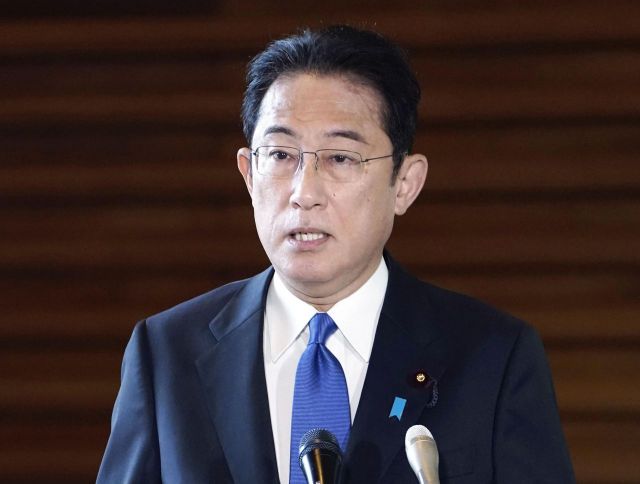
However, Japan has not given a definitive answer and is taking a cautious stance. Prime Minister Fumio Kishida said on the 7th regarding the U.S. diplomatic boycott announcement, "We will comprehensively consider the significance of the Olympics and our country's (Japan's) diplomacy and make an independent judgment from the perspective of national interest."
Government spokesperson and Chief Cabinet Secretary Hirokazu Matsuno also repeated the existing position, saying, "Nothing has been decided at this point," and "We hope the (Beijing) Games will be held as a festival of peace in accordance with the Olympic and Paralympic ideals."
Foreign Minister Yoshimasa Hayashi also expressed a cautious view at a press conference that morning, stating, "We will make a judgment by comprehensively considering all circumstances at an appropriate time."
However, when asked whether the 'all circumstances' to be considered include human rights issues, he said, "It is important that respect for freedom and fundamental human rights, which are universal values of the international community, and the rule of law are guaranteed in China as well."
This implies that the Japanese government may use China's human rights issues as a criterion in deciding whether to participate in the diplomatic boycott.
Regarding this reaction, local media analyze that Japan, which successfully held the Tokyo Olympics with China participating amid the difficult situation of the COVID-19 pandemic, is now in a position forced to make a difficult decision.
Although the Kishida administration appears to be walking a tightrope by not immediately expressing its intention to join the U.S.-led diplomatic boycott aimed at checking China through the Olympics, many expect that it will ultimately align with the United States.
Within Japan, there are also voices opposing participation in the U.S.-led boycott. Yukio Hatoyama, former Japanese Prime Minister who was in office in 2009 as a member of the then-opposition Democratic Party, criticized the Biden administration on his Twitter on the same day, saying, "The U.S. government has decided on a 'diplomatic boycott' by not sending government officials to the Beijing Winter Olympics," and added that "emphasizing differences in values and provoking confrontation in a rush to gain domestic popularity is completely wrong."
© The Asia Business Daily(www.asiae.co.kr). All rights reserved.
![Clutching a Stolen Dior Bag, Saying "I Hate Being Poor but Real"... The Grotesque Con of a "Human Knockoff" [Slate]](https://cwcontent.asiae.co.kr/asiaresize/183/2026021902243444107_1771435474.jpg)
















