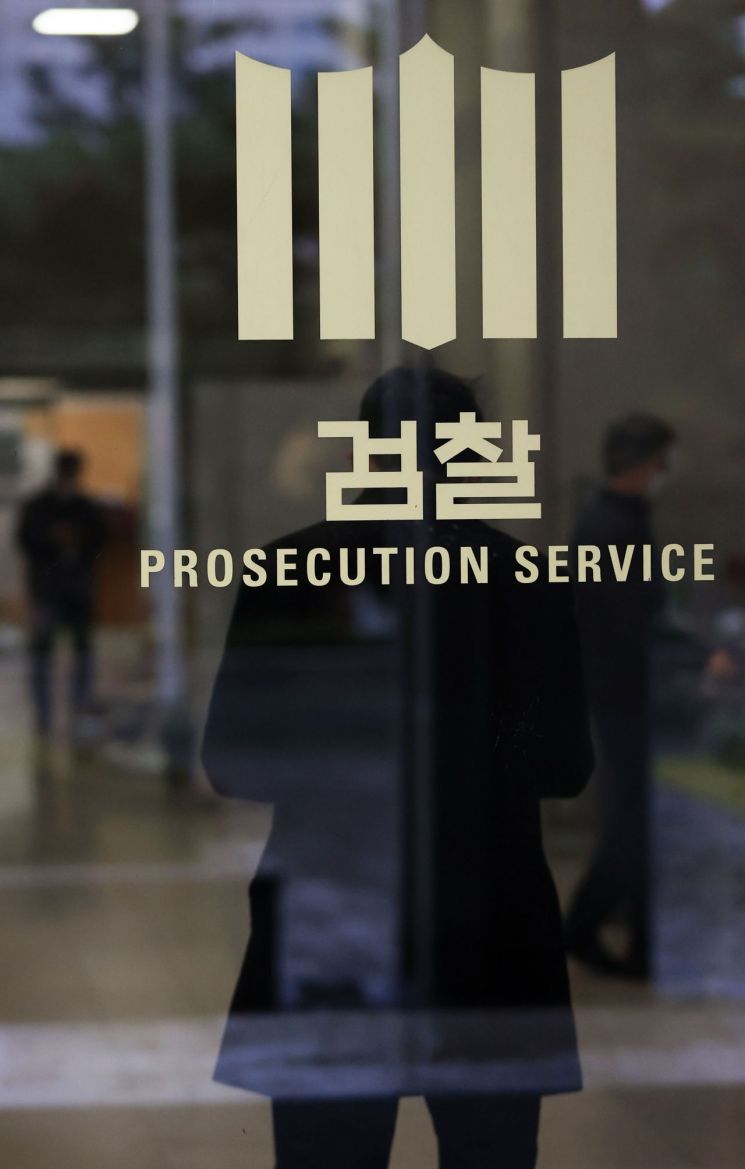
[Asia Economy Reporter Bae Kyunghwan] Kang Susanna, the head prosecutor of the Important Economic Crime Investigation Division at Incheon District Prosecutors' Office and former human rights officer at Suwon District Prosecutors' Office, which has recently been involved in conflicts over the search and seizure by the High-ranking Officials' Crime Investigation Unit (HCIC) and the Supreme Prosecutors' Office, has called for amendments to the HCIC Act, stating that "harmonious legal reform with the Constitution and criminal law system is necessary."
On the 7th, Deputy Chief Prosecutor Kang posted an article titled "Review of the Necessity to Amend the HCIC Act" on the internal prosecution network, E-Pros, arguing that "the HCIC, established to check the prosecution, is showing greater problems than the prosecution in various aspects such as human rights protection, investigative capability, and political neutrality."
He further stated, "In particular, Article 24, Paragraph 1 of the HCIC Act, which stipulates the HCIC's priority investigative authority over other investigative agencies without reasonable grounds, and Article 29 of the HCIC Act, which provides special provisions on re-investigation requests, must be promptly amended."
He pointed out, "Regarding investigations of high-ranking officials' crimes, the HCIC Act grants the HCIC chief unilateral authority to request case transfers, and obliges the counterpart investigative agencies to comply without exception, thereby placing the HCIC above prosecutors under the Constitution and laws, infringing on prosecutors' authority and functions related to investigative and prosecutorial rights. Moreover, despite potentially affecting the suspect's right to appear and defend, there are no provisions considering the suspect's interests."
Deputy Chief Prosecutor Kang added, "The HCIC's case transfer requests and priority investigative rights are not limited to crimes for which the HCIC has prosecutorial authority. Therefore, even if the police or prosecution have conducted investigations sufficient for prosecution, if the HCIC receives the case and leaves it unattended for a considerable period without any disposition, there is no way to check this. Restrictions on the HCIC's transfer request authority are necessary for crimes where it lacks final disposition authority."
He continued, "If the HCIC receives cases of prosecutable crimes and neglects investigation, leading to a non-prosecution decision as the statute of limitations approaches, complainants or accusers cannot even exercise the right to request re-investigation. This could cause significant gaps in the punishment of violations of the Public Official Election Act, which has a short statute of limitations, thus requiring supplementation in line with Article 260 of the Criminal Procedure Act."
Meanwhile, Deputy Chief Prosecutor Kang served as the human rights officer responsible for public relations at Suwon District Prosecutors' Office during the investigation by the Criminal Division 3 of Suwon District Prosecutors' Office into the case of Lee Sung-yoon, Seoul High Prosecutors' Office chief, allegedly covering up the illegal travel ban investigation of former Vice Minister of Justice Kim Hak-ui, before being reassigned in the recent personnel reshuffle.
© The Asia Business Daily(www.asiae.co.kr). All rights reserved.
![Clutching a Stolen Dior Bag, Saying "I Hate Being Poor but Real"... The Grotesque Con of a "Human Knockoff" [Slate]](https://cwcontent.asiae.co.kr/asiaresize/183/2026021902243444107_1771435474.jpg)
















