Daily confirmed cases remain at 4,000-5,000
Over 1,000 waiting to enter hospitals
High-risk patients dying at home reported
If spread not curbed in time, risk of 'medical collapse'
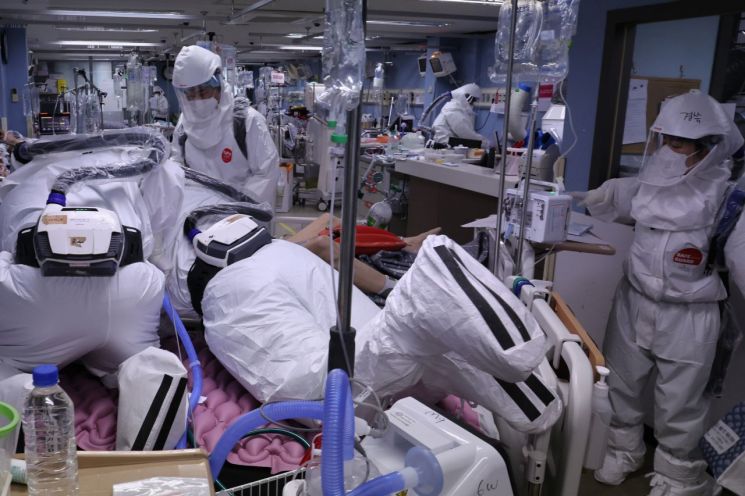 On the 6th, medical staff are moving a patient's bed in the intensive care unit of Pyeongtaek Bakae Hospital, a dedicated COVID-19 hospital. The number of critically ill COVID-19 patients has remained in the 700s for six consecutive days, pushing the capacity of intensive care beds to its limit, especially in the metropolitan area. / Photo by Yonhap News
[Asia Economy Reporter Lim Juhyung] As the number of daily COVID-19 cases reaches the 7,000 range, the healthcare system is experiencing overheating. One of the most urgent issues is the number of patients waiting for hospital beds, which has surpassed 1,000. These are individuals who have tested positive but must wait at home due to the lack of available beds in nearby medical facilities. If these patients do not receive timely treatment, the situation could worsen, and if the overall healthcare system becomes overwhelmed, there is a risk of a 'medical collapse,' making this a critical problem.
◆More than 1,000 patients waiting for beds... tragic cases of death at home
The Central Disease Control Headquarters announced that as of midnight on the 8th, there were 7,175 new confirmed COVID-19 cases, bringing the total to 489,484. Of the new cases, 7,142 were domestic, and 33 were imported. As the number of patients requiring hospitalization increases, the number of beds available for COVID-19 patients in hospitals and other medical institutions is rapidly decreasing. Consequently, some patients who have tested positive for COVID-19 are unable to be admitted and must wait at home. According to the health authorities, as of the 6th, the number of patients waiting at home reached 1,012, surpassing 1,000 for the first time in history.
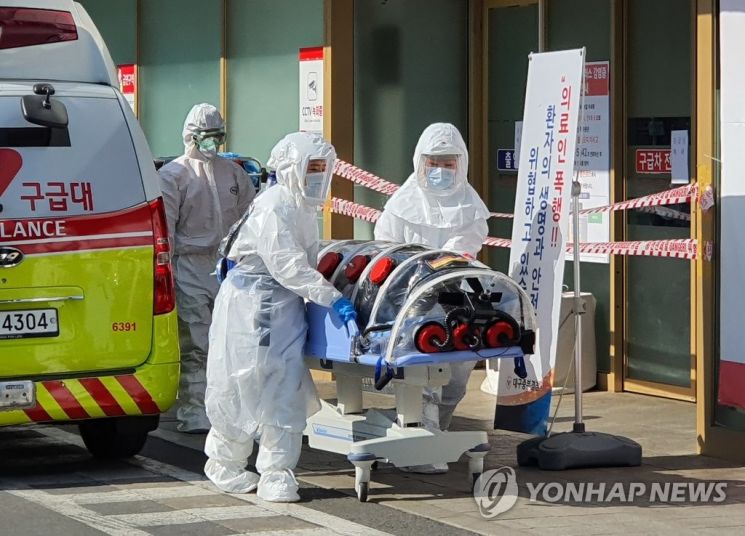
Particularly concerning is that among the patients waiting for beds in the Seoul metropolitan area, 55.7% (547 individuals) are elderly patients aged 70 or older with weakened immune systems. These individuals are classified as 'high-risk groups' for COVID-19 and have a higher fatality rate compared to other age groups.
In reality, there have been tragic cases where patients waiting at home have lost their lives without timely medical assistance. On the 3rd, a 75-year-old female patient experienced worsening symptoms such as decreased consciousness and difficulty breathing while waiting at home and was transported to a nearby emergency room but ultimately passed away. According to health authorities, from October 31 to November 4, approximately 29 patients died while waiting for hospitalization.
◆Decreasing hospital beds signal healthcare system overheating... must avoid 'medical collapse'
Although the risk of COVID-19 has significantly decreased due to vaccination, the rapid spread following the 'With COVID' policy has triggered warning signs of healthcare system overheating.
Among these, the shortage of hospital beds is one of the most representative and serious signals. When the number of patients exceeds the number of beds available for COVID-19 patients in medical institutions, treatment inevitably gets delayed. However, the problem does not end there. If the number of patients becomes uncontrollable, medical institutions must allocate even more beds to COVID-19 patients.
Ultimately, as COVID-19 patients occupy most of the medical institutions, treatment for other urgent patients, such as cancer patients, is postponed. This leads to the 'collapse' of the entire healthcare system.
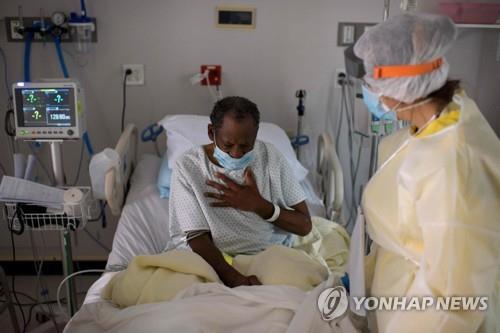 On July 2nd last year (local time), medical staff at United Memorial Medical Center in Houston, Texas, USA, are attending to a COVID-19 patient. / Photo by Yonhap News
Countries that failed to implement timely COVID-19 measures last year experienced such a horrific 'medical collapse.' Even advanced healthcare countries like the United States and Europe could not avoid it. According to the US media outlet The New York Times (NYT), as of last September, 77,000 people died from COVID-19 infections in US nursing facilities.
Betsy McCaughey, former Lieutenant Governor of New York State, told the NYT in an interview, "Even before COVID, this place was already at full capacity," adding, "With patients overflowing and staff severely lacking, even a single patient could turn the nursing facility into a scene of carnage. It was like a graveyard."
India, which faced the more contagious 'Delta variant' of the COVID-19 virus, is another representative country that experienced medical collapse. In India, there were cases of women dying in front of hospital buildings, and images of overflowing corpses at large crematoriums near cities shocked the public.
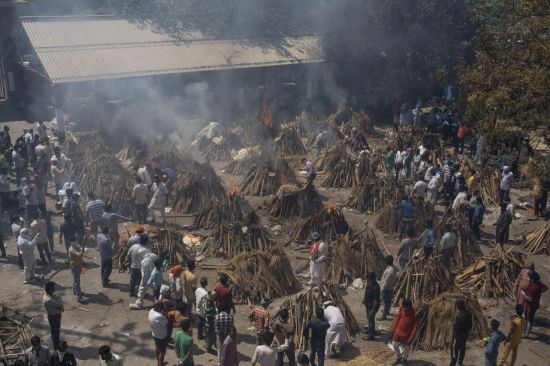 At an open-air crematorium in New Delhi, the capital of India, the cremation of a COVID-19 victim's body on April 24 last year (local time). / Photo by Yonhap News
Having successfully promoted vaccination early and launched a large-scale 'With COVID' policy in July, the United Kingdom is also suffering serious aftereffects. According to the British media outlet The Guardian, as of October, the backlog of hospital appointments in the UK's National Health Service (NHS) was approximately 5.61 million, equivalent to about 10% of England's total population.
◆"Early diagnosis and transfer of patients with underlying conditions is key"
The government is making every effort to prevent healthcare system overheating. Previously, the health authorities discussed the 'Strengthening Medical Response Measures in the Seoul Metropolitan Area' last month and issued an administrative order to seven general hospitals with more than 700 beds in the metropolitan area to secure 52 intensive care beds, which is 1% of their authorized beds.
To improve bed utilization rates, the plan is to first utilize hospital staff, and if securing personnel becomes difficult, the health authorities will directly support medical personnel through the medical personnel support system.
Additionally, for residents and workers in nursing facilities, psychiatric hospitals, and other places particularly vulnerable to COVID-19 infection, mobile vaccination teams from public health centers are operating to expedite additional vaccinations.
Experts emphasize active cooperation between primary medical institutions such as local clinics and the government.
On the 7th, the Korean Medical Association (KMA) held an 'Emergency Press Conference on COVID-19 Home Treatment' at the KMA's temporary Yongsan office in Seoul, warning, "Home treatment depends on how quickly severe patients are diagnosed and transferred," and cautioned, "Failure to recognize the worsening symptoms of patients with underlying conditions early can pose health risks."
They added, "If patients receive care from doctors at local medical institutions, severe patients can be identified and treated more quickly," advising, "For safe and efficient operation, it is necessary to appropriately distribute the number of patients per doctor to manageable levels, implement backup doctor systems, and use work smartphones to alleviate patients' anxiety, among other improvements."
© The Asia Business Daily(www.asiae.co.kr). All rights reserved.
![Clutching a Stolen Dior Bag, Saying "I Hate Being Poor but Real"... The Grotesque Con of a "Human Knockoff" [Slate]](https://cwcontent.asiae.co.kr/asiaresize/183/2026021902243444107_1771435474.jpg)


















