GTX Boom Fades in Indukwon
Buying Pressure Weakens, Supply Builds and Prices Fall
Prices Drop by Tens of Millions Compared to Previous Actual Transactions
However, Artificial Regulations Suggest Price Rise Next Year
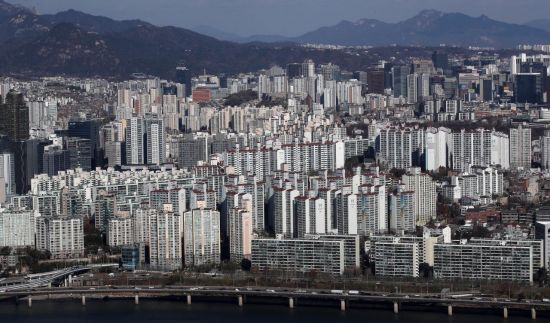
Due to the construction of the Metropolitan Area Express Train (GTX) and the designation of new towns, apartment prices in major areas such as Siheung and Anyang in Gyeonggi Province, which saw significant increases this year, have recently dropped to about half of their previous rise. As high loan interest rates and property tax burdens have weakened buying demand and listings have accumulated, the upward trend is slowing down. In some complexes, transactions have been made at prices several tens of millions of won lower than previous actual transaction prices.
According to the real estate industry on the 6th, buying demand in Anyang, Siheung, and Ansan, which led the apartment price increase in Gyeonggi this year, is subsiding. Based on statistics from the Korea Real Estate Board, Anyang, which rose 28.49% this year, saw its weekly increase rate drop from 0.44% to 0.19% in the past month. This marks a slowdown in growth for seven consecutive weeks. Although the news in June that Indeogwon Station was effectively selected as a stop on the GTX-C line caused nearby housing prices to surge, recent high asking prices and weakened buyer sentiment have virtually halted transactions.
In the case of Complex A in Naeson-dong, Uiwang City, near Indeogwon Station, an 84.98㎡ unit was traded for 1.26 billion won in July but dropped to 1.18 billion won in October. Although dozens of listings are currently posted online, real estate agents on the ground report that there are almost no buyer inquiries.
Siheung, designated as the sixth 3rd generation new town in February, shows a similar atmosphere. This area showed the highest increase rate in Gyeonggi due to expectations of new town development, but the upward trend has shrunk for two consecutive weeks. The increase rate of around 0.50% last month sharply fell to 0.20% this week. In Jeongwang-dong, Siheung, Complex B’s 59.85㎡ unit recorded a new high of 280 million won in October but continued to decline, trading at 180 million won on the 15th of last month. Complex C in Baegot-dong, with a 69.86㎡ unit, also dropped more than 50 million won from 650 million won in October to 598 million won last month.
Nearby areas such as Ansan, Gwangmyeong, Hwaseong, and Pyeongtaek are also seeing a sharp reduction in price increases. The West Coast area of Gyeonggi, which includes these regions, recorded a sales supply-demand index of 100 this week, showing a clear decrease in buying demand.
However, since price trends vary by region and apartment complex, it is difficult to hastily conclude that a downward trend is underway. Although the upward momentum has slowed due to government loan and tax regulations, it is explained that as long as major positive factors such as GTX, new town development, and redevelopment of aging urban areas continue, housing prices are unlikely to fall easily.
Lee Eun-hyung, a senior researcher at the Korea Institute of Construction Policy, explained, "While sales are artificially suppressed, price fluctuations appear to be absent or reduced, but the moment these suppressive factors are lifted, the pent-up increases may reappear as price rises."
© The Asia Business Daily(www.asiae.co.kr). All rights reserved.
![Clutching a Stolen Dior Bag, Saying "I Hate Being Poor but Real"... The Grotesque Con of a "Human Knockoff" [Slate]](https://cwcontent.asiae.co.kr/asiaresize/183/2026021902243444107_1771435474.jpg)
















