Immediate Implementation at 24 Corporation-Operated Sites Including Children's Grand Park and Underground Shopping Mall... Planned Expansion to Contract Workers
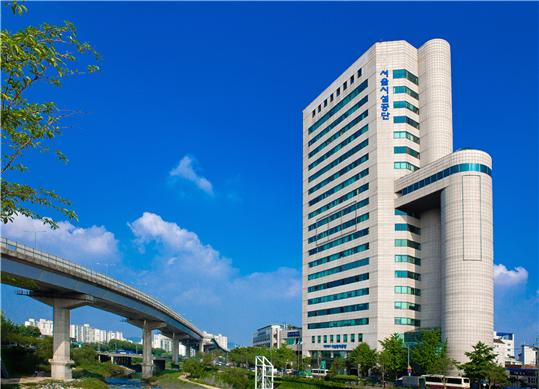
[Asia Economy Reporter Lim Cheol-young] Seoul Facilities Corporation announced on the 1st that, ahead of the enforcement of the 'Serious Accident Punishment Act' in January next year, it will be the first public institution to fully guarantee the 'right to refuse dangerous work' to create a safer working environment for on-site workers.
When conducting facility inspections or repair and maintenance work, if a worker judges the task to be dangerous or unsafe, they can exercise the 'right to refuse work' by stopping the work at any time before or during the task and notifying the manager. Once the right to refuse work is exercised, the work is immediately halted, and after implementing necessary safety and health measures such as installing safety facilities or deploying additional personnel, the work will resume. There will be no disadvantages due to the refusal of work.
Seoul Facilities Corporation plans to immediately implement this for employees at its 24 business sites, including Seoul Children's Grand Park and underground shopping malls, and after system supplementation and improvement, expand it to subcontractor workers. In addition, by introducing the 'right to refuse dangerous work' in addition to the 'right to stop dangerous work' guaranteed by the Industrial Safety and Health Act, the corporation aims to complement and strengthen the safety net for workers and eliminate safety blind spots.
Furthermore, Seoul Facilities Corporation aims to effectively apply the purpose of accident prevention by implementing the 'right to refuse work,' a broader concept than the 'right to stop work' guaranteed by the Industrial Safety and Health Act. In particular, to realistically reflect the position of on-site workers, the corporation has prepared detailed standards and procedures for the 'right to refuse dangerous work' through labor-management consultations. Since the core of the right to refuse dangerous work is for workers themselves to recognize that they can exercise the 'right to refuse,' the corporation plans to actively promote and educate about it.
Meanwhile, Seoul Facilities Corporation has been operating the 'Serious Accident Safety System Improvement TF' since early this year, alongside the enactment of the Serious Accident Punishment Act, which focuses on safety and respect for life. It is also engaged in activities to identify and improve mandatory obligations stipulated by law but not actually implemented, along with discovering risk factors on-site.
Cho Sung-il, Director of Seoul Facilities Corporation, said, "If the focus until now was on eliminating existing risk factors, we expect that by fully guaranteeing the 'right to refuse dangerous work,' we will be able to eliminate unforeseen variable risks in real time," and added, "While basically recognizing the right to refuse, when the safety of employees and citizens conflicts, such as in the case of floods or snow removal, we will prioritize citizen safety."
© The Asia Business Daily(www.asiae.co.kr). All rights reserved.

















