Chief of Chinese Academy of Social Sciences: International Raw Materials, Global Supply Chains, and Real Estate Regulations Overlapping Pressures
Next Year’s US Inflation Is the Biggest Variable... No Political Risk in China
[Asia Economy Beijing=Special Correspondent Jo Young-shin] Concerns have emerged within China that the country's fourth-quarter economic growth rate will be significantly lower than expected. There is also an analysis suggesting that global uncertainties have increased to the extent that even maintaining a growth rate in the 5% range next year would be considered successful for China's economy.
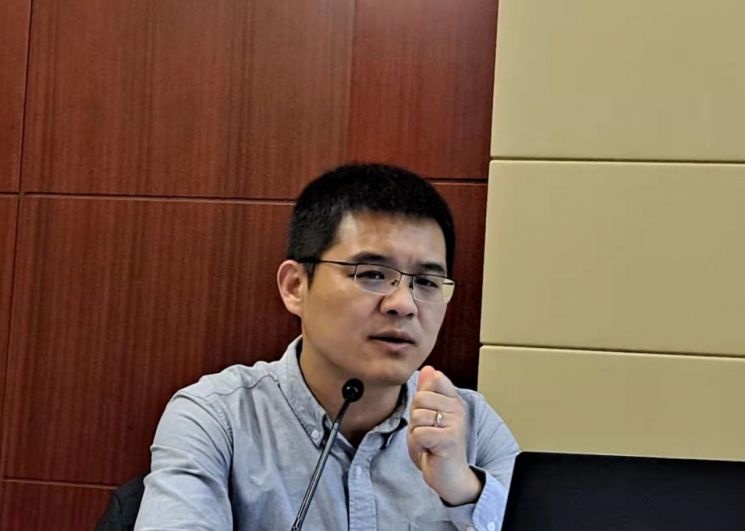
Tang Duoduo, head of the Economic Research Institute at the Chinese Academy of Social Sciences, attended the 'Korea-China Economic Forum' hosted by the Korea Institute for International Economic Policy (KIEP) Beijing office on the 29th. He explained that due to a combination of negative factors such as rising international raw material prices since the third quarter, global supply chain crises, and regulations on China's real estate and education sectors, the growth rate only reached 4.9% year-on-year, and he analyzed that the fourth-quarter growth rate could be significantly lower than initially expected.
Although Tang did not disclose specific figures, some within China are concerned that the growth rate could fall into the 3% range. This is indicated by signs in China's monetary policy. In the third quarter 'China Monetary Policy Implementation Report,' the Chinese monetary authorities removed phrases such as ▲Daesuman-gwan (avoiding excessive monetary easing) ▲maintaining normal monetary policy ▲comprehensive monetary management. This implies that there is room for monetary policy to change at any time depending on the situation.
China's fiscal policy has also come under scrutiny. Although the Chinese leadership declared it would implement an 'active' fiscal policy, it has been criticized for not being 'active' in practice. Special bonds issued by each province and municipality directly governed by the central government are representative examples. As of the end of October, the scale of newly issued bonds by local governments in China was 3.513 trillion yuan (KRW 655.8771 trillion), of which the issuance of special bonds was only 2.7578 trillion yuan, 76% of the target. Since the Chinese government set the purpose of fiscal policy on three guarantees (basic livelihood, wages, operations), funds have not flowed into infrastructure and real estate, which require large-scale investments.
Tang explained the background of the low issuance of special bonds by local governments, saying, "The Chinese government has a clear goal to realize order in the real estate market, including suppressing real estate prices, within three years." He added, "Real estate and infrastructure investments can be tempting because of their significant effects, but past experience shows that their side effects are not insignificant. If macro data in China show an increase in real estate and infrastructure investments, it is a signal that the Chinese economy is not doing well."
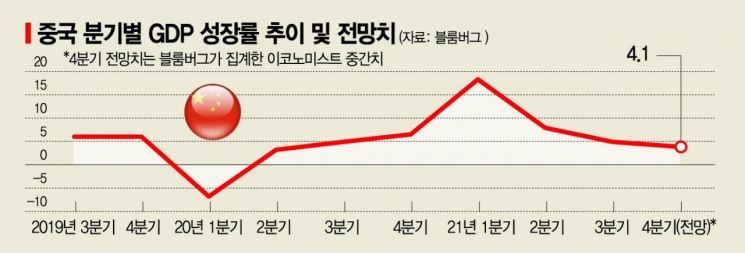
Tang also analyzed that the outlook for China's economy next year is not bright. He explained that uncontrollable external variables such as U.S. inflation concerns, U.S.-China relations conflicts, rising international raw material prices, and global supply chain instability could have a significant impact.
He stated, as his personal opinion, that if next year's economic growth rate is above 5.5%, it means the Chinese economy is doing well; if it is between 5.0 and 5.5%, it means it performed decently; and if it is below 5.0%, it means the Chinese economy is performing poorly. He added that next year, considering the base effect, China's economy will show a 'lower in the first half and higher in the second half' pattern. It seems likely that the Chinese government's economic growth target for next year will be in the 5% range, about 1 percentage point lower than this year.
Regarding domestic variables such as the Beijing Winter Olympics in February next year and the 20th Party Congress, he predicted, "Considering the past Beijing Summer Olympics and the COVID-19 pandemic situation, the economic impact will not be significant." Furthermore, Tang commented on China's political risks, saying, "The Chinese government has various policies to manage and control the economy," and "there will be no political risks for the next 5 to 10 years."
© The Asia Business Daily(www.asiae.co.kr). All rights reserved.

![A Woman with 50 Million Won Debt Clutches a Stolen Dior Bag and Jumps... A Monster Is Born [Slate]](https://cwcontent.asiae.co.kr/asiaresize/183/2026021902243444107_1771435474.jpg)
















