[Seoul District News] Seongdong-gu Completes 801m Alleyway Regeneration Project on Yongdap 21-gil After 3 Years, Transformed into a Pleasant and Bright Space with Shared Yard and Park, Low Fences, Mailboxes, and Meter Covers Enhancing Communication and Delicate Sensibility... Eunpyeong-gu’s ‘Our Neighborhood Store Artterior Project’ Boosts Local Business Sales... Geumcheon-gu Hosts 2021 Village Autonomy Exhibition ‘Hello, Village: Disaster and Community’ from Dec 1-31... Yangcheon-gu Selected as ‘Excellent Local Government’ in 2021 Local Finance Analysis... Dongjak-gu, Public Facilities and
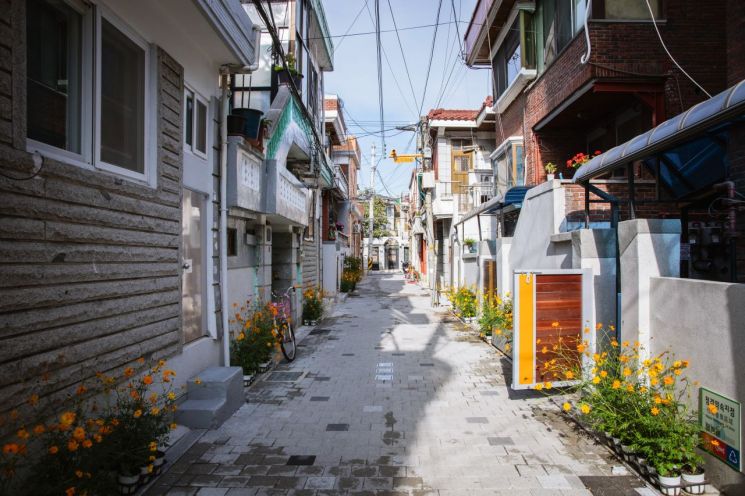
[Asia Economy Reporter Park Jong-il] “The alley that used to be dark and stuffy has transformed like this, brightening not only the alleyway but also people's hearts. I want to continue living here among these clean and beautiful houses.”
This is the remark of a resident living in Yongdap-dong, Seongdong-gu.
Seongdong-gu (Mayor Jung Won-oh) announced on the 28th that it has completed the full renovation of the alleyways in Yongdap-dong through the ‘Yongdap-dong Alleyway Regeneration Project.’
The project, completed over three years, covers an alleyway area of 33,205㎡ along Yongdap 21-gil, extending 801 meters. Through the regeneration project, the area has been refurbished with bright colors to create a pleasant and emotionally appealing space.
The asphalt pavement, which was cracked, uneven, and dark in atmosphere, was replaced with bright-colored mixed pedestrian and vehicle paving blocks. Low walls and gates of 1.2 meters height were installed considering privacy, visually widening the narrow alleyways.
A shared yard and shared stairs were created by demolishing the gates and walls of two houses facing a dead-end alley, maximizing spatial efficiency. Bright colors were applied to the shared stairs to create a brighter and softer atmosphere, facilitating natural communication among residents.
Notably, four old houses facing a tall railway retaining wall were purchased and converted into a park. The previously densely packed residential area now has open space, providing a playground for children to run and a resting place for adults.
The park’s flooring uses bright-colored rubber materials to ensure children can play safely, and it is decorated with wooden playground equipment and a green garden, making the atmosphere more vibrant and relaxing.
Along with installing ground lighting to brighten the dark alleys, fences around Yongdap Elementary School’s child protection zone were replaced to ensure children’s safe commute. Unauthorized dumping was prevented by installing waste disposal guidance boards. Considering the high proportion of foreign residents in Yongdap-dong, QR codes with explanations in English and Chinese were added to the guidance boards to enhance usability.
As a resident-led community revitalization project, the gas meter cover replacement project was expanded throughout Yongdap-dong. The project repainted dirty city gas pipes with peeling paint and replaced old mailboxes with new red mailboxes. Ordinary road nameplates were replaced with self-designed building address plates matching the alley’s character, giving the alleyway a unique identity.
Improvements to sewage pipes and gutter maintenance resolved the alley’s biggest complaints: foul odors and poor drainage. Crime Prevention Through Environmental Design (CPTED) was introduced in the narrow, gloomy alleys, and additional CCTVs were installed to create a safe alley environment.
The project area is a low-rise residential dense area where most alleys are about 3.5 meters wide, and over 90% of houses are more than 20 years old. Approximately 1,400 residents live there, with a high proportion of foreign residents. The railway retaining wall near Yongdap Station on Line 2 added to the area's dark atmosphere.
Accordingly, the district selected the project through the ‘Seoul-style Alleyway Regeneration Project’ contest (August 2018) to preserve the gradually disappearing alleys and improve the aging residential environment. After a pilot project on a 122-meter section in 2019, the project was sequentially implemented based on residents’ feedback and improvements. Following full-section improvements last year, small-scale maintenance projects to create shared yards and enhance resident convenience were carried out this year to increase project completeness.
Jung Won-oh, Mayor of Seongdong-gu, said, “The Yongdap-dong Alleyway Regeneration Project has become an opportunity for residents to feel the region’s change and development. I hope Yongdap’s harmonious alleys, bright and warm in atmosphere, will bloom with laughter among residents.”
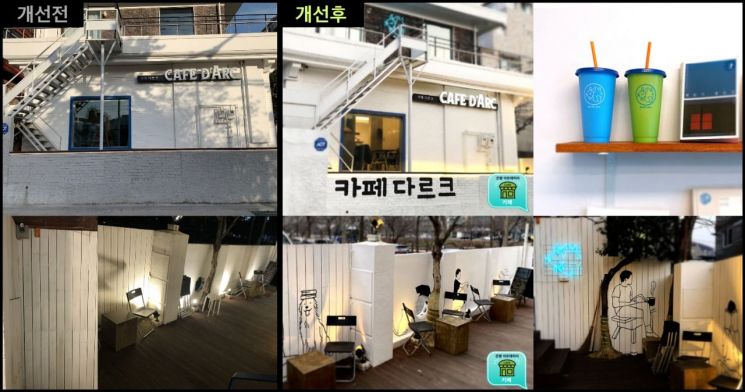
A policy that increases sales for local small business owners and guarantees work experience and actual income for artists is gaining attention.
This is the ‘Our Neighborhood Store Artterior Project’ by Eunpyeong-gu (Mayor Kim Mi-kyung).
Artterior is a compound word of Art and Interior, a project where local artists customize small business store interiors, remodeling, and brand development.
This year, Eunpyeong is conducting the project with a total budget of 228 million KRW, including 150 million KRW secured from the Seoul city contest and 78 million KRW from Eunpyeong-gu’s budget, connecting 60 local stores with 23 local artists. Last year, the ‘Our Neighborhood Store Artterior’ project supported 40 stores centered around Bulgwangcheon, and searching ‘Eunpyeong Artterior’ on Naver shows before-and-after images of participating stores that have become hot places around Bulgwangcheon.
This year’s project selected stores located in alleys connecting Eunpyeong’s natural environment and traditional markets. Small stores connecting the entrance of Bukhansan Mountain to Yeonseo Market, and the cypress forest to Daerim Market are undergoing transformation. Especially, the changes in stores along the newly created (tentative name) New Road in Sinsa 2-dong are highly anticipated.
The Artterior project greatly contributes to revitalizing neighborhood stores. A caf? owner by Bulgwangcheon who participated in the project praised, “It was hard to escape stagnation due to COVID-19, but with wall paintings and other changes, the store’s atmosphere revived, helping attract customers.”
Local artists in charge of Artterior are handling design improvements for 3 to 4 stores each. Their main activities include ▲renewal of interior and exterior spaces (wall painting, window painting, wallpaper and furniture reform, etc.) ▲improvement of product display methods (wall decor, show window design, etc.) ▲installation and exhibition of artworks (three-dimensional sculptures, paintings, etc.) ▲production of products and printed materials (cups, tableware, business cards, stickers, etc.) ▲branding and marketing (logo, color and style establishment, promotional posters, etc.), transforming the appearance of various stores.
One artist participating as a local artist said, “Last year, I made neon signs and menus for a pub, and recently heard that customers in their 30s and 40s have increased, which is very rewarding,” expressing pride in participating as a local artist for two consecutive years.
Artists participating as local artists gain experience building their portfolios beyond activity fees, creating a win-win effect. A new cultural breeze is blowing through Eunpyeong’s neighborhood stores.
Kim Mi-kyung, Mayor of Eunpyeong-gu, said, “This project is meaningful as it gives hope to neighborhood stores during COVID-19 and opportunities to young artists struggling with employment. We expect the transformation of neighborhood stores to lead to revitalization of our local economy and culture.”
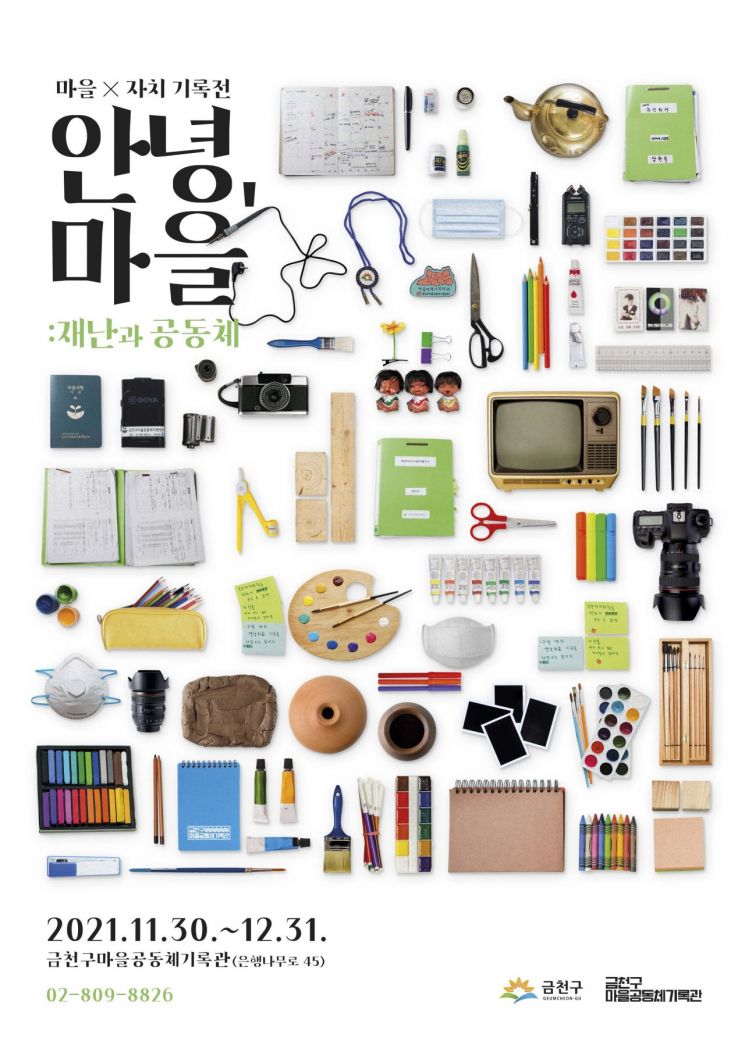
Geumcheon-gu (Mayor Yoo Sung-hoon) announced that the Geumcheon-gu Village Community Support Center will hold a village autonomy record exhibition titled ‘Hello, Village: Disaster and Community’ from December 1 to December 31, documenting villages during the COVID-19 era.
The village autonomy record exhibition, now in its fifth year since 2017, is held at the Geumcheon-gu Village Community Archive (45 Eunhaengnamu-ro), the first of its kind nationwide.
This exhibition, themed ‘Hello, Village: Disaster and Community,’ was planned with the intention of asking and confirming ‘hello’ among villagers living in the COVID era. The familiar greeting ‘hello’ is reinterpreted with meanings of ‘peace, wish, encounter, and farewell.’
Artists from Geumcheon-gu working in various genres such as painting, printmaking, and media art created works based on the theme to ask residents ‘hello.’ Notably, artist Choi Hee-ja’s ceramic craft work ‘Warmth’ was created with teenagers spending more time with family due to non-face-to-face activities, reflecting on the meaning of ‘warm home.’ Also, the portrait photo exhibition ‘Ah!, That Person!’ featuring village activists is displayed alongside essays written by the activists themselves.
Residents wishing to view the exhibition can visit the Geumcheon-gu Village Community Archive until December 31 to see the works.
In addition to the exhibition, on December 1 at 2 p.m., a program where artists serve as docents to explain the works will be held. From December 6 to 9, workshops with artists will be conducted, including ▲upcycling bookbinding with artist Park Young-in ▲making houses with ceramics with artist Choi Hee-ja ▲acrylic painting with artist Kim Young-joo. These programs are for Geumcheon-gu residents, with applications accepted on a first-come, first-served basis via the Geumcheon-gu Village Community Support Center website until December 6.
Kim Yoo-sun, Center Director, said, “We experienced the unfamiliar disaster era of COVID-19 and recorded the village community in various ways, collaborating with local artists to create works. We hope visitors will reflect on the meaning of the village through this exhibition.”
Yoo Sung-hoon, Mayor of Geumcheon-gu, said, “We will continue to preserve valuable records as Geumcheon’s record assets and hold village record exhibitions to maintain residents’ ongoing interest. We ask for the active interest and participation of residents.”
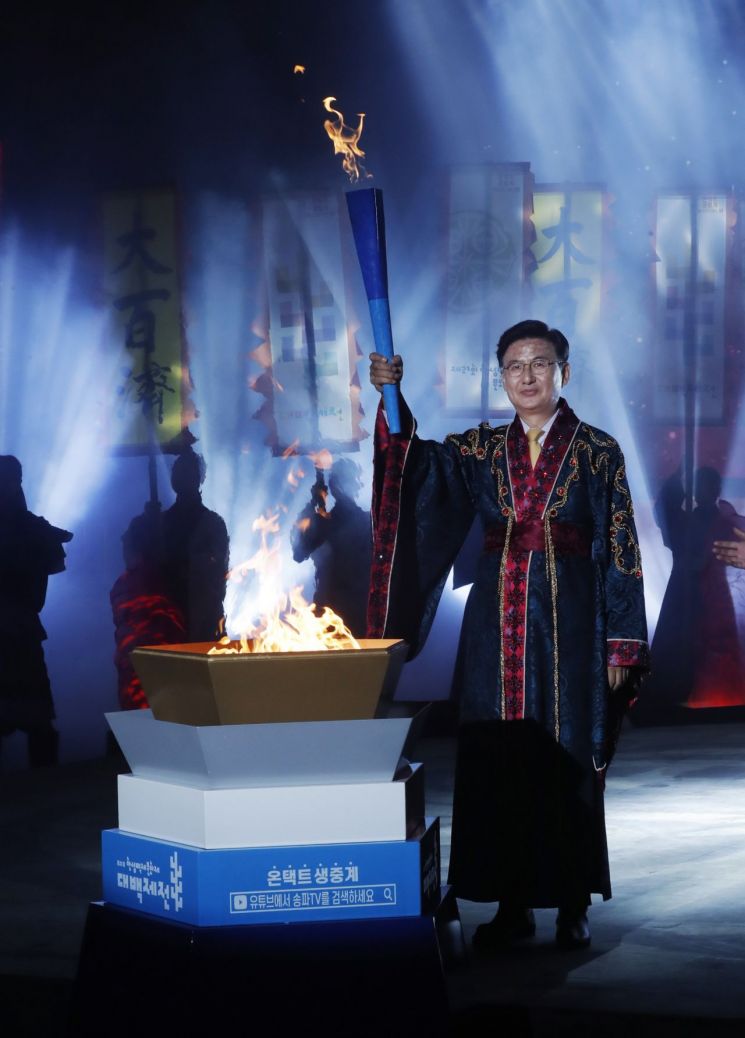 Park Seong-su, Mayor of Songpa-gu, lighting the sacred fire at the opening ceremony of the 21st Hanseong Baekje Cultural Festival Daebaekjejeon.
Songpa-gu (Mayor Park Sung-soo) announced that the ‘21st Hansung Baekje Cultural Festival Daebaekje Exhibition’ held last month swept four categories at the 15th Pinnacle Awards Korea Competition, achieving the remarkable feat of winning for 10 consecutive years.
The Pinnacle Awards, hosted by the International Festivals & Events Association (IFEA WORLD), is the world’s festival Olympics that discovers and awards competitive festivals worldwide annually. This year, about 40 festivals participated in the Korean preliminary round, competing in 13 categories with over 100 entries.
At this award ceremony, Songpa-gu won four categories: ▲Festival Organization of the Year ▲Gold Award in Sponsor Attraction Program ▲Silver Award in Online Experience Product (Hansung Baekje Cultural Festival with Zepeto) ▲Bronze Award in Mid- to Long-Term Plan.
This year marks the 21st Hansung Baekje Cultural Festival, planned as the ‘Daebaekje Exhibition’ unifying Baekje’s historical and cultural cities. As a foundation, in June, Songpa-gu declared ‘Baekje Historical and Cultural Area Exchange Cooperation’ with six local governments including Gongju, Buyeo, Iksan, Gwangju, and Hanam to share festival resources and discover cooperative projects.
Based on this, the ‘Daebaekje Exhibition’ was held from October 8 to 10 as a three-day hybrid festival covering 700 years of Baekje history, both online and offline. It was held dispersedly across Songpa-gu at Seoul Nori Madang, Seokchon Lake, and Songpa Dulle-gil, successfully completing 14 programs in three fields.
To ensure residents and tourists could safely enjoy the festival, major programs were live-streamed on YouTube, and online programs such as ‘Daebaekje Online Parade,’ ‘Hansung Baekje Cultural Festival with Zepeto,’ and ‘Daebaekje Golden Bell’ were operated. Additionally, the ‘Daebaekje Light Festival’ and ‘Songpa Art Groups and Young Artists Special Exhibition’ provided diverse and beautiful sights and entertainment.
Park Sung-soo, Mayor of Songpa-gu, said, “The 21st Hansung Baekje Cultural Festival Daebaekje Exhibition opened a new horizon for platform festivals connecting Baekje and Songpa with the spirit of Great Baekje. It is meaningful to have proven its achievements by winning the Pinnacle Award for 10 consecutive years. We will continue to present new paradigms for festivals and further enhance residents’ happiness and Songpa’s value.”
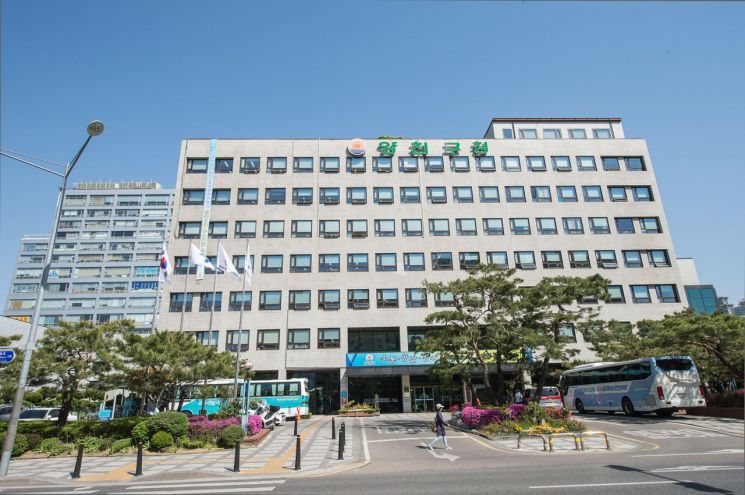
Yangcheon-gu (Mayor Kim Soo-young) announced that it was selected as an ‘Excellent Local Government’ in the 2021 Local Government Financial Analysis Evaluation conducted by the Ministry of the Interior and Safety.
The Local Financial Analysis Evaluation divides local governments nationwide into 14 groups considering population and financial scale, and comprehensively analyzes and evaluates financial status and operational performance based on the previous year’s settlement data. It is a local finance monitoring system.
This evaluation selected excellent institutions by analyzing 13 detailed indicators in three areas: financial efficiency, planning, and soundness, based on the previous year’s performance.
Yangcheon-gu was selected as an excellent institution by receiving the highest grade ‘A Grade’ in the financial efficiency category (Autonomous District Seoul Type I) and secured special grants as financial incentives.
In particular, the district received high evaluations in indicators such as local tax collection rate, delinquent tax management ratio, local subsidy ratio, and investment and contribution transfer ratio, significantly improving financial efficiency.
Also, in 2020, despite COVID-19 causing cancellations and reductions of projects, the district adjusted projects to be executable within the year through supplementary budget preparation and continuously managed execution, which was highly evaluated.
Kim Soo-young, Mayor of Yangcheon-gu, said, “Being selected as an excellent local government in the Local Financial Analysis Evaluation is the result of actively striving to increase revenue and reduce expenditures despite the prolonged difficulties of COVID-19. We will continue to ensure smooth budget execution through efficient and sound financial management.”
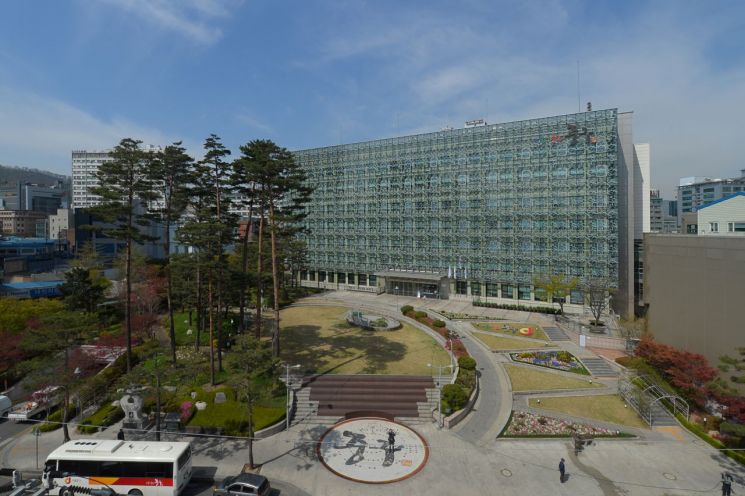
Jung-gu, Seoul (Mayor Seo Yang-ho) is accelerating efforts to create safe school routes.
On the 22nd, Jung-gu announced the operation of ‘Children’s Walking Safe Zones.’ Areas designated as Safe Zones will be subject to intensive parking and stopping crackdowns, with immediate fines and towing applied under a zero-tolerance policy upon violation. Especially, illegal parking or stopping in child protection zones between 8 a.m. and 8 p.m. will incur fines of 120,000 KRW for passenger cars and cargo vehicles under 4 tons, and 130,000 KRW for vans and cargo vehicles over 4 tons.
There are 42 Safe Zones in the district: 36 child protection zones and 6 children’s parks. Children’s parks, where vehicle entry is prohibited, are excluded. The district plans to add areas around daycare centers not yet designated as child protection zones to the Safe Zone operation targets.
To ensure the Safe Zones are effective, various enforcement activities are planned. Patrols, previously conducted four times daily, have been increased to six times. Patrol personnel have been significantly increased to about 180 to prevent undetected illegal parking due to manpower shortages and to carefully ensure children’s safety. Residents from neighborhood management offices (Udongso) and local communities participate in patrol activities.
Additionally, information sharing via Naver Band will be implemented to reduce enforcement blind spots.
Residents can also report violations via applications. By photographing illegally parked vehicles near elementary school entrances and uploading them to the ‘Seoul Smart Complaint Reporting App’ or ‘Safety Report App,’ fines may be imposed.
This Safe Zone installation follows the revised Road Traffic Act effective October 21, which prohibits parking and stopping in child protection zones, highlighting the need to inform and build community consensus.
Seo Yang-ho, Mayor of Jung-gu, said, “The designation of Children’s Walking Safe Zones allows children in the area to be more safely active. We will continue these efforts to create school routes where parents can send their children with peace of mind and environments where children can play safely.”
Jung-gu is also intensifying efforts to create safe school routes through joint police crackdowns, campaigns supporting children’s traffic safety umbrellas, and the ‘Children’s Reliable Safe School Route’ project.
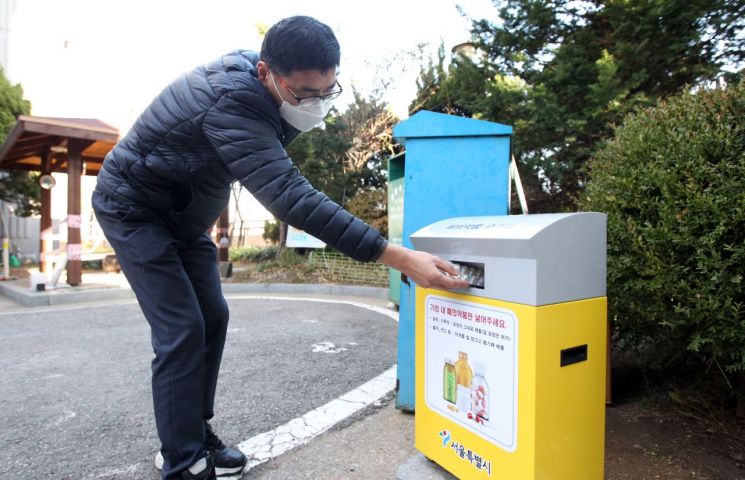
Dongjak-gu (Mayor Lee Chang-woo) announced on the 29th that it will install 30 pharmaceutical waste collection boxes in public facilities such as the district office and community centers, as well as in apartment complexes, to facilitate safe and convenient separate disposal of pharmaceutical waste.
All medicines should be disposed of by removing packaging and placing only the medicine in designated pharmaceutical waste collection boxes. However, such boxes are only installed in health centers and some pharmacies, causing inconvenience for residents who often dispose of medicines as general waste.
When pharmaceutical waste is disposed of as general waste and buried in soil or flushed into sewers, drug components can enter soil and waterways, causing environmental pollution.
Therefore, the district decided to improve the existing pharmaceutical waste collection system by installing collection boxes in public facilities and public housing to allow safer and more convenient disposal of medicines discarded at home.
The installation sites include ▲district office ▲health center ▲15 community centers ▲10 welfare centers ▲one apartment complex (Jungang Heights in Sangdo-dong), with signboards planned to help residents easily locate the boxes.
Following installation, the district will collect pharmaceutical waste for incineration as follows: ▲district office, health center, welfare centers on the 2nd and 4th Wednesdays of each month ▲15 community centers as needed ▲apartment complex on the last Thursday of each month.
The district will produce and distribute promotional materials explaining the need for separate disposal and proper disposal and treatment methods. After installation, information will be displayed on public data maps to encourage more residents to use the service.
Meanwhile, Jungang Heights apartment complex, where a collection box is installed, designates the last Wednesday of each month as ‘Pharmaceutical Waste Collection Day’ for pilot operation.
Choi Seung-baek, Head of the Cleaning Administration Division, said, “We ask residents to actively cooperate in making separate disposal of pharmaceutical waste a habit by disposing of medicines in nearby collection boxes despite the inconvenience.”
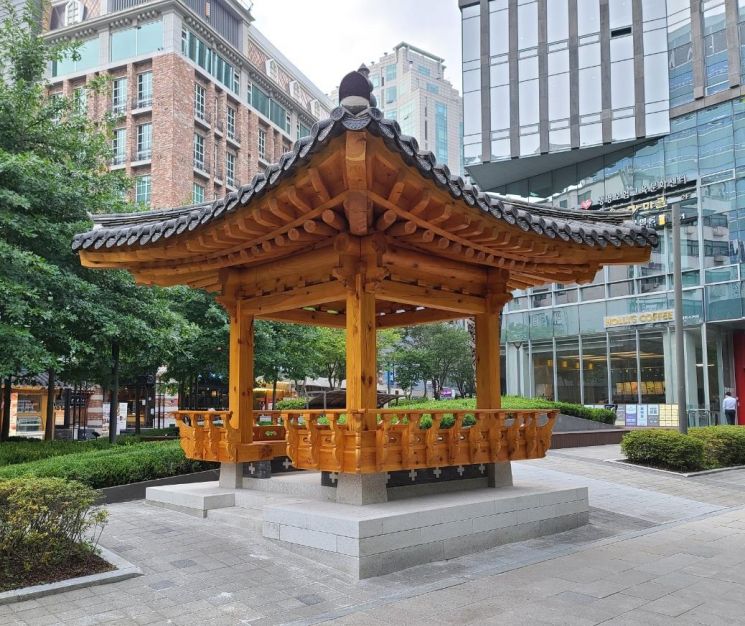
Elegant traditional pavilions preserving the beauty of tradition have been erected near Sejong Center for the Performing Arts and Pyeongchang-dong Community Center, attracting the attention of passersby.
The ‘Jeokseonjeong’ (behind Sejong Center at Doryeom Park) and ‘Pyeongchangjeong’ (rest area at Pyeongchang-dong Community Center), completed this year, are the fruits of Jongno-gu’s persistent efforts in the ‘Traditional Pavilion Construction Project on Public Land.’
Starting with the construction of Waryongjeong at Waryong Park in 2018, Jongno-gu completed Hyehwajeong at the Olympic Memorial National Life Hall and Songgangjeong at Mugunghwa Hill in Gungjeong-dong in 2019, and Cheongjinjeong in 2020, solidifying Jongno’s historical identity and striving to provide spaces where residents can rest.
Since pavilions reflect ancestors’ desire to fully enjoy the beauty of nature through wind and sunlight throughout the year, traditional methods were used from the floor plan to structure and roof shape.
In particular, the roof decorations of Pyeongchangjeong and Jeokseonjeong were designed simply, similar to the cheolbyeongtong of Hyangwonjeong in Gyeongbokgung Palace and Buyongjeong in Changdeokgung Palace. The floor plan was designed as a single-room samojeong, giving a modest yet subtle beauty.
Additionally, some old tiles and wood materials from the ‘Hanok Demolition Material Recycling Bank’ were reused, giving new life to traditional cultural resources and reducing construction costs.
Jongno-gu’s Hanok Demolition Material Recycling Bank, established in 2015 as the first nationwide, manages hanok materials demolished due to development or new construction. It supplies materials for a fee to users and provides consultation and technical support by hanok experts to preserve the value of hanoks that would otherwise disappear due to redevelopment or owners’ circumstances.
An official from the district stated, “With Jeokseonjeong and Pyeongchangjeong added this year, there are now six traditional pavilions in Jongno. The ‘Traditional Pavilion Construction Project’ is a unique project to reveal the region’s historical and cultural identity and provide resting places for residents. We will continue to create traditional pavilions where anyone can rest and regain life’s leisure throughout the region.”
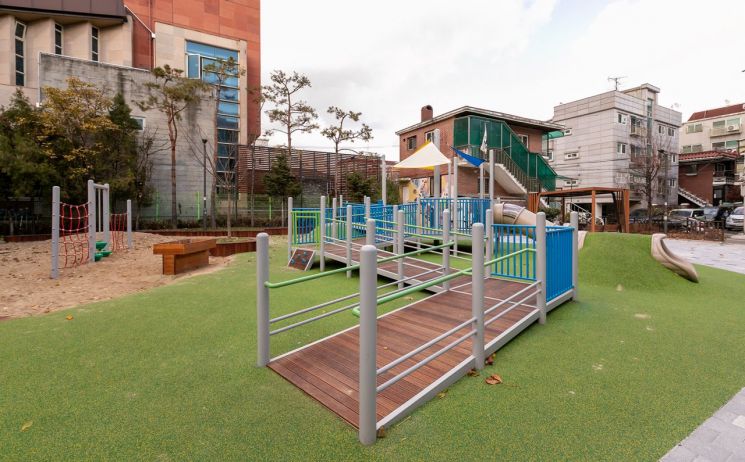
Hamateo Children’s Park in Hwagok-dong, Gangseo-gu, has been reborn as a park for everyone by applying universal design.
Seoul Gangseo-gu (Mayor Roh Hyun-song) announced that it has created a children’s park with universal design, allowing convenient use regardless of gender, age, disability, or other factors.
The district invested a total of 270 million KRW to transform Hamateo Children’s Park in Hwagok 2-dong into an integrated children’s park centered on play with universal design applied.
Universal design refers to a universal design that embraces diverse users. It is characterized by designing so that there are no usage restrictions due to gender, age, disability, language, etc.
Hamateo Children’s Park is located near an elementary school and surrounded by densely populated residential areas, with many residents using it, but playground facilities were aging and convenience facilities for residents were lacking.
Therefore, the district started the integrated children’s park creation project in earnest from January. Especially, a public-private task force team was formed to incorporate local residents’ opinions as much as possible from the design stage to create a park that residents want.
Moving away from conventional playground equipment like slides, the park was created focusing on horizontal play facilities such as sandboxes and circular tunnels incorporating universal design, reborn as a park where not only general residents but also people with disabilities, seniors, children, and stroller users can use comfortably.
To facilitate visitors’ movement, entrances and various bumps inside the park were removed, ramps and deck roads were installed, and block paving was carried out.
Additionally, tree planting improved the park’s aesthetics, and some convenience facilities were refurbished to enhance visitor convenience and satisfaction.
The district plans to thoroughly manage Hamateo Children’s Park, reborn with universal design, to become a healing space where diverse residents gather.
Roh Hyun-song, Mayor of Gangseo-gu, said, “Hamateo Children’s Park reborn with universal design is meaningful as a harmonious space where everyone can play together without discrimination. We will continue to expand leisure and rest spaces where residents respect each other and enjoy together by actively reflecting community and residents’ opinions.”
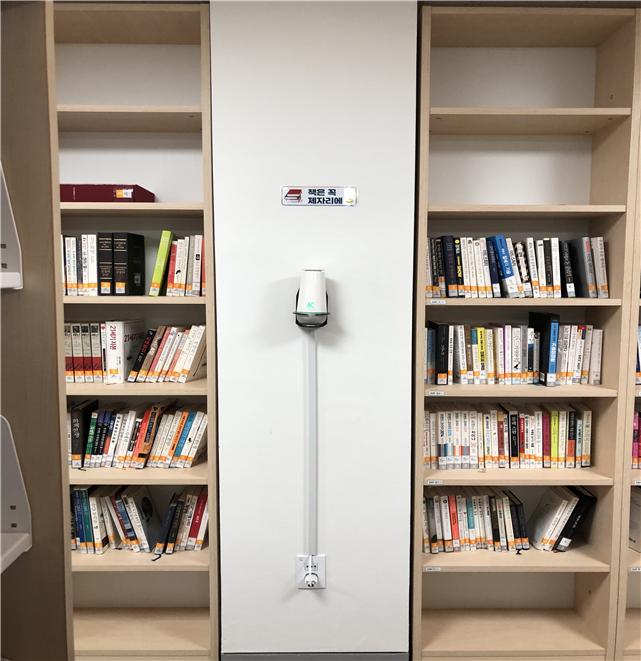
Seocho-gu announced that it will pilot-install and operate an ‘Automatic Ventilation System’ by the end of the year targeting 70 households in apartment complexes (40 households in Seocho The Sharp Foret, 30 households in Acro River Park) and 30 multi-use facilities such as community centers and daycare centers in preparation for the frequent occurrence of high-concentration fine dust in winter.
The district’s ‘Automatic Ventilation System’ aims to improve indoor air quality by increasing the operation rate of ventilation devices. Last year, Seocho-gu was the only autonomous district nationwide selected as a demonstration institution in the Ministry of Trade, Industry and Energy’s ‘Energy Technology Acceptance and Commercialization Promotion’ project. Indoor air quality specialist company KWeather Co., Ltd. led the project, and Zero Energy Remodeling Cooperative handled on-site installation and management.
The system works as follows: operation information of existing ventilation devices is transmitted to an AI controller, which sends indoor air quality and ventilation operation information to a management server. Based on indoor air quality, the system determines ventilation device operation and ventilation volume. The district expects this system to improve indoor air quality and reduce energy waste.
Based on indoor air quality monitoring, the district plans to manage ventilation operation status and air quality changes and analyze effects. It will also strengthen promotion for use and maintenance to increase ventilation device usage in apartment complexes and multi-use facilities.
As part of the Green Seocho Project, the district improves air quality in public facilities and sensitive-use facilities through the ‘Seocho Green Safety Zone.’ The district manages air quality comprehensively through measurement, disinfection, ventilation, and consulting, creating safe spaces and certifying facilities that maintain good indoor air quality.
Additionally, the district pursues various air environment policies to reduce fine dust, including ▲‘Idle-free heaters’ installed on daycare and kindergarten buses to keep warm without idling ▲fine dust shade shelters ‘Seoripul Sumter’ ▲dust suction vehicle operation focusing on high-speed terminals ▲fine dust adsorption filters installed at bus stops ▲fine dust inhalation footrests protecting vulnerable groups.
Choi Hee-young, Head of the Climate Environment Division, said, “We will continue to discover resident-experience fine dust projects to create an air environment where residents can breathe safely.”
© The Asia Business Daily(www.asiae.co.kr). All rights reserved.



















