[Asia Economy Reporter Lee Chun-hee] Authorities have announced that they will continue to monitor the B.1.1.529 variant, known as the 'Nu (Nu)' variant. However, it is still too early to determine the actual risk posed by the B.1.1.529 variant.
On the afternoon of the 26th, Kim Eun-jin, head of the testing and analysis team at the Central Disease Control Headquarters, said at a background briefing that "32 mutation sites have been identified in the B.1.1.529 variant, which is a high number compared to the approximately 10 mutations seen in the Alpha, Beta, Gamma, and Delta variants," adding, "Experts believe that certain mutations included in this variant may increase infectivity or enhance immune evasion, so monitoring is necessary."
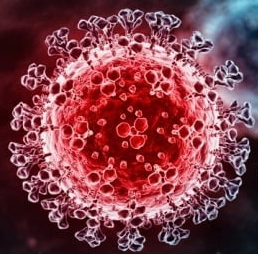
The COVID-19 virus uses spike proteins protruding from its surface to bind to and penetrate host cells. Antibody treatments and vaccines work by interfering with this binding, thereby providing therapeutic and preventive effects within the body. However, mutations may reduce the effectiveness of these measures.
'Nu' is not yet an official name. The World Health Organization (WHO) assigns names following the Greek alphabet sequence when a variant is classified as a Variant of Concern (VOC) or Variant of Interest (VOI). WHO plans to hold a special meeting on the 26th (local time) to decide whether to designate the B.1.1.529 variant as a VOC or VOI. If registered as a VOI, it will be named the Nu variant, following the Mu variant.
According to WHO classification, four major variants of concern have been registered so far: Alpha, Beta, Gamma, and Delta. Variants of interest include Lambda and Mu. Eta, Iota, and Kappa, which were previously classified as VOIs, have been downgraded to Variants Under Monitoring (VUM), while Epsilon, Zeta, and Theta have been removed from monitoring. The U.S. Centers for Disease Control and Prevention (CDC) currently classifies only Delta as a variant of concern, downgrading Alpha, Beta, Gamma, Epsilon, Eta, Iota, Kappa, Zeta, and Mu to Variants Being Monitored (VBM).
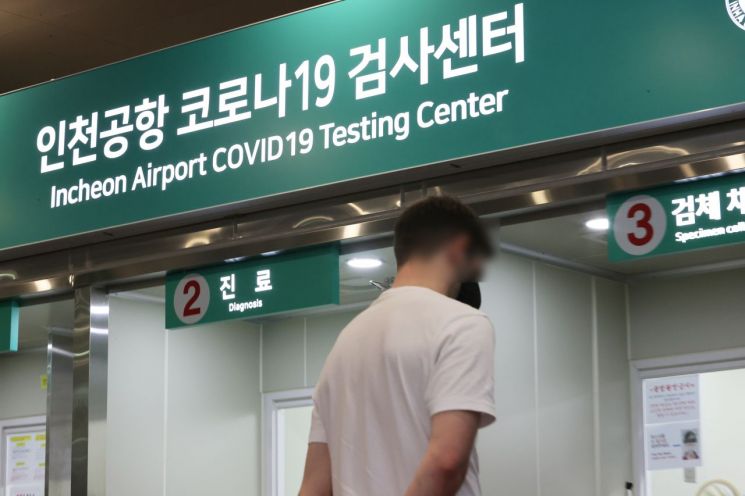
The B.1.1.529 variant has been registered 66 times in the WHO database, mainly from South Africa, Botswana, and Hong Kong. Kim Eun-jin stated, "Since the variant is primarily emerging in Africa, we are conducting comprehensive surveillance and analysis," adding, "We will continue to closely monitor and track the trend of its introduction into the country." The UK and Israel, which have frequent exchanges with African countries, have quickly closed their borders. The UK will include six African countries?South Africa, Botswana, Namibia, Zimbabwe, Lesotho, and Eswatini?in its red list of banned countries starting at 12 PM on the same day. Israel has also designated seven countries?South Africa, Lesotho, Botswana, Zimbabwe, Mozambique, Namibia, and Eswatini?as travel ban countries.
However, it remains uncertain whether the B.1.1.529 variant will actually surpass the Delta variant in transmissibility and immune evasion. Changes in the spike protein do not necessarily aid virus spread. In fact, in Japan, the recent sharp decline in new COVID-19 cases has been interpreted as the Delta variant undergoing excessive mutations that hinder viral replication, leading to a form of 'self-destruction.'
Baek Soon-young, emeritus professor at the Catholic University School of Medicine, explained, "At one point, the Delta Plus variant was expected to be stronger than Delta, but it failed to spread and has almost disappeared," adding, "While many mutations can increase transmissibility, they can also be disadvantageous." He also addressed concerns that the B.1.1.529 variant might have arisen from a combination with the HIV virus in AIDS patients, saying, "It is unlikely. In immunocompromised patients, the virus is not properly cleared, allowing various mutations to accumulate, so the variant likely emerged in this way."
Professor Baek emphasized, "Variants like B.1.1.529 can arise domestically at any time," and stressed the need for continuous variant monitoring. He added, "No one can guarantee that mutations will not occur. Continuous monitoring should be maintained domestically, and all imported cases should undergo genetic sequencing as a precaution."
© The Asia Business Daily(www.asiae.co.kr). All rights reserved.

















